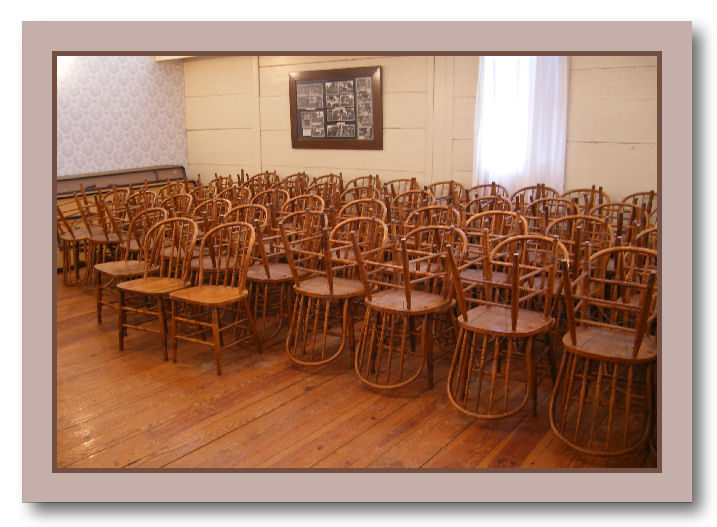
The hottest item at last night’s Town Meeting was the election of a new School Board Director. 91 citizen-voters turned out. The vote count was relatively close, much like last fall’s rescission vote, except it went the other way this time. Marie Fay won with 49 votes to Karen Nelson’s 42.
I supported Karen, had campaigned for her, and was very sorry to see her lose, especially by so few votes. With her fierce and absolutely unswerving commitment to keeping our school open, she would have been a tremendous asset to our School Board. However, I give Mrs. Fay, the winner, the benefit of the doubt and believe we should all give her a chance, in good faith. I hope she sticks to the statement she made last night–when asked–that she has no agenda to close our school.
The school budget passed with relatively little discussion. This year, in a long overdue move, the School Board is applying $59,000 out of unencumbered funds (surplus) as revenue in order to reduce education property taxes.
We then took up Article #6, which proposed that we conduct the election of School Board Directors and Moderator by Australian ballot. The Town side has been using Australian ballot for many years already. The general consensus in the hall last night was in favor of moving to Australian ballot, in the interest of having a more organized election process and a better informed electorate. A few people admitted to a certain nostalgic regret at the idea of shifting this over to Australian ballot. Actually, I am sympathetic to the nostalgia factor. But I think the need for a more organized and serious approach to electing School Board officers outweighs the nostalgia. The Article passed on a voice vote.
The Town portion of the meeting flew by rapidly. There was virtually no discussion on any of the warned appropriations. Article #12 proposed making Road Commissioner an appointed rather than elected position. Some people felt strongly that going the appointed route would afford more options for professional roads management. Others felt that keeping it as an elected position was important for local control. In the end, the Article was defeated and the position will remain an elected one.
The Town budget passed with exactly zero discussion or questions. (This always surprises me). $300, 933.00
At the conclusion of the meeting, a woman who lives in Dalton but owns some property in our town, stood up to speak. (We later realized she was not a resident or registered voter–so technically she should not have been allowed to speak without formal unanimous consent).
This woman told the assembly that she didn’t like all the recent publicity generated by our recent town and school controversies. She said she thought that people in town should just deal with each other face to face, that we should not let things get into the news, and that we should go back to some time in the 1700s when “everyone got along.” (As one of my neighbors commented to me this morning in reference to the woman’s speech last night, “they use to shoot each other in the 1700’s, in contrast to now.)
She was clearly very uneasy with the idea of any publicity about issues in our town–so uneasy that I actually felt badly for her.
But I don’t agree with her.
Does she object to Christina McGrath’s letter to the editor in last week’s Coos County Democrat, in which Mrs. McGrath thoughtfully criticized the Guildhall School Board for it’s freeze on the school checking account? Was she referring to articles written by reporters (which no one can control, that’s for sure)? Was she objecting to Lynn Berry’s recent letter to the editor about the importance of voting? Was she talking about one of my blog posts? Who knows.
This woman said she felt embarrassed by people’s public expression of opinion. In contrast, I feel proud. I feel proud when people care enough about something to write a letter to the editor, or speak out loud at town meeting. Guess what? It’s not an easy thing to do. It’s brave.
This is what democracy is about. We express opinions. We write letters. We make our voices heard. We should never feel embarrassed by that, only proud.
Passions may be running a little high on certain issues here in Guildhall as we approach Town Meeting. But we are all in this together, even if we disagree. We are Americans and we use the local and proper channels of democracy to resolve problems–attending and speaking up at meetings, writing letters to the editor, petitioning our local officials, voting, and going through the judicial system. In the midst of the disagreements of the last year, I am confident we will resolve our disagreements and remain civil and neighborly in the meantime.
Please vote today, Town Meeting day. Come to the Town Offices from 10am-7pm to vote for local officers by Australian ballot. Come to the evening portion of Town Meeting, at 7pm to elect a new School Board Director and to vote on the town and school budgets, plus other warned articles. Make your voice heard on this historic Vermont day.
On the Town side, we have two Selectboard seats open. Vote for the candidates who will restore productivity, efficiency, fairness and professional calm to our Selectboard.
On the School side, there is one School Board seat open. Vote for the candidate who believes in our school and will work to keep it open, strong and vibrant. Vote for the candidate who will represent the best interests of our School District as a whole.
This is our elementary school. There are 21 students enrolled here. We have two fabulous, dedicated teachers, plus part- time art, music and phys ed instructors, a cook, and a part- time janitor. According to two recent rounds of NECAP testing scores, the students are high performing. This photo was taken on a Saturday, but even so, there was stuff going on–a group of kids and parents were sledding on the slopes behind the building. All kinds of wonderful things happen here every day of the week. If it’s anything I’ve learned over the last year, it’s been that our school is fantastic and worth fighting for.
The school normally bustles with activity. But it could all go very quiet shortly after March 2, 2012. About 6 days from now.
That’s the date a majority on our School Board (Helen Martin and Matthew Smith) have actually voted to freeze all Guildhall financial disbursements, unless the disputed tuition for Board member Matthew Smith’s own child to go to a New Hampshire school is guaranteed. (See minutes of Guildhall School Board meeting, Feb 20, 2012. The minutes are available–they are public information– in hard copy at the Essex-Caledonia Supervisory Union, phone number 695-3373. Or call or email me and I can fax you a copy)
The vote to freeze all spending stems from Board member Matthew Smith’s vote in August of last year to tuition his 5th grade child to an out-of-district school, in spite of the fact that our students, in accordance with the will of the Guildhall electorate, may only be tuitioned out starting in the 6th grade. Over the years, Guildhall parents, if they felt another school was in their child’s best interests, have either had to pay the tuition themselves, or move. The matter is now in litigation. At the February 20 meeting, the Board chair reported that School District attorney Barbara Blackman has advised the School District against paying the disputed tuition until the Court reaches a decision, and said that to pay now would “compound” the Board’s legal problems on conflict of interest grounds. The Martin/Smith majority reacted to her advice by passing the motion to freeze all disbursements by March 2. That course of action would certainly, in about two weeks or less, grind school operations to a halt.
I often use this blog to express my opinions. But there’s no need for any opinion or commentary here. The facts speak for themselves.
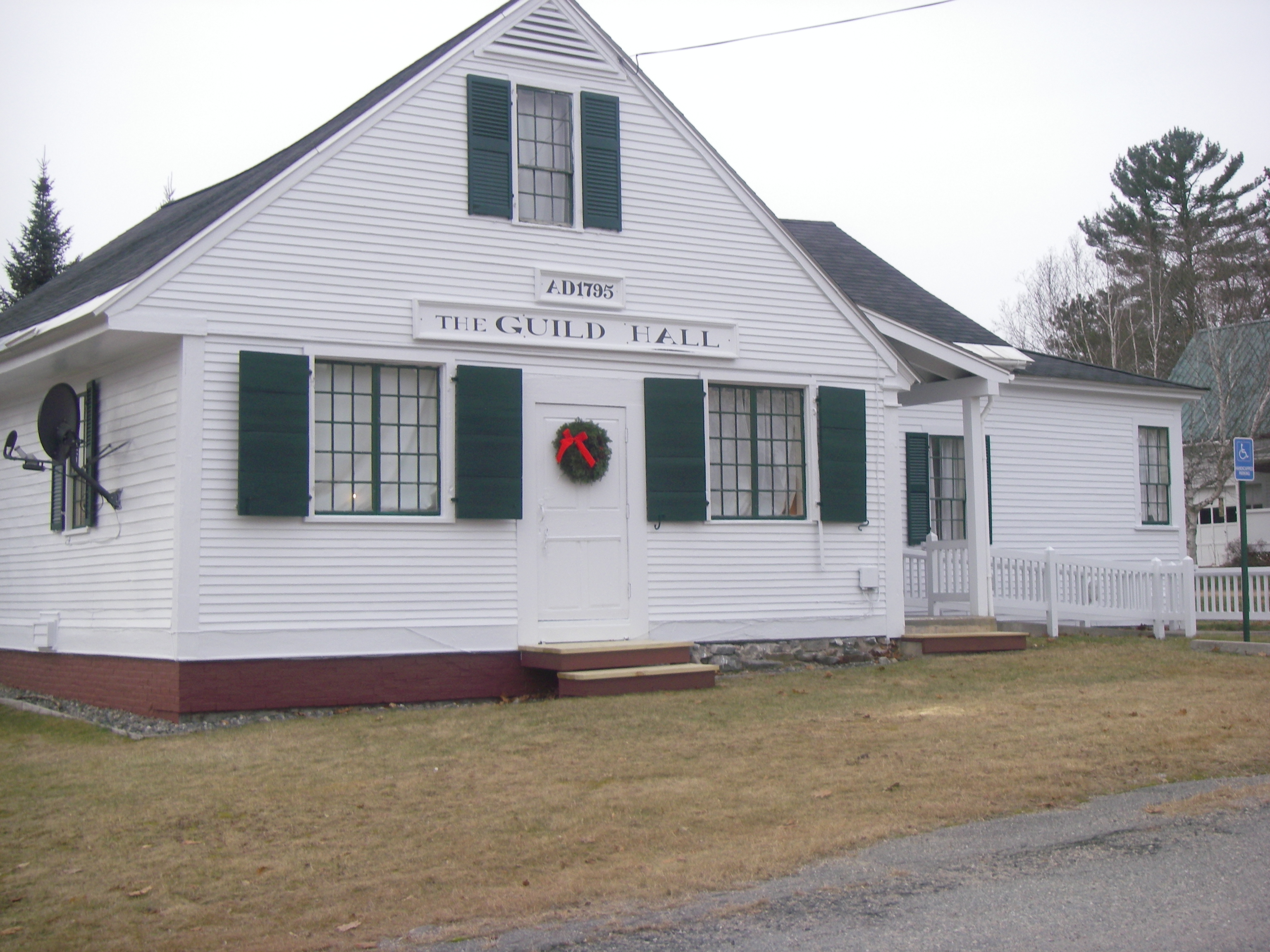
The Guild Hall, where our Town and School District meetings take place.
In Guildhall, just as in towns all over Vermont, the warning for Annual Town and School District Meeting is now–pursuant to Vermont law–published. Many of the Articles on Vermont town and school district warnings are the standard ones that appear year after year, and they are frankly hard for anyone to get excited about. (For example: shall the voters authorize the Town to collect its municipal taxes up until the tax due date of October 15th? Who can argue with that?)
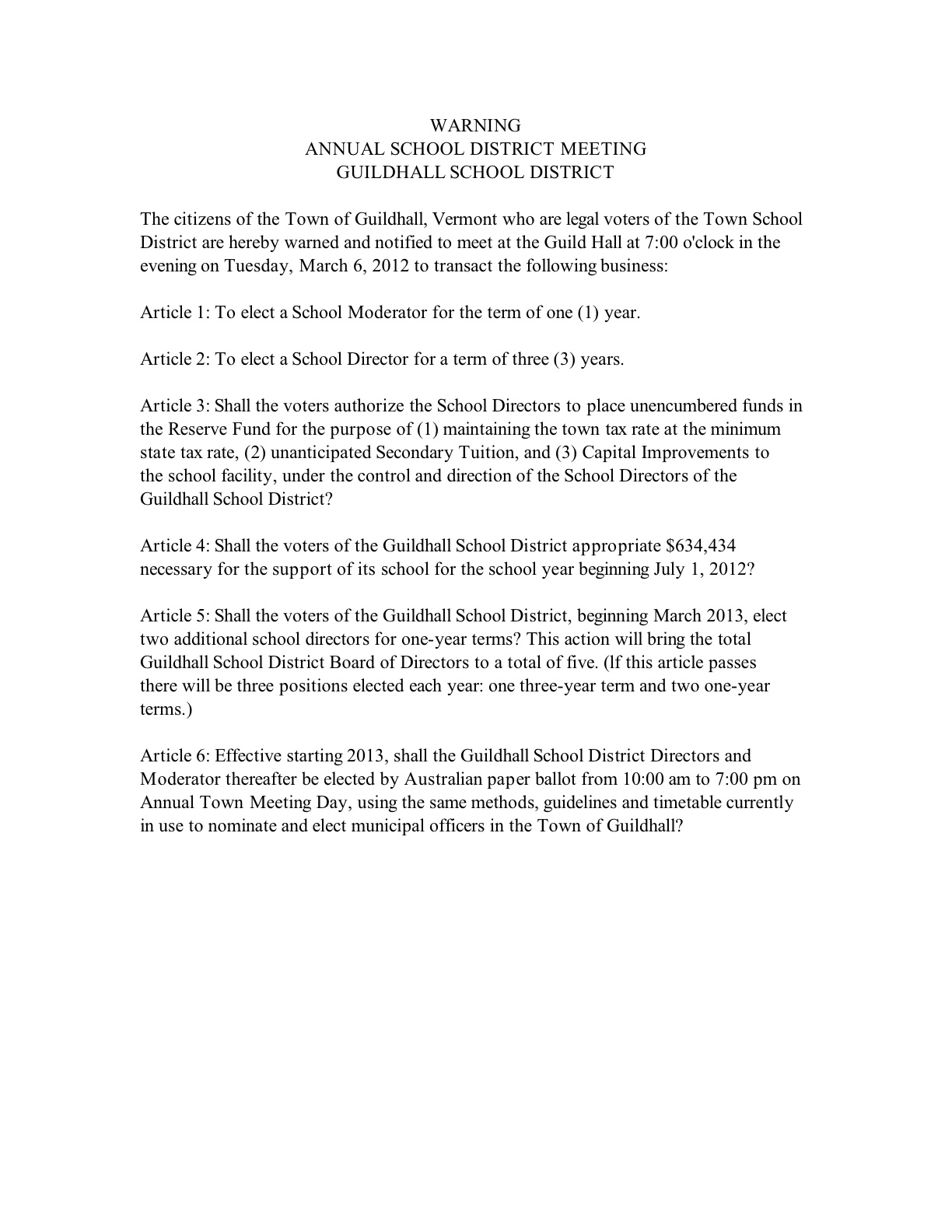
Text of School District Warning 2012
But quite often, there is at least one or more Articles that represents a substantive question worthy of debate or an actual controversy. Increasingly in most Vermont towns, warned articles appear as ballot questions only, so there is no live debate. But here in Guildhall, we still have a live evening Town meeting, in which all the Articles on the warning, including the Town and School budgets, are discussed and immediately voted upon. The majority of Articles pass without so much as a comment or even a pause. But others generate strong, and sometimes passionate debate.
Here are four examples of specific Articles that appear on our warning this year, ones that I anticipate will provoke at least some serious discussion and perhaps disagreement. I’ve provided my own assessment and opinion of the merits or demerits of each article, just for the sake of blog debate!
School District Article #5: Should the Guildhall School Board expand from 3 members to 5? Or, phrased another way: does size matter?
This article, proposed by School Board clerk Helen Martin, asks if the voters want to see an expanded school board membership.
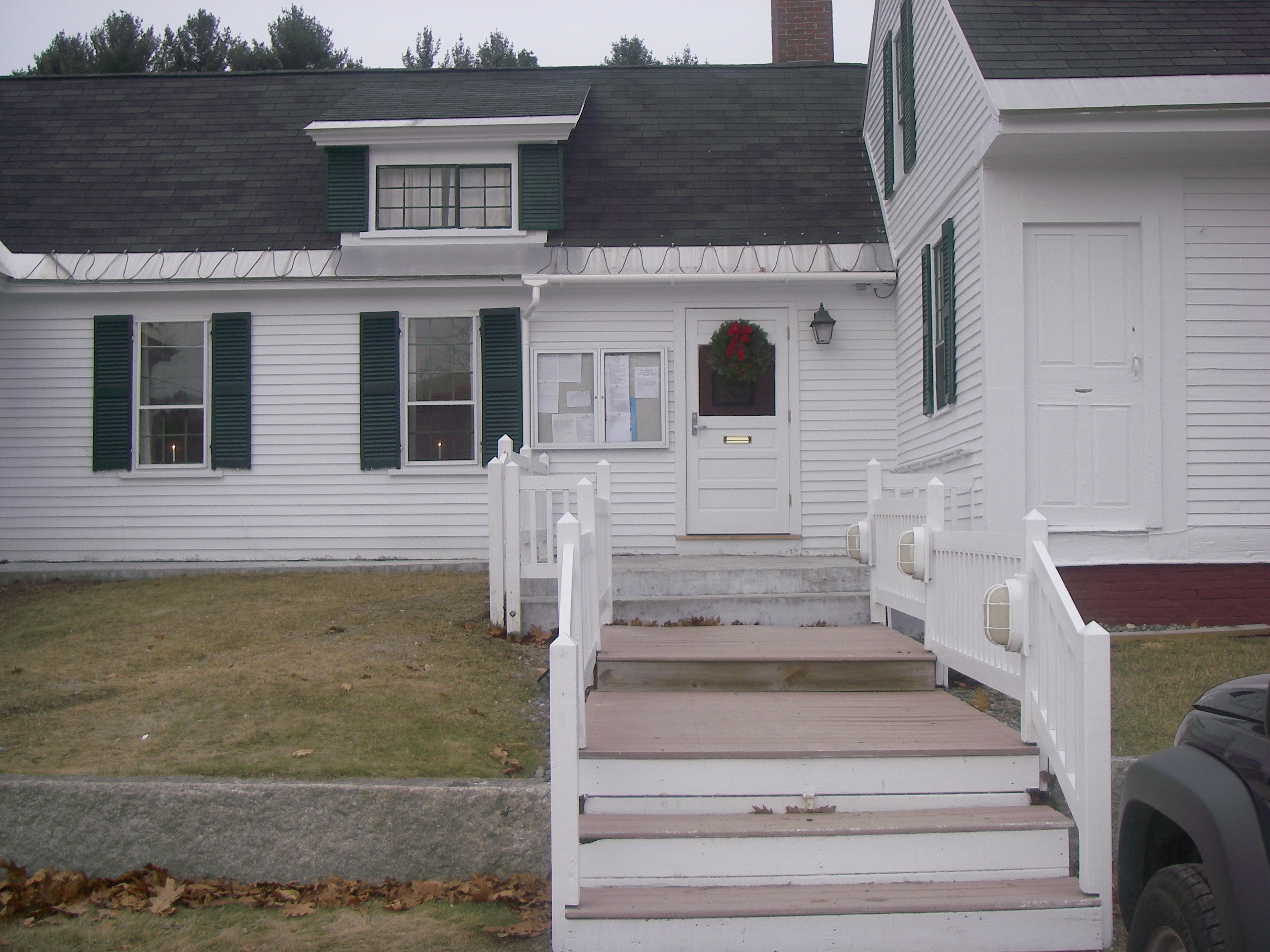
Entrance to Guild Hall, for Town Meeting 2012
In considering whether to expand the School Board, it’s key to bear in mind the following facts: We have one K-6 school here in Guildhall. It consists of two rooms and a total of 21 kids. Yes, 21 kids. There are two full time teachers, two full time para-educators, one full time cook, a part-time janitor, and separate part time teachers for music, art, and phys ed.
Given the size and scope of our excellent school, why is it necessary to add two administrators to this mix? (Bear in mind that each School Board member gets paid $500 per year. That’s a pittance and less than they deserve for the work involved, but should we really add more staff to the budget for a single two room school with 21 kids?)
Lynn Berry, a Guildhall citizen, made an excellent point in her recent letter to the Caledonian Record. The issue with our School Board is not, she commented, the number of Board members, but rather how the ones we already have conduct themselves in office. In short, School Board members can behave lawfully or unlawfully, no matter how many of them exist. Let’s focus on electing School Board members we can trust to carry out the business of our school district fairly and honestly, before we think about adding more. I say VOTE NO on School District Article 5.
School District Article #6: Should the voters elect School Board members by Australian ballot, rather than the current “from the floor” system? This article appears on the warning via citizens’ petition. Decades ago, on the Town side, we went from electing officers “from the floor,” to electing them by secret paper “Australian” ballot. Under that system, more voters can participate, since the hours for voting are 10am-7pm, and more important, candidates must declare their intention, in writing, 5-6 weeks before Town Meeting, via nominating petitions. That way, voters can know well in advance who is running, have enough time to reflect and consider, and have the opportunity to ask the candidates questions. However, for some reason, our School Board has remained a “from the floor” system to this day.
It makes for confusion and general chaos during the School District portion of the meeting. Most people in attendance at the evening meeting have no idea who is running for the office until the moment someone nominates them. Depending on whether or not the vote is conducted by hand count or paper ballot in the hall, there’s usually about 15 minutes at the most to think about it before casting your vote. Not exactly enough time to mull your decision over carefully!
If we want to make thoughtful, informed choices as to who will oversee our kids’ education, we should take the election process as seriously as we do for Selectboard members on the Town side, and go to an Australian ballot system. In my opinion, vote YES for School District Article #6.
Town, Article #16: Should the Town Road Commissioner be appointed by the Selectboard, rather than elected by the voters, as it currently is?
For me, this one’s a closer call. There are some compelling arguments in favor of appointment as well as election. The first thing to bear in mind is that under Vermont law as I understand it, most elected town officers are autonomous and accountable directly and exclusively to the voters. The Selectboard has virtually no power to tell the Town Clerk, the Treasurer, the Auditors, the Listers, or the Delinquent Tax Collector how to do his or her job. However, not so with the Road Commissioner. My understanding is that the Selectboard is directly responsible for the maintenance of Town roads, and that they have the express responsibility of supervising and directing the activities of the Road Commissioner, whether she is elected or appointed.
One advantage of an appointed Road Commissioner is that it provides wider options for qualified candidates. The Selectboard can, I understand, consider anyone, even from out of town, to be the Road Commissioner. On the other hand, when the RC is elected, the Town is generally limited to electing Guildhall residents who are registered voters and who have chosen to run and place their names on the ballot. I’m all for local control, but the reality is that road maintenance is arguably the most important function of municipal government and I’m not entirely sure that role should be restricted to such a small field of candidates.
Appointing the RC could expand the field of qualified applicants considerably and therefore go a long way toward making our road maintenance more professional and better-equipped.
The appointment route strengthens the hand of the Selectboard in selecting and supervising the Road Commissioner. Since the Selectboard has that responsibility anyway, it might very well make sense to formalize it. However, it means vigilance and careful thought on the part of the voters. If we go to an appointed RC, it means that when citizens cast votes for Selectboard members, they are also, in essence, electing them for their ability to choose a competent and qualified Road Commissioner. Under an appointment system, if you don’t think a particular SB member is capable of choosing a competent Road Commissioner, you should vote for another SB candidate who you think can and will.
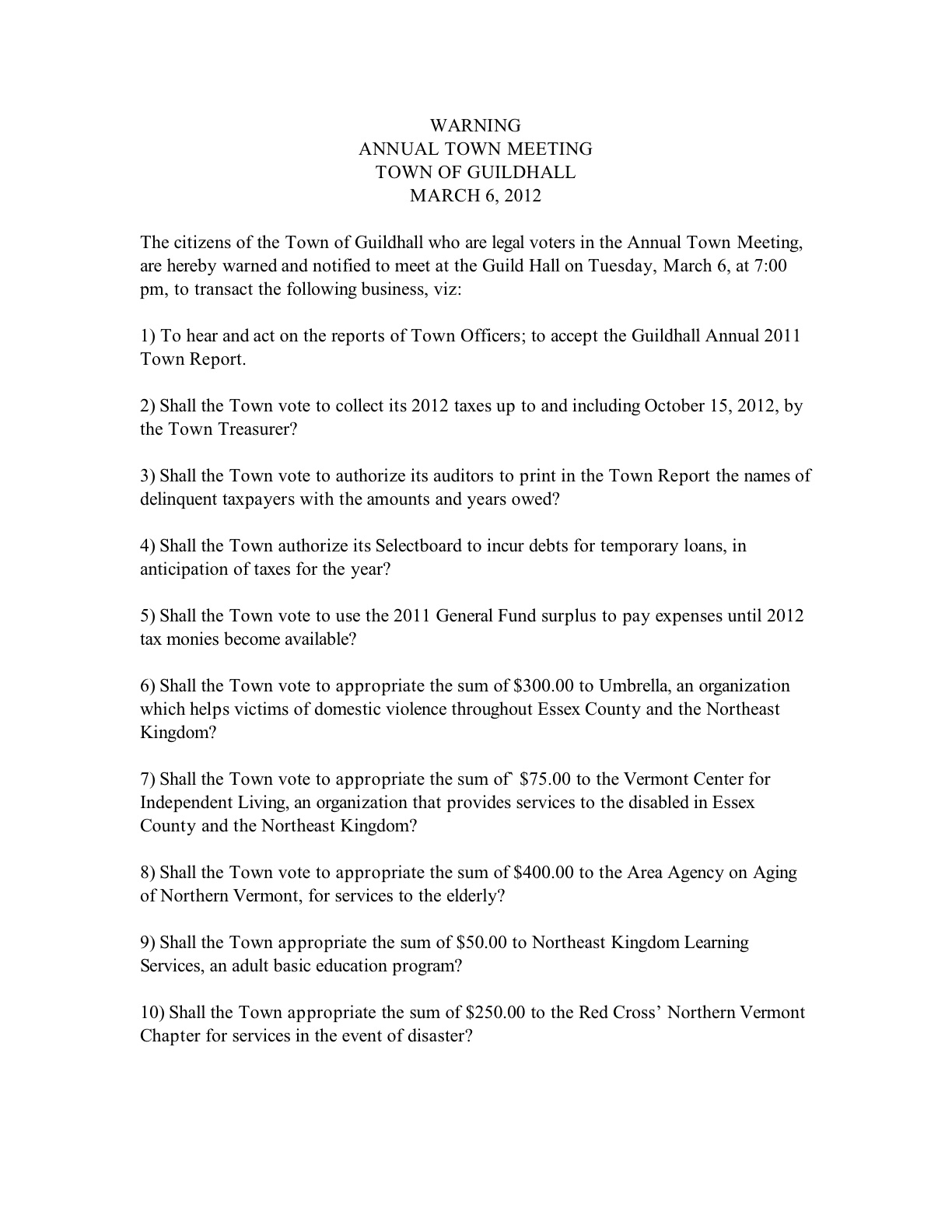
page two, text of Town Warning, 2012
Of course, the flip side of the equation is this: If the voters aren’t ultimately happy with the performance of the Road Commissioner that the Selectboard appointed, the voters have no recourse except to elect new Selectboard members who will make a different choice. (But of course, that’s in large part what representative democracy is all about anyway). So there may be an advantage to keeping the Road Commissioner directly elected by voters. Still, it’s worth remembering that under a direct election system, your options are limited to whomever lives in town, is registered to vote, and is willing to declare themselves as a candidate. In short, there are trade-offs either way.
As I said, it’s a close call. Right now, I lean toward appointment of the Road Commissioner–voting YES on Town Article#16— as the better alternative, because it will strengthen the Selectboard’s hand and provide better options and more flexibility in bringing professionalism to the maintenance of our roads.
Town, Article #12: This Article asks the voters to authorize a sum of money to subsidize Guildhall residents’ access to the pool at the recreational center in neighboring Lancaster, NH.
Ah, the matter of government subsidies! Admittedly, the sum of money involved in Article #12 is miniscule–a paltry $300. But believe it or not, there is a principle involved here. I’m a Democrat and a liberal, and therefore I support government safety net programs in most forms. (Most, but not all–for a recent example of a local entitlement that I believe goes too far and is fundamentally unfair, see some of my blog posts from August-October 2011 about a school tuition entitlement that caused a groundswell of outrage here in our town.)
I support the federal subsidies and government price supports for my dairy farm neighbors in Essex County. I support the federal commodity subsidies that the local potato farm receives year after year. I’m likewise a big supporter of the generous tax breaks given to agricultural land via Vermont’s current use program.
I support the state and federal aid that flows to our little elementary school year after year. (According to this year’s Town and School District report, federal and state grants make up a whopping 32% of the Guildhall School District’s revenue). I’m grateful and supportive of the over $50,000 in disaster relief that FEMA gave to Guildhall last year so we could repair our roads and stay within our budget after the devastating May 2011 floods.
I also support Social Security, Medicare, Medicaid, food stamps, AFDC, heating oil assistance, unemployment benefits, and the federal Women, Infants & Children (WIC) program.
Similarly, I support local appropriations for public libraries, law enforcement, fire and ambulance services, road maintenance, and even the local Meals on Wheels program for the elderly. All of these programs listed above–all of them–are necessary components of our social compact. Frankly, here in Essex County, a rural, poor and underserved county, if all such programs were to end, it would be a disaster to rival a 19th century Dickens’ novel. We’re all in this together, and government spending is one way we take care of each other.
But I confess I draw the line when people seek personal entitlements that aren’t for the good of the many, but only for the few and for personal preferences rather than needs. Article #12 represents a subsidy for personal recreational interests. Is it fair? What about the children or adults who would like to swim somewhere other than the facility in Lancaster? Should that be subsidized as well? What about the kids who would rather take karate lessons? Should we subsidize that, too? What about the Tai Chi lessons that I’m thinking of signing up for next month? Should I ask my fellow taxpayers to foot the bill for that? I think most of my neighbors would say no, and frankly, I would never dream of asking. That’s why I will—again–vote NO on Town Article #12.
“This Land is your Land.” Like many, I grew up hearing the tune as a bedtime lullabye. To me, it was a comforting, albeit kind of corny song about how nice it was to be an American. But as an adult, I learned it was the most patriotic song of all. It’s a simple, moving tune that has inspired people since the 1930s with the basic idea that this land belongs to us, that we are a democracy, that in America, we don’t allow people to hijack government for private advantage or financial gain.
The legendary Woody Guthrie song isn’t just about national politics. It also applies right here at home, in our towns. This land is our land; this town is our town. When our local government is threatened by those who may have misused their power or failed to live up to their responsibilities, we citizens have a responsibility to take it back.
In Vermont, we’re now approaching the season for Annual Town and School District Meetings. All over the state, citizens prepare to elect local officials and debate local issues.
With Town Meeting on the horizon, here in Guildhall we face some serious problems. We urgently need to reclaim our Selectboard and School Board and make them accountable once again to citizens and voters.
Last year was especially troublesome on the School Board side. The Board and two of its individual members are now charged with breach of fiduciary duty and violating a Vermont conflict of interest statute. They may also have violated the Open Meeting Law. Citizens also took the serious step last fall of voting to revoke a controversial gifted and talented article which many felt may have been used to improperly benefit a Board member.
Our Selectboard, for its part, has degenerated into near-chaos this past year. Many questions have arisen as to possible conflict of interest in the awarding of contracts and independent contractor work, compliance with the open meeting law, the filling of officer vacancies, and the ability of the Chair to conduct himself professionally at meetings. At a recent meeting, one well-spoken citizen said: “the way this meeting is run makes me afraid to say anything or voice any concerns at all.” When a citizen says that, you know something has gone badly awry, and it’s time for a change.
(Here’s a link to another, equally moving version of This Land is Your Land, Bruce Springsteen, 1985)
But we need not be discouraged. During the coming weeks, we citizens have the opportunity and indeed, the duty to rectify all this. We are Americans here in Guildhall. We will never accept the idea that one child or one family gets special or better treatment than other families simply because that child’s parent sits on the School Board. We are Americans, and we will never accept that any of our Selectboard members might give special favors or benefits based on friend or family connections.
We are Americans and we believe in fairness.
Let’s elect competent Selectboard and School Board members who will play by the rules and act in the best interests of the Town. Let’s elect those who will conduct themselves openly and transparently, make good faith efforts to become familiar with the basics of municipal government, behave professionally at meetings, and listen respectfully to constituents.
(Below is a link to another great version of This Land is Our Land, this time by Pete Seeger and an older Bruce Springsteen, at the 2009 inauguration of Barack Obama. You don’t have to be a Democrat, indeed you don’t have to be of any political persuasion to be moved by this amazing expression of patriotism. I especially like seeing the great statue of Abraham Lincoln in the background.)
This spring, we can take back our School Board and our Selectboard. This land is our land. This town is our town. Guildhall, Vermont, 2012.
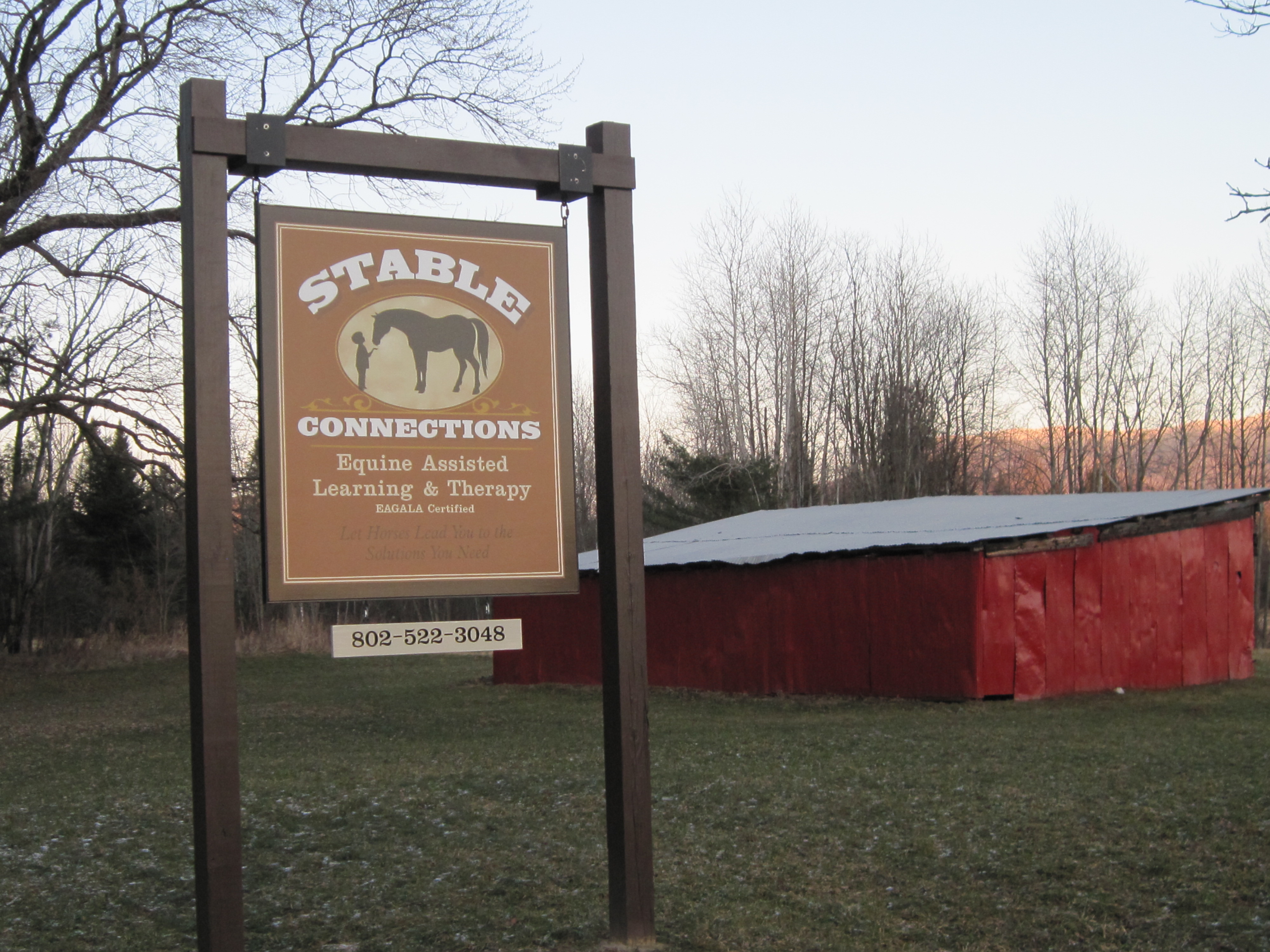
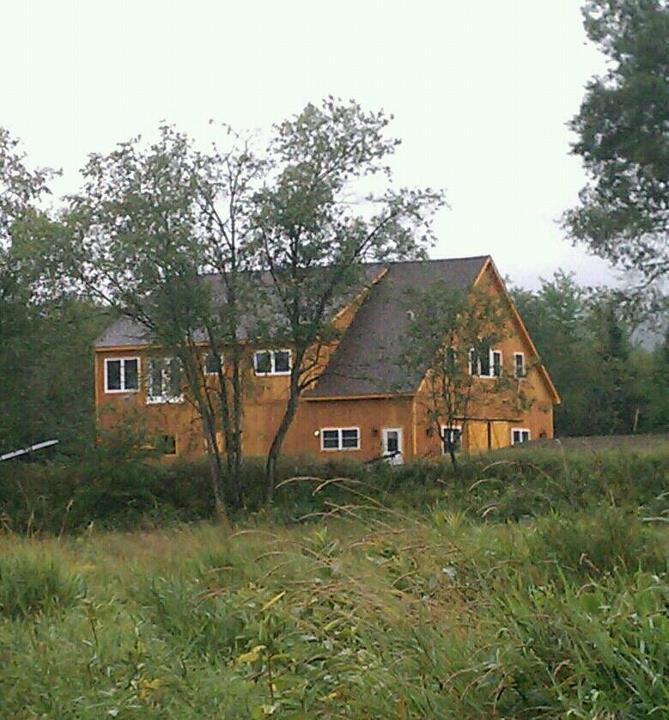
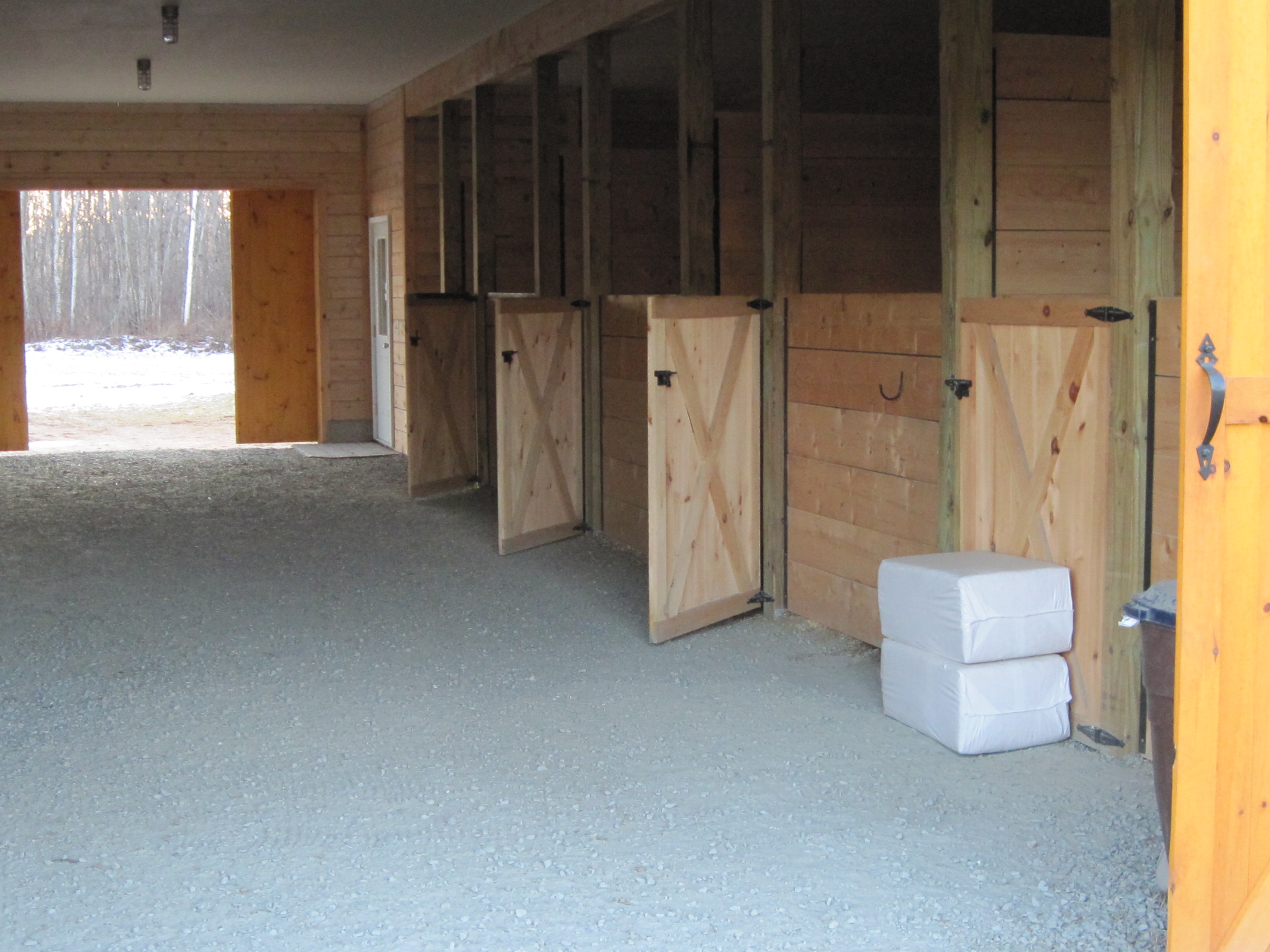
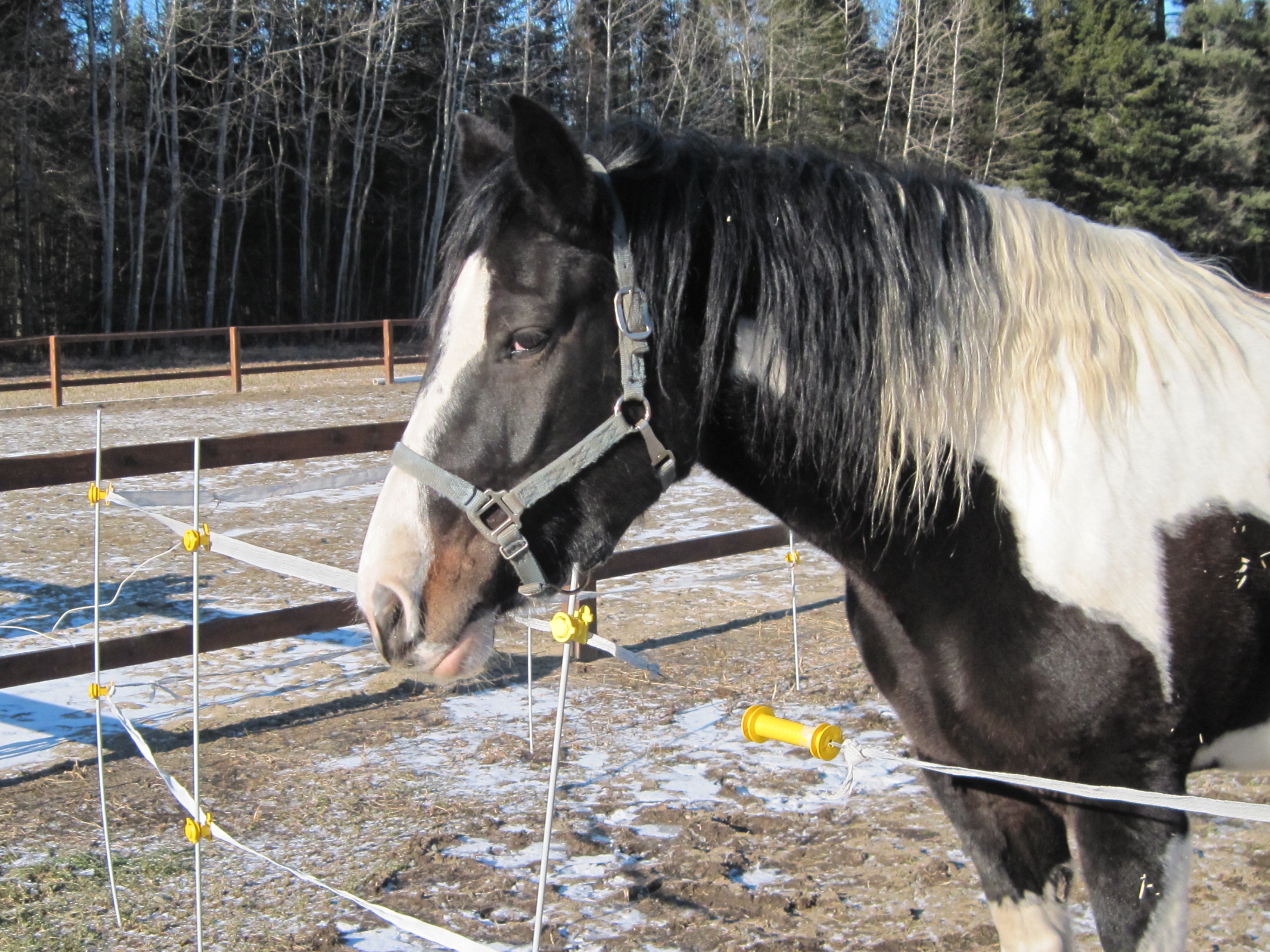
It’s big news when any business endeavor comes to this rural part of Vermont. After all, most residents are hungry for economic development, jobs and the increased revenue that can accompany a viable business. In this economically depressed area, one recent and promising development is Stable Connections. It’s a fledgling equine therapy program now located just south of the Klinefelter property on Route 102. Founder and manager Karen Guile is building this intriguing business slowly, steadily and modestly. She already has numerous concrete accomplishments under her belt. Stable Connections has land, approved zoning permits on file at the Town Office, a newly constructed barn-office, four beautiful horses, clients, private grant money from the Tillotson Foundation for program expenses, working solar panels, and much more in the pipeline. Her business is in the baby stages, but it’s for real.
Stable Connections. It’s a catchy, clever play on words and ideas, invoking the role that horses can play in fostering self-confidence, stability and balance in human lives. Stable Connections is the only EAGALA-certified equine therapy program in Vermont and New Hampshire, a groundbreaking endeavor in itself.
I confess when I first learned of the plans for an equine therapy program, I was somewhat skeptical, wondering how such a business/program could be viable in these rural parts. Worthy as the program is, surely a better place for it might be the outskirts of Brattleboro, Montpelier or Burlington?
But although Stable Connections is still new and has yet to prove its full economic chops, I’m now cautiously optimistic that it will prosper and benefit our region.
The barn-office at Stable Connections, Guildhall, Vermont
Last summer, Stable Connections hosted its Grand Opening, garnered some decent publicity and is slowly but steadily building a client base and revenue stream. Clients range from private autistic youth to social workers and guidance counselors, and groups of at-risk youth. Guile has longer term plans for couples counseling, corporate and non-profit team-building retreats, and training for other human service professionals. She’s also in the process of negotiating a contract with the court diversion program for Caledonia, Essex and Orleans counties, whereby first-time non-violent and youthful offenders can fulfill their counseling and community service requirements at Stable Connections.
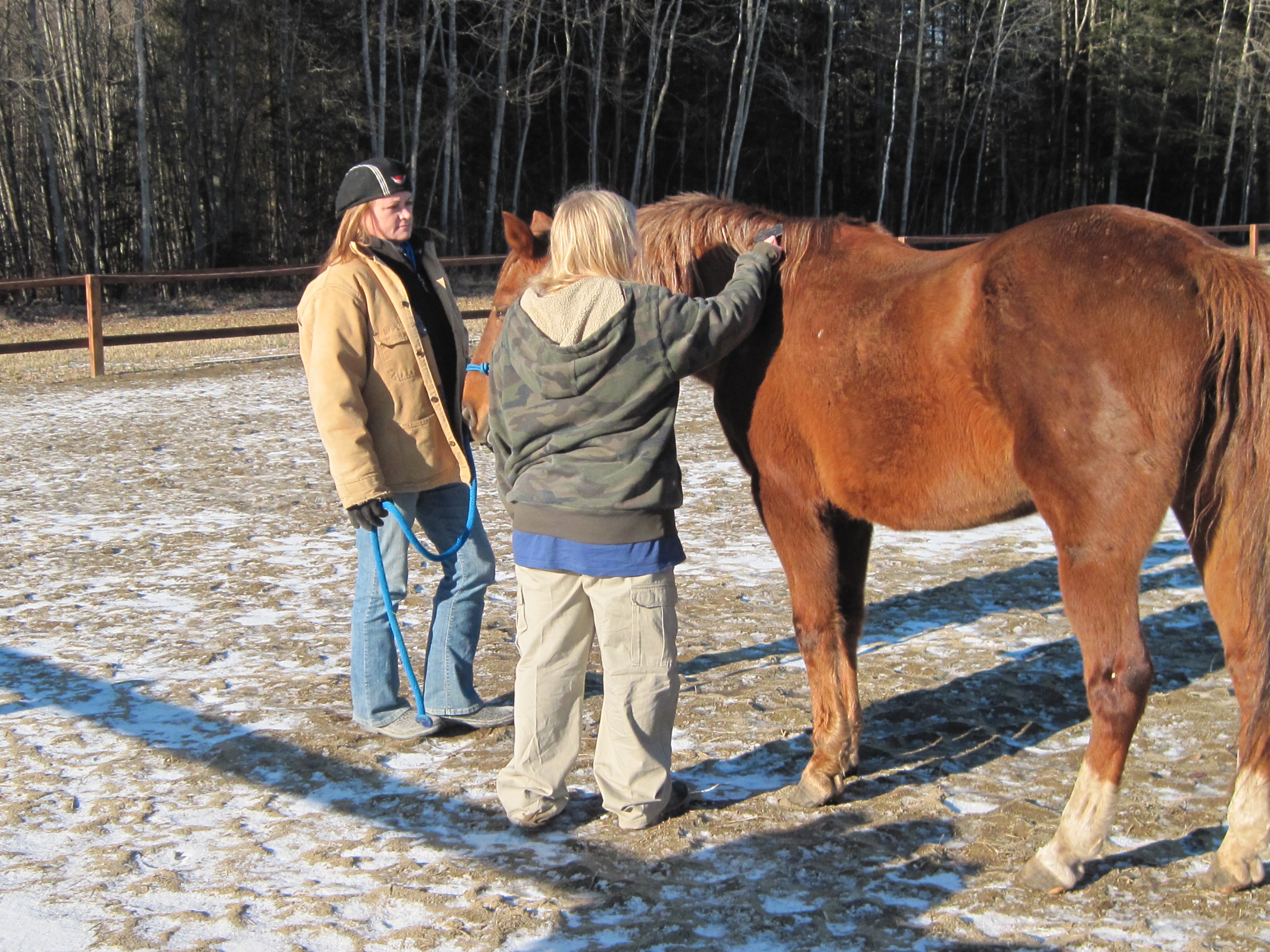
Karen Guile, on left, observes as Sabrina brushes one of the horses
It’s an exciting and innovative program, a great example of using some of the resources of the working landscape to diversify the local economy and give back. When asked how she thinks Stable Connections will contribute or enrich the community, Guile is honest and realistic. Although it will be a while before her business will generate jobs, Guile believes that Stable Connections has the potential to generate significant ancillary revenue. For example, she foresees hosting increasingly large groups at the facility, which can in turn lead to increased revenue for local restaurants, hotels and even limousine services.
Stable Connections has its origins in a dream held and patiently nurtured over time by Karen (Peaslee) Guile. Karen is the oldest daughter of Bert Peaslee, the now-legendary town official and proprietor of Peaslee’s Vermont Potatoes. Although Mr. Peaslee died of pancreatic cancer in 1999, he is still well-known and fondly remembered in much of Essex County and neighboring New Hampshire. Karen, one of four surviving Peaslee children, was reportedly the kid who loved horses. From the age of 5 or 6, she recalls, she adored horses and truth be told, was a little obsessed with them. As she grew into adulthood, she saw in them the potential for companionship and healing. Early on, as she describes it, she knew her fate and future were linked to these animals she loved best.
It took Karen a while to be ready to launch her dream. Education, work, marriage and her son all demanded her time and attention. But by 2009, she began marshalling her resources. She has an associate’s degree in physical therapy, studied special education and psychology at Lyndon State College, and has worked in hospitals, volunteered as an EMT-B and owned/ managed various businesses. With this background, she began and successfully completed the training to become a certified equine therapy instructor. For more information about EAGALA-certified programs and instructors, visit this website.
Both sentimental and practical reasons brought Karen back to Guildhall to launch her project. Her mom (Representative Janice Peaslee), her sister Barbara, and the family farm where she’d grown up, were all here. And in very practical terms, she had a small piece of land waiting for her in Guildhall, well-suited to her plan. Her dad Bert Peaslee had long intended each of his four surviving children to have a share of the Peaslee land holdings. “He wanted all of us to have a portion of the land as our legacy and heritage,” says Karen. Bert’s widow Janice Peaslee and Sharon Peaslee DeCicco, (one of Karen’s younger sisters) confirm that the 140 acre parcel known as the old Deering Meadow, had long been intended for Karen, just as other parcels scattered across Guildhall and Maidstone were intended for other siblings.
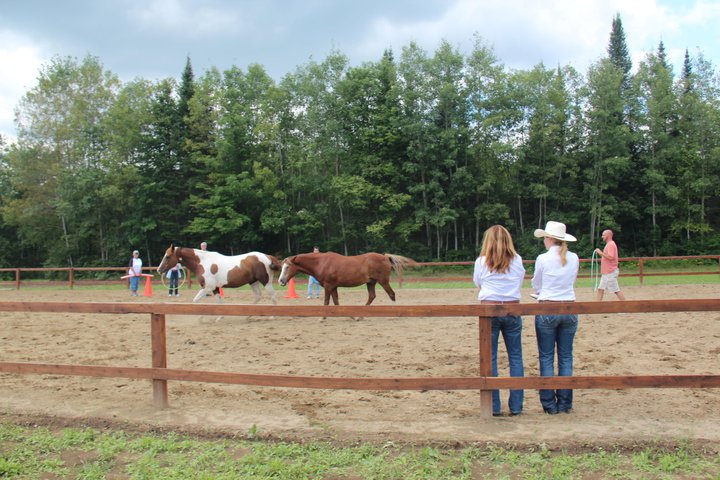
Karen Guile and social worker Amber Bennett, at Stable Connections' Grand Opening, last summer
The parcel of land on which Stable Connections now sits continues to function as a working part of Peaslee farm operations, except that a 4-5 acre portion of it has been taken out of current use and is devoted to Stable Connections’ barn and horse training area. This enables the lion’s share of the parcel to continue being farmed and managed the way it has for generations.
Karen wouldn’t have it any other way. During numerous interviews, she made it clear that her first priority is the health and economic viability of the farm—hence her decision to carefully limit the scope of Stable Connections’ development on this parcel.
Her first order of business was to construct a barn-stable. After generating a business plan, demonstrating evidence of her own capital investment in the project, and undergoing a grueling application process, she secured financing for barn construction from the Vermont Agricultural Credit Corporation and North Country Investment Corporation, non-profit lending agencies.
One particularly notable dimension of Stable Connections is its business model. Karen has chosen to proceed modestly. Her dreams may be grand, but there’s nothing grandiose or naïve about the execution. In short, she hasn’t bit off more than she can chew. Thanks to her loan financing, the horse stables are complete, as is the indoor plumbing and a small office on the ground floor. The upstairs, intended as more habitable living and program quarters, remains partially unfinished, until Karen can generate more clients and more capital. She works three days a week in a separate job to bring in a steady income. She’s taking it slowly and operating within her means. Her goal is to keep a tight lid on expenses and debt while she grows—slowly.
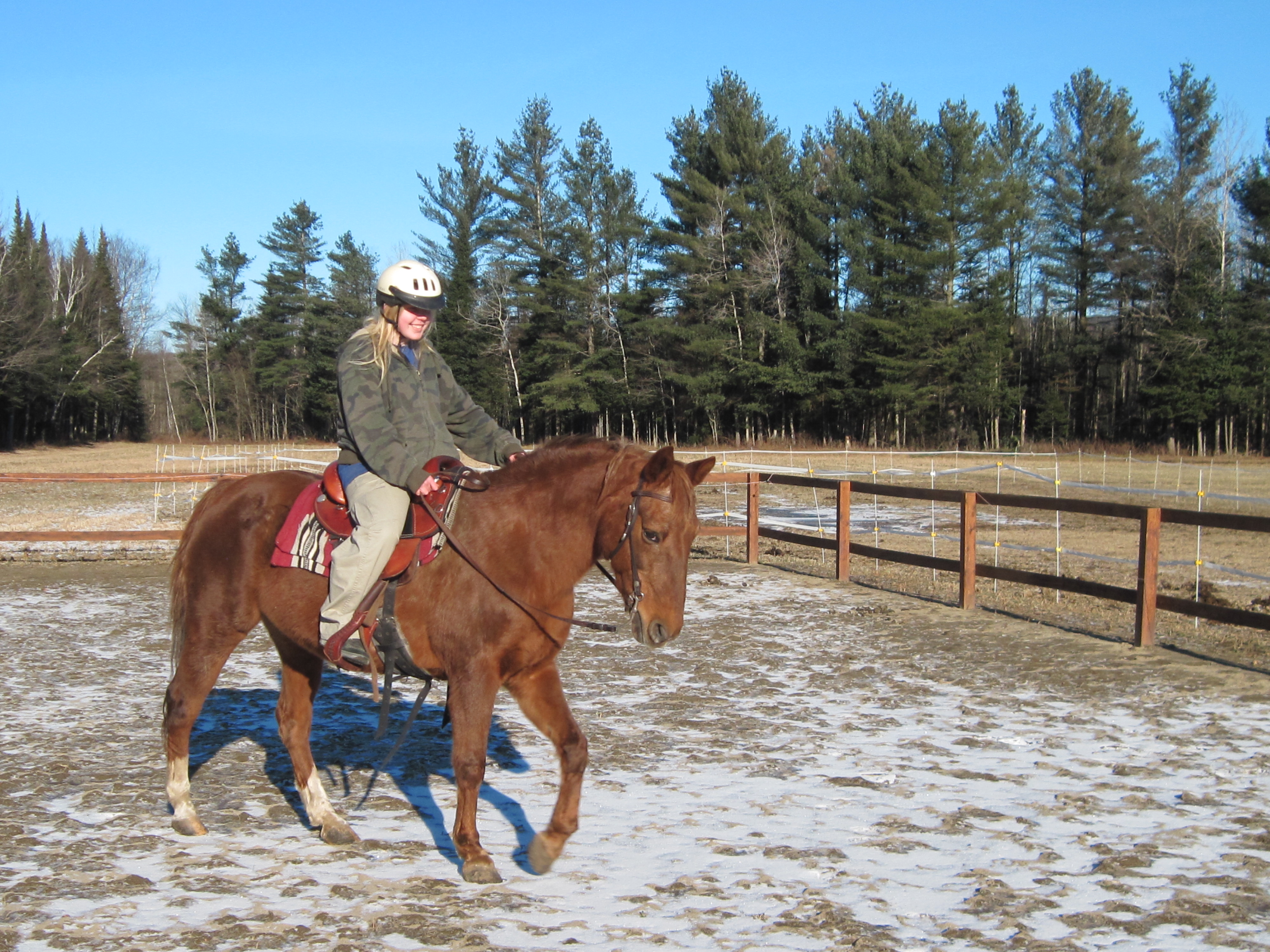
Sabrina, a Stable Connections client, during her session
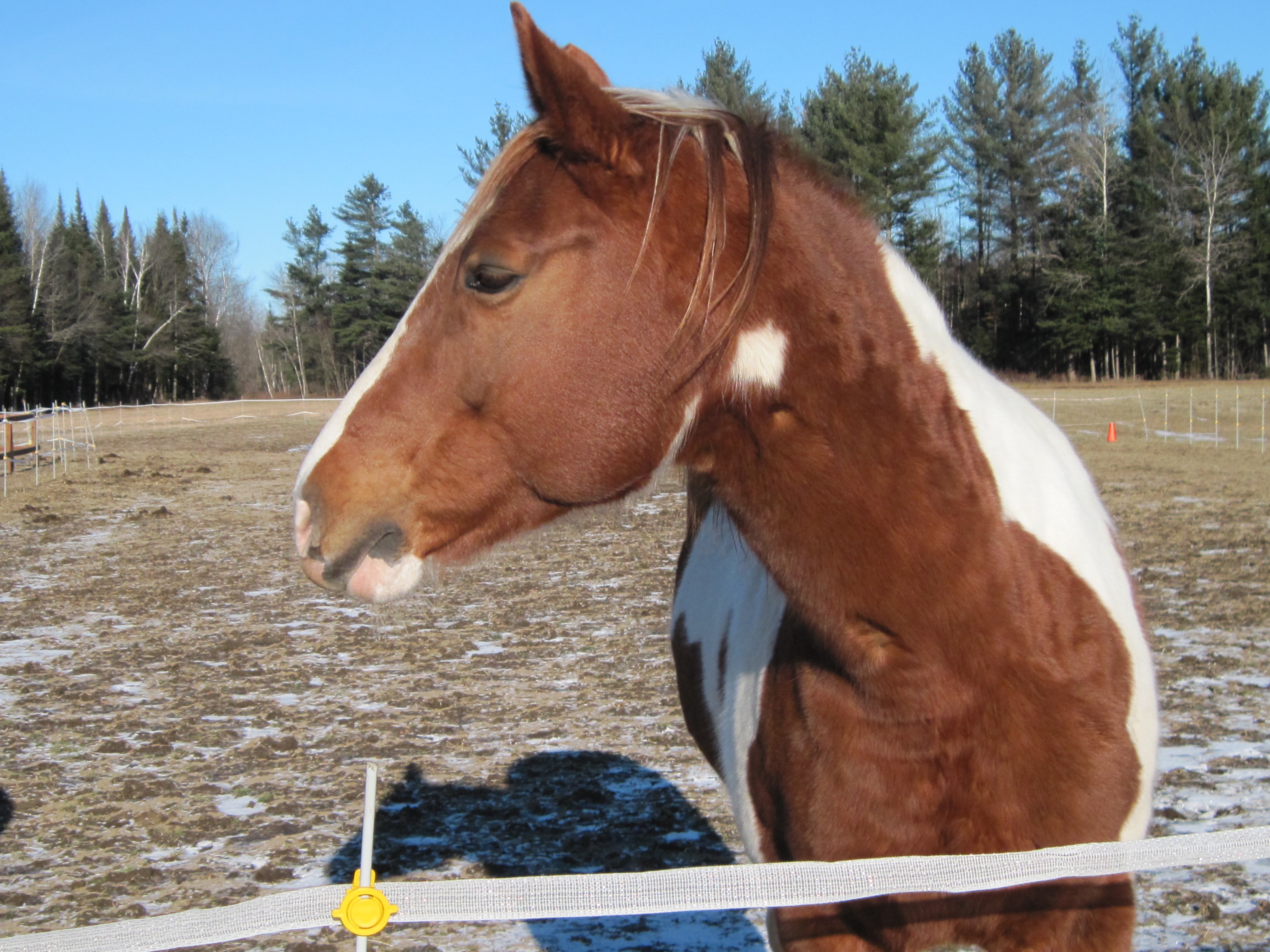
On a cold but sunny and bright day in December, I conducted one of several visits to Stable Connections, this time with a list of hard questions and my camera. That day, while Karen and I talked about the origins and evolution of the program, 15 year old client Sabrina was out brushing, feeding and watering the program’s four beautiful horses, Lovey, Daisy, Dream and Thunder. When finished taking the last of the horses out to the therapy area, Sabrina came in to talk. Sabrina is autistic, and Karen had warned me that she could quickly become shy and extremely withdrawn if she felt uncomfortable. Yet on this occasion, Sabrina was attentive, personable and responsive. She’s clearly a bright kid who takes considerable pride in the fact that Karen entrusts her with the care of the horses. She talked at length about her long history with and affection for animals, how she feels she’s changed since starting the program at Stable Connections, and many other topics. For a teenager who came to the program not wanting to converse, and with her hair hanging in her eyes—as Karen reports– this young woman is a remarkable testament to equine therapy and the patient, persistent model that Karen Guile employs. (Equine-assisted psychotherapy’s team approach has led Guile to collaborate with Amber Bennett, a clinical social worker at Northeast Kingdom Human Services. The association with Bennett functions to properly assess and develop therapeutic strategies for kids like Sabrina)
Later, out in the therapy area, I observed, snapped photos and asked questions as Karen worked with Sabrina and the horses. “Contrary to popular belief, equine-assisted psychotherapy and learning isn’t about riding,” Karen pointed out. Rather, it’s about using the horses as part of the treatment team; it engages the client in finding solutions to their problems by using carefully selected ground activities. It also helps develop social skills and self-confidence through interaction with the horses. All sessions are individually tailored—by Guile and Bennett—to the needs and goals of each client. (It can also be about emotional problem-solving. Karen tells a frankly moving story about how a horse, on one particularly difficult day, had helped her get through the sadness and turmoil of her father’s death.)
The horses' quarters, at Stable Connections
The day I was there, Sabrina was, in addition to caring for the horses, getting a therapeutic riding lesson. When she got up on the horse, it was obviously less about managing the horse, than managing herself. For example, Karen repeatedly called out instructions to Sabrina, not the typical ones you might hear from a riding instructor, but rather simple tasks like “hold out your arms to the side.” “Look up at the sky.” “Put your palms forward.” “Eyes forward, always look ahead” The instructions given were clearly designed to help Sabrina find a sense of balance and confidence.
Karen and Sabrina both, while we led the horses back into the barn, recounted how when Sabrina first started at Stable Connections, she frequently said “it’s hard,” or “it’s too hard.”
In response, Karen has persisted in telling Sabrina, time and after time, that it’s okay to admit something is hard. But the next sentence, Karen insists, has to be: “but I can do it.” That could be the motto of Karen Guile and Stable Connections, as she returns to Guildhall and builds a dream. It’s hard, but you can do it.
Stable Connections’ website is currently under construction, but interested persons can visit its Facebook page here. To contact Karen Guile about Stable Connections’ services and prices, call 802-522-3048 or send an email to karen@stableconnections.com
January: Edward and I started the New Year in Oklahoma City,of all places! My mother has a house there now with her partner David, and I hadn’t yet seen her new digs. My brother and his girlfriend Gina flew in from Eugene, Oregon. In short, we converged from all over the country, had great food, drink, conversation and music, and explored OK City and the environs.
Outside the museum. A moving spot indeed.
Most notably, we visited the site of the bombing of the Alfred P. Murrah federal building in 1995, a place I’ve wanted to go for a long time. (I highly recommend this living museum. Not an easy museum to make one’s way through, but I’m very glad I did. Here’s the link to the museum.
January and February were bittersweet months. In January, the law firm where I’d spent most of my law clerkship underwent a major change. My two mentors, Dave Sleigh and Dave Williams parted company. For over three years, I’d had the good fortune to work at this remarkable firm and get unprecedented exposure to the hard realities of law practice. In retrospect, their breakup appears to have been for the best, and I have maintained a great relationship with both of them, but those initial weeks were a sad time: this extraordinary and near-legendary Vermont law partnership had come to an end. I was lucky to have been a part of it, but now it was over and we all somehow had to move on. I’d been planning to stop working by April 1 to start bar exam study; with the change, I adjusted my study plans and decided to plunge in a bit earlier. I was sad about something wonderful coming to an end, but looked forward to a new chapter in my life and career.
February: I began bar exam study. From February through mid-April, I studied approximately 3-5 hours a day. The rest of the time, I worked on various law research and writing projects for Dave Williams, to complete the last leg of my clerkship requirements. In February, I took an online MBE immersion course, and I designed a program of study leading up to May, when the study would then become truly high-powered and ultra-structured.
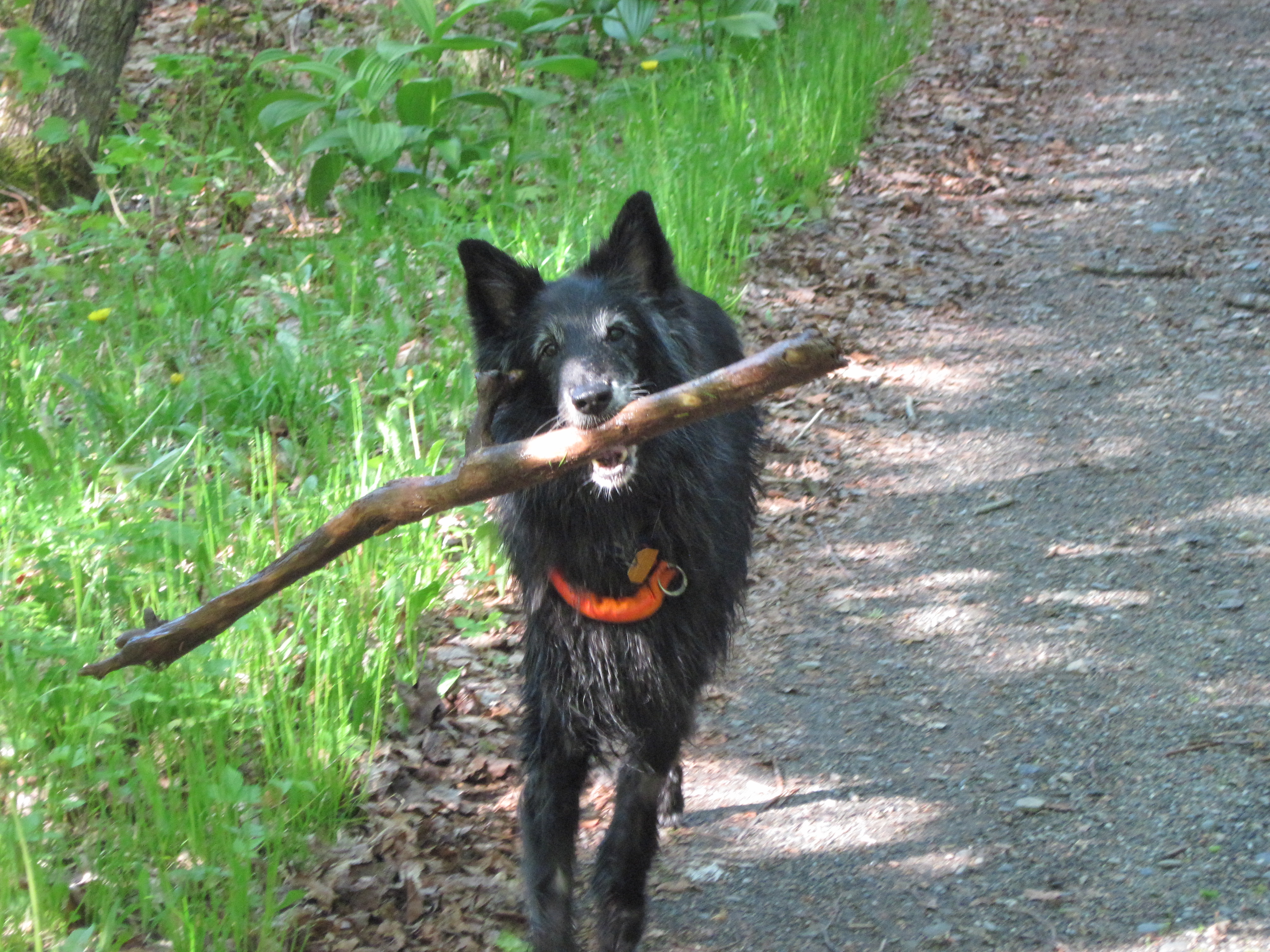
March: Our beautiful Belgian sheepdog Simone de Beauvoir passed away on March 28. She was just a few months shy of her 14th birthday. This was a devastating loss to us, but I confess it was also something of a relief. During the last month or so, her health was severely compromised; when her time finally came, I felt glad that her suffering was over. She was a unique dog, so elegant and refined. And she was the first dog I’d ever had as an adult. Happy hunting grounds, darling Simone!
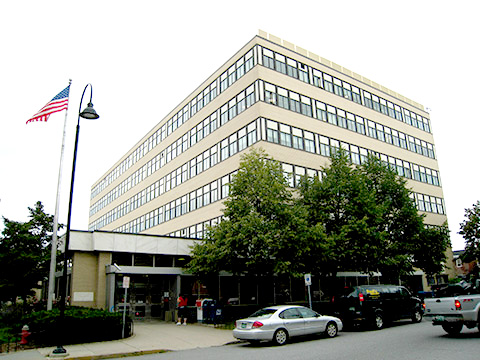
Federal Building, Burlington. The location of U..S. District Court, where I more or less lived for two solid weeks during the trial
April: I spent the first two weeks of April as defense counsel trial assistant for Dave Williams on a federal conspiracy trial in Burlington. It was amazing! I learned an astonishing amount and had the opportunity to do many new things (such as draft defense counsel jury instructions!) (Many thanks to Tim and Leslie Nulty for letting me stay at their beautiful home in Jericho during much of the trial). Once it was over, I elbowed almost everything else out of my life so I could study for the bar exam.
May: On May 15, I turned in my final law office clerkship report to the Vermont Board of Bar Examiners and Supreme Court, hence “graduating” from Vermont’s unique four year alternative to law school. One of many milestones to come during 2011!
After months of spending hours each day perched in front of a laptop or with my nose in a book, I developed some serious neck and shoulder pain. I had many despairing days of panic as I wondered how I could possibly prepare effectively for the bar exam with such excruciating pain. Thank goodness for the great physical therapist Stacy Hicks, of the Carlisle Place, who put me on a strict program of exercise and instructed me on exactly how to sit when I studied. Because by this time, I was studying 7 hours per day. Thankfully, after about two weeks on the regimen, the pain cleared up completely.
At the end of May, I had the honor of being appointed by Governor Peter Shumlin to a three year term as Act 250 Commissioner for District 7, which covers the Northeast Kingdom counties of Caledonia, Essex and Orleans. For those non-Vermonters among you, Act 250 is the mechanism by which Vermont regulates development. For each district, there are a group of citizen-commissioners who act in a quasi-judicial role to mitigate the environmental costs of development. Act 250 was passed in the 1970s and in sum, is pretty much the reason why Vermont retains much of its beauty and has avoided blight. Under Act 250, Commissioners employ the now-famous 10 criteria to rule on development projects. In my politically conservative corner of Vermont, Act 250 has taken a lot of heat. But the reality is that in a rural state which must strike a balance between much-needed economic development and environmental concerns, Act 250 is beneficial to both would be developers and the environmentalists. It provides a clear and consistent framework and guidelines for responsible development. For more information on Act 250, visit the Natural Resources Board website.
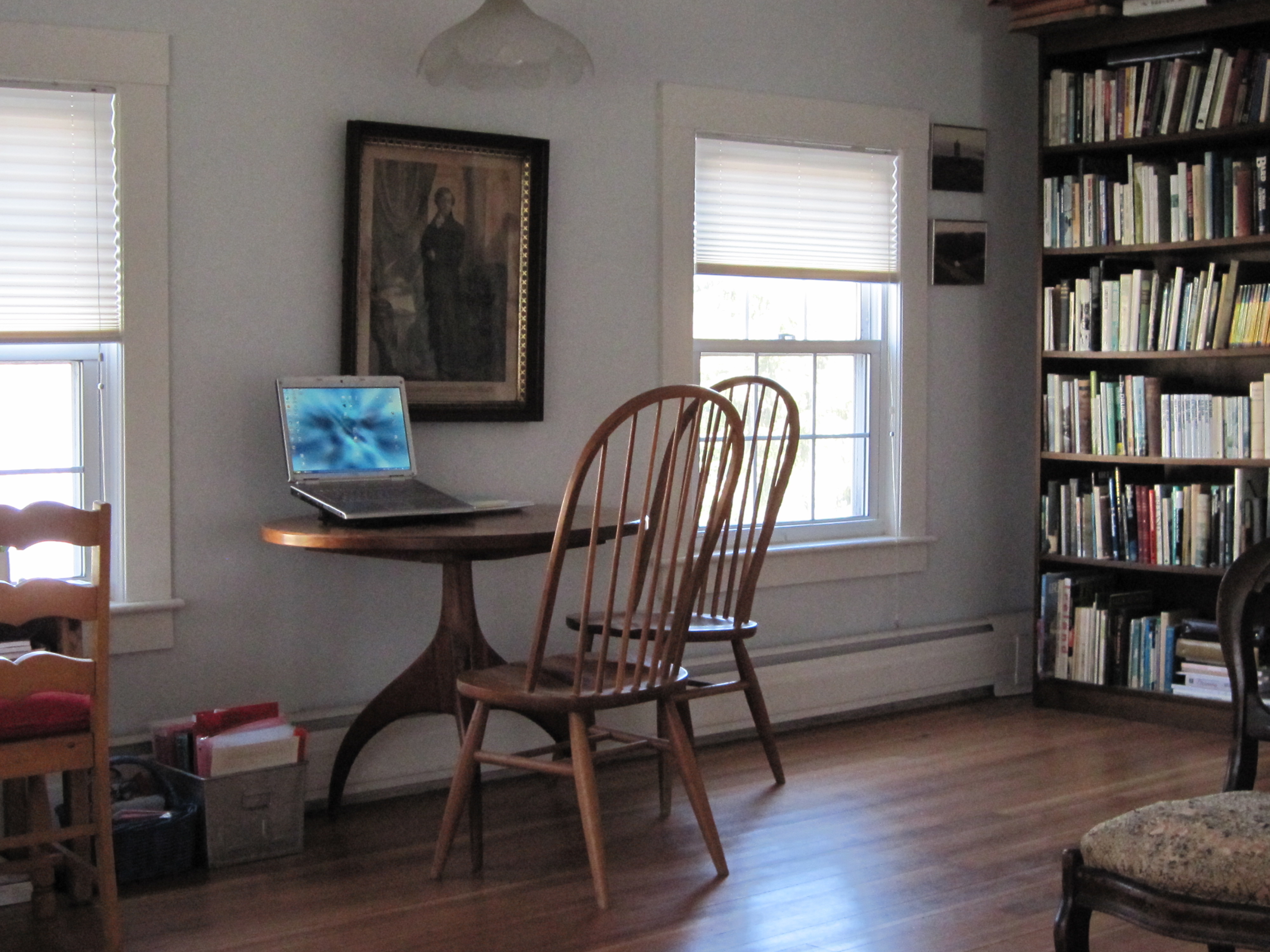
One of my law study corners. When not here, I was at Weeks Memorial Library in Lancaster.
June and July: these months were a blur. I really cannot remember much during this period, except that I studied like a madwoman. In the last two weeks before the exam, I had a couple of hours-long meltdowns, but I easily could have had more, so I count myself lucky. During all of June and July, I was on a strict regimen of study, starting at 8:30am each morning, a half hour break for lunch and a short walk, then study until dinner time, then another quick walk, and then another hour of study. I took the Vermont Bar Exam on July 26 and 27 in Montpelier, Vermont, at the Capitol Plaza Hotel.
August: After the bar exam, I allowed myself one and a half days of complete rest. Then I started studying—again, for 8 hours per day—for the Multistate Professional Responsibility Exam. The test was held on August 5, down in South Royalton, at Vermont Law School. Finally, the studying and exams were over and I embarked upon the torture of waiting and wondering….
In the meantime, our town and school district erupted in controversy. I’ve written on this blog many times already about that controversy, so I need not repeat details here.
The School Board controversy has divided some friends and neighbors and created some uncomfortably tense moments. On the other hand, there’s a positive side to the whole affair. For starters, there has been an amazing level of community involvement around this issue. In our town, like in many places, people get mad about things all the time and in most cases, they just complain. But in this instance, people did more than get mad—-they got constructive with their anger. Instead of just complaining behind each others’ backs, they spoke up and took action. There was a groundswell of local activism that frankly surprised even me. Even if it’s been difficult, our town has changed for the better. Conflict is never easy, but when handled through proper channels of local democracy and the legal system, conflict can also be inspiring and downright empowering. It’s been pretty exciting to watch as some normally very reticent and even shy people take a public stand against something they believe to be unjust and unfair.
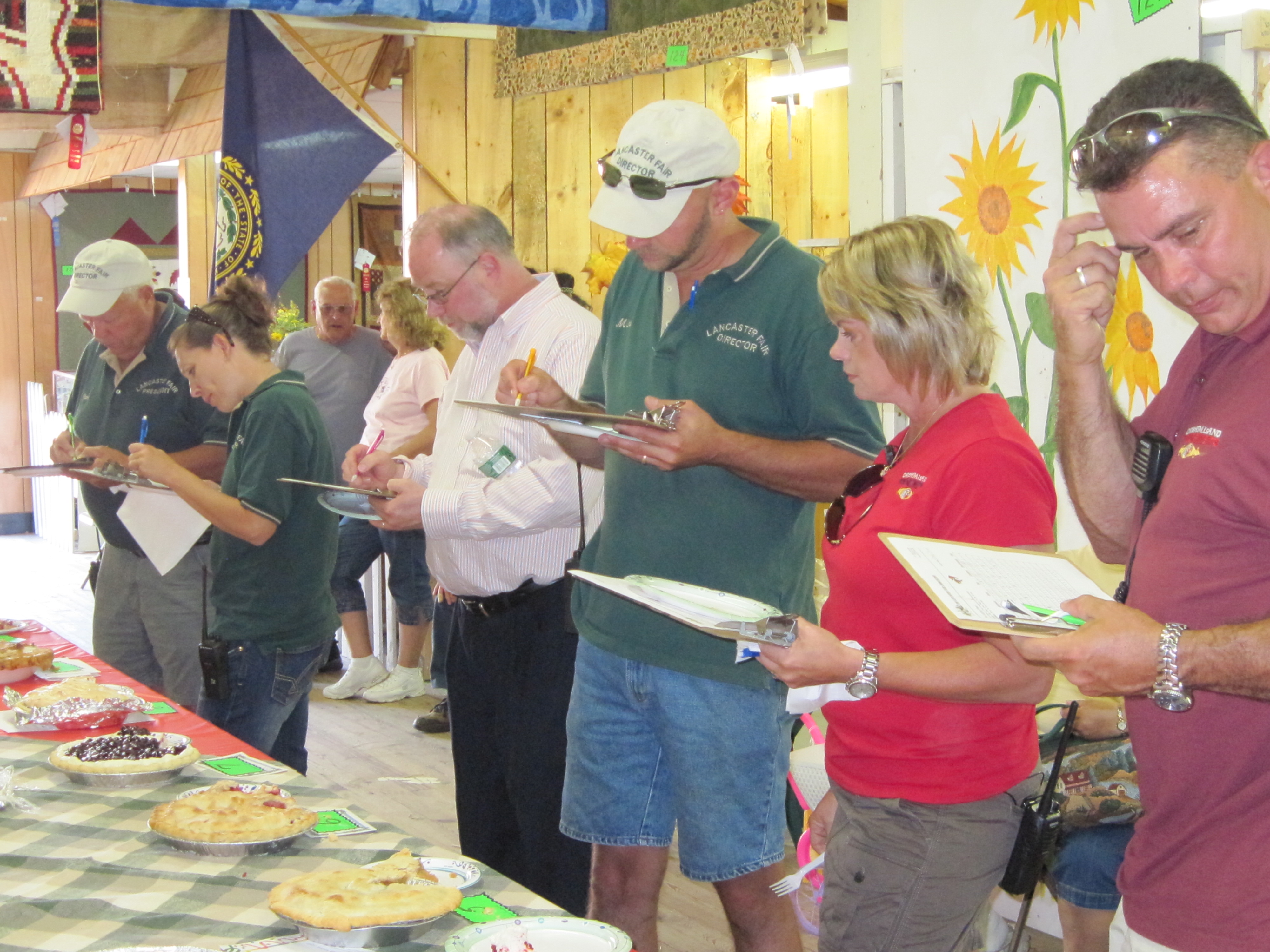
Earnest judges at the Lancaster Fair Pie Contest, Day 1
September: I entered two piemaking contests, at the Lancaster Fair. And I won second prize at the Apple Pie contest! It was very exciting! My first pie contests ever! (This later flowered into to a renewed commitment to pastry skills).
On behalf of one of Dave Williams’ clients, I traveled to the Charlotte, NC area for two days to do mitigation research for an upcoming sentencing hearing. My task: to interview the client’s family members on video in order to learn more about the defendant’s childhood and background. I flew into Charlotte, NC, checked into a hotel, and then spent two full days in a rental car driving around the North Carolina countryside interviewing people and taking photos. While I’m there, I got an email informing me I passed the Professional Responsibility Exam!
September 23, 2011, I received my bar exam results in the mail—I passed! (I confess it took me about a month for the news to truly sink in; the habit of worrying about bar exam results was tough to shake.)
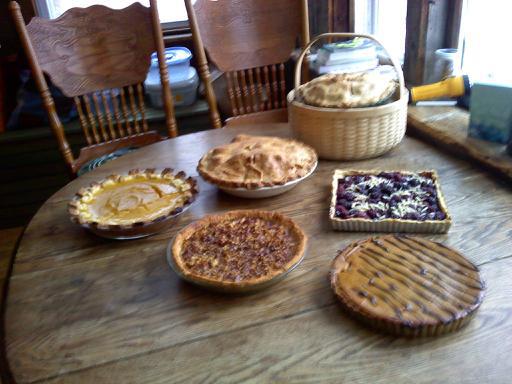
November: I might also call this the year that Laura got serious about pastry. I’ve been refining and working on my baking skills. In the aftermath of the piemaking contest, I decided to do a pie extravaganza for Thanksgiving. I designed a menu of six pies, carefully chosen for diversity, the season, and the individual tastes of guests. I baked all the pies the day before, so I wasn’t rushed, and was hence super-focused on technique. Each and every one turned out great. Even the one untested project—the blackberry almond tart—was very popular.
December: On December 7, I was sworn in to practice law at the Vermont Supreme Court. Amazing!
Then, of course, my job search began in earnest, until the holiday break.
Christmas at the Guildhall house
For the first time since 2006, we spent Christmas right here in Guildhall, and we even had a tree. My mother and five of our Guildhall friends and neighbors came over on Christmas Eve Dinner and Christmas Day itself.
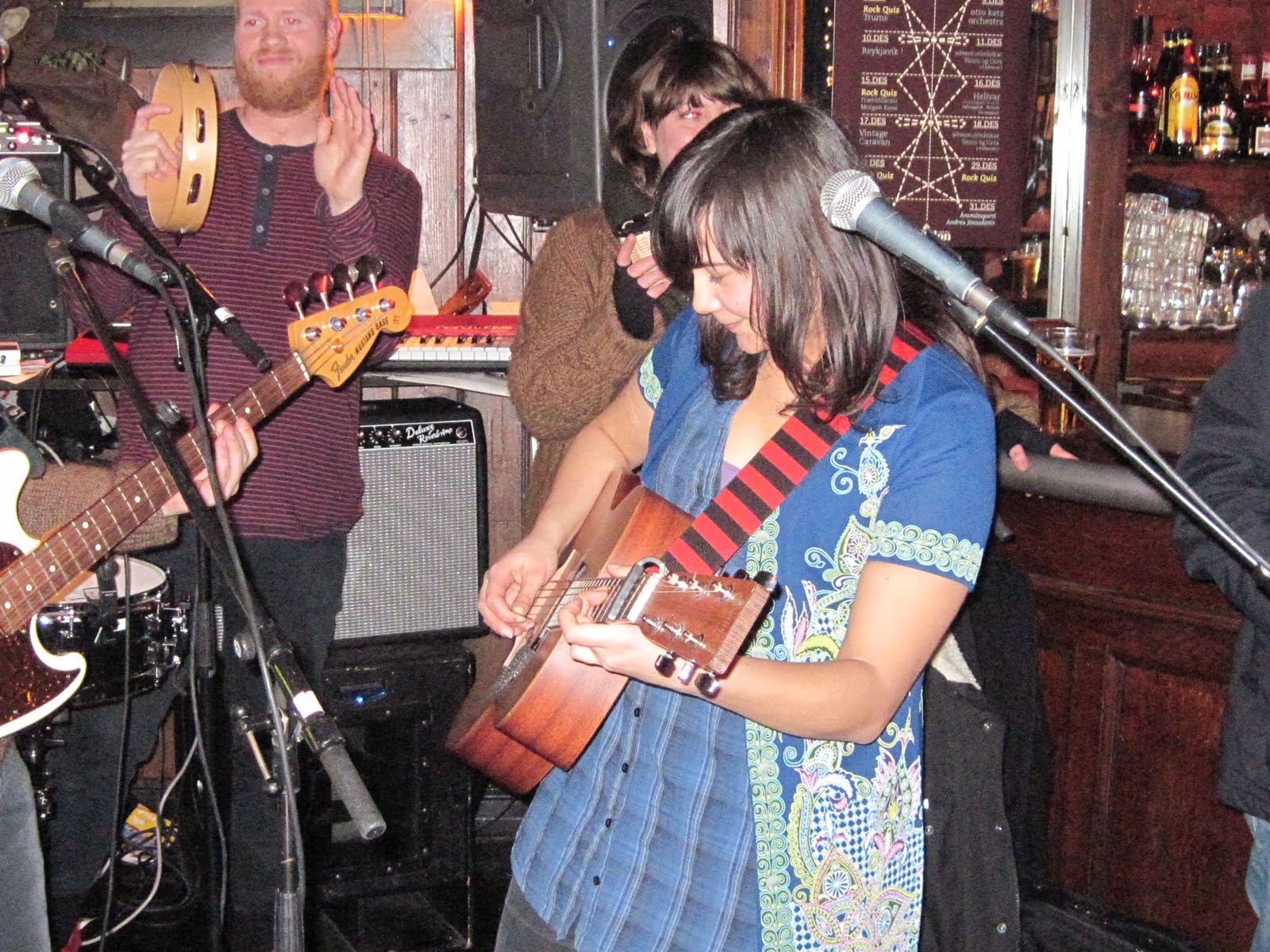
Lay Low, at Dillon's in Reykjavik, approximately midnight
On December 28, Edward and I flew from Boston to Reykjavik, Iceland, to spend New Year’s. Shortly after I passed the bar exam, we decided on a celebratory trip to Iceland. For years, we’ve wanted to spend New Year’s in Reykjavik, the hippest city on earth! The trip was short, but sweet, and just the thing we needed. We went to a museum–sometimes two–every day we were there. We heard great live music. We had a different kind of international cuisine every night, including at a fantastic Bulgarian restaurant. We did a lot of people watching, and in a city like Reykjavik, you never tire of it! On New Year’s Eve, we drank champagne in a glass-domed revolving restaurant overlooking the city and watched the best fireworks display I’ve ever seen anywhere.
Happy New Year, to all my readers, wherever and whoever you are!
This is the foreclosed home in our tiny, otherwise picturesque village of Guildhall, Vermont. These days, I regularly find myself wondering if maybe it’s a suitable location for our own Occupy Guildhall encampment.
After all, the house has been sitting empty and forlorn for over two years, grossly neglected by whatever distant lending companies now own it, a blight on our neighborhood. It’s become our own local symbol of the destructive, pointless power that a small minority holds over regular people and how that power can destroy or at least seriously undermine livelihoods, relationships, dreams and entire neighborhoods.
The house, a historic structure, sits one lot away from our house, nestled comfortably between the banks of the beautiful Connecticut River on one side and on the other, the Public Library and Masonic Hall.
Back of the Foreclosed House, with Swing, Dog Pen
From my kitchen window, where I’m washing dishes or baking bread, or just taking a break from writing some legal document, I can see the back of the foreclosed property, including an old swing that hangs somewhat mournfully from a maple tree and the large pen where the former owners’ dogs used to run and play. On another side of the house, I can see the blueberry bushes that the former owners once lovingly planted.
Closer up and sadder
Like all foreclosures, this one has a story behind it. I need not mention names, but the people against whom the bank foreclosed had come to be our friends. They bought the house in 2006 and had their wedding right there in the back yard. Less than 3 years later, they were divorced. Divorce in America typically tends to be a financial disaster for one or both spouses. In this case, neither spouse could swing the mortgage payments on their own. The wife moved to neighboring Lunenburg, where she rents with a friend and struggles to complete her nursing degree while working full time.
The husband, just before the divorce happened, was laid off from his job. He happily found someone new to love and fortunately, that new partner had some means. Together, they moved far away indeed: to a Central American country. At least he’s out of the reach of the creditors.
Meanwhile, the house sits empty, unkempt and steadily deteriorating. Last summer, we noticed that someone came by once a month or so to mow the lawn. No one has cleaned up the mess inside or bothered with any exterior upkeep or maintenance. As far as I can tell, whatever lending company owns the damn thing now doesn’t give a fig about trying to market or sell it. The house appears on no listings that I can find, and there’s no sign posted out front.
It would be nice to have the house occupied, but during the foreclosure process, the finance company specifically refused the wife’s repeated requests to re-negotiate the terms of the mortgage payments.
The result? The lending company gets nothing and in fact takes a loss, because they keep having to pay the taxes and water bills. The wife, who was well-liked and actively engaged in town government was forced from her home and her town. I and the other village residents have lost our neighbor and every day must look at the failing house–and alternately feel sad or wonder how it all affects our own property values. I somehow doubt that this beautiful historic home will ever be sold or even inhabited again.
You couldn’t ask for a better illustration of the utterly pointless carnage wreaked on our society by the greedy corporations and lenders. Indeed, maybe it’s time to Occupy Guildhall, right next door.
Elements. Known around these parts as the best restaurant in the entire Northeast Kingdom. Possibly among the best in the state of Vermont. A remarkable restaurant where I’ve never had a bad meal, and where I always want to have dessert. Since I’ve lived in the NEK, Elements has always been a touchstone for me, a reminder that superb food, wine, service and live music are just a short drive away. (Well, fairly short–about forty minutes.)
I’ve just gotten word that Elements is closing. No. No. No. But yes, it’s true. On January 1. Unless some buyer surfaces between now and the New Year, Elements will be a thing of the past.
Ouch. Not good for the NEK. Not one bit.
So I’m putting out the word to any interested buyers/investors out there. Come take a look at Elements! In the words of Florence and Keith Chamberlin, Elements owners and managers: “We are keeping the door open a crack, however. We believe there is tremendous opportunity in this place—be it the continued home for Elements, as a different restaurant or bar, or for any number of other ventures. If a buyer or buyers present themselves before the 31st we will be happy to talk with them about keeping this space and Elements a vital and exciting part of the dining scene in the Northeast Kingdom.”
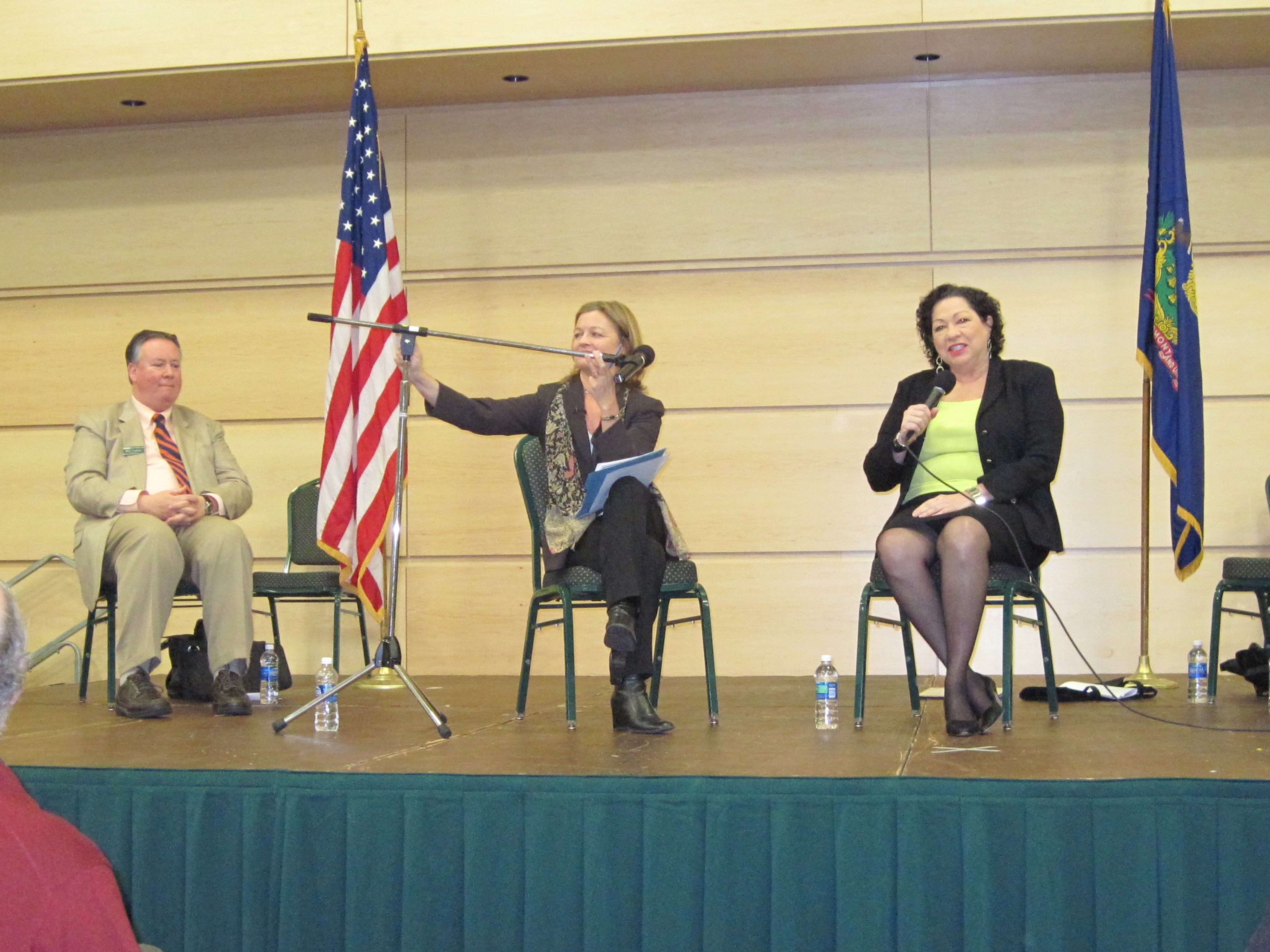
Thanks to Senator Patrick Leahy’s office, United States Supreme Court Justice Sonia Sotomayor came to Randolph, Vermont this past weekend. She was the keynote speaker at the 15th Annual Women’s Economic Opportunity Conference, held at Vermont Technical College.
The hall was packed with women–and a few men–eager to hear her speak, but really, she behaved as if she was sitting in my living room. She refused to use the podium, instead sitting on a chair close to the edge of the stage, using a hand-held microphone. And she took the opportunity to talk about her education, career, ambitions and dreams.
I didn’t learn much new information about Justice Sotomayor–after all, between her confirmation hearings and the many publicized appearances she makes, I’ve come to know most of the interesting facts of her life and career. But that didn’t seem to matter much. It was just a remarkable thing to sit in the same room with her and feel like she was talking directly to me, the fledgling attorney!
 The hottest item at last night’s Town Meeting was the election of a new School Board Director. 91 citizen-voters turned out. The vote count was relatively close, much like last fall’s rescission vote, except it went the other way this time. Marie Fay won with 49 votes to Karen Nelson’s 42.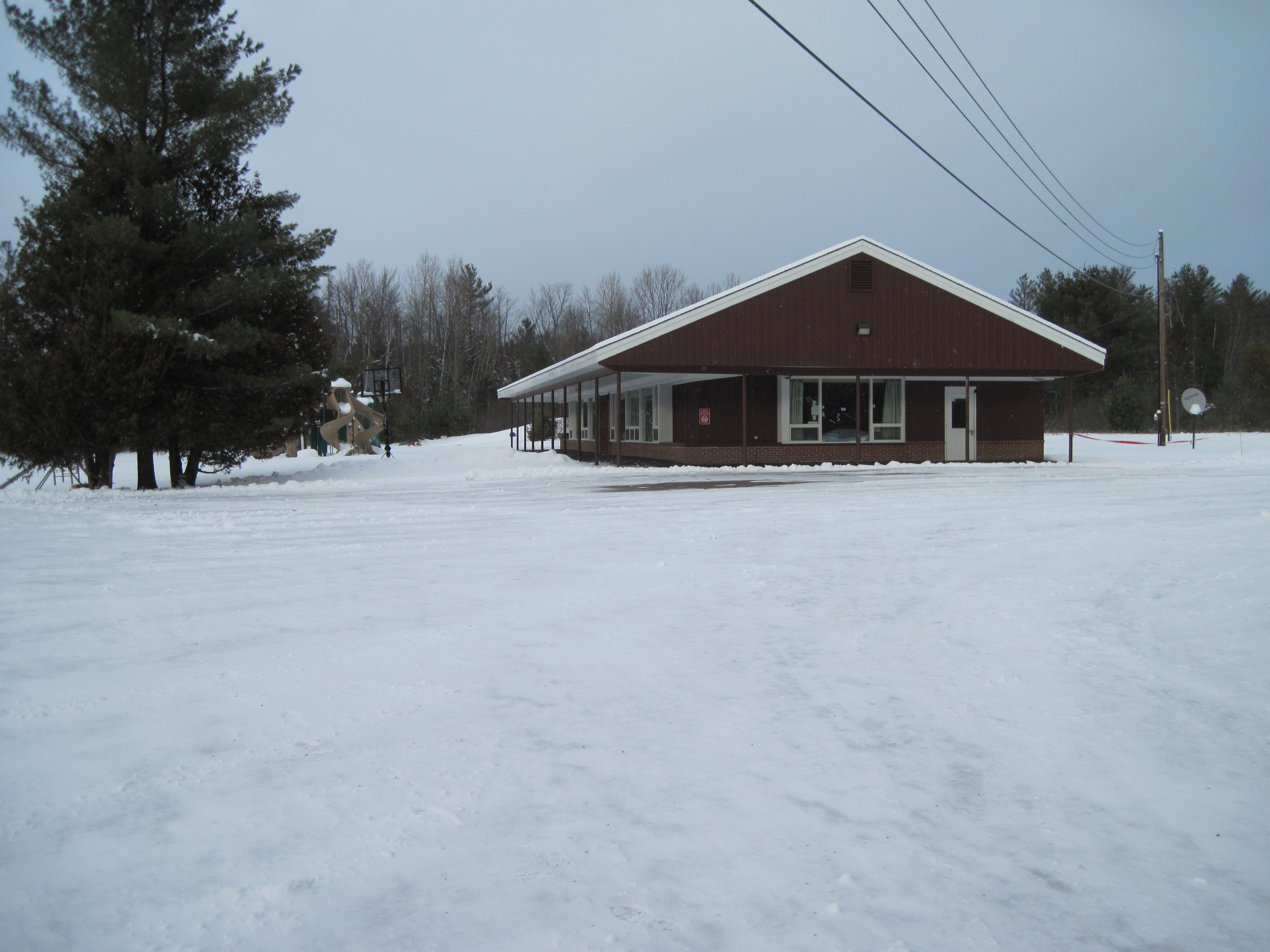









 Life, Law, and Politics in the Northeast Kingdom