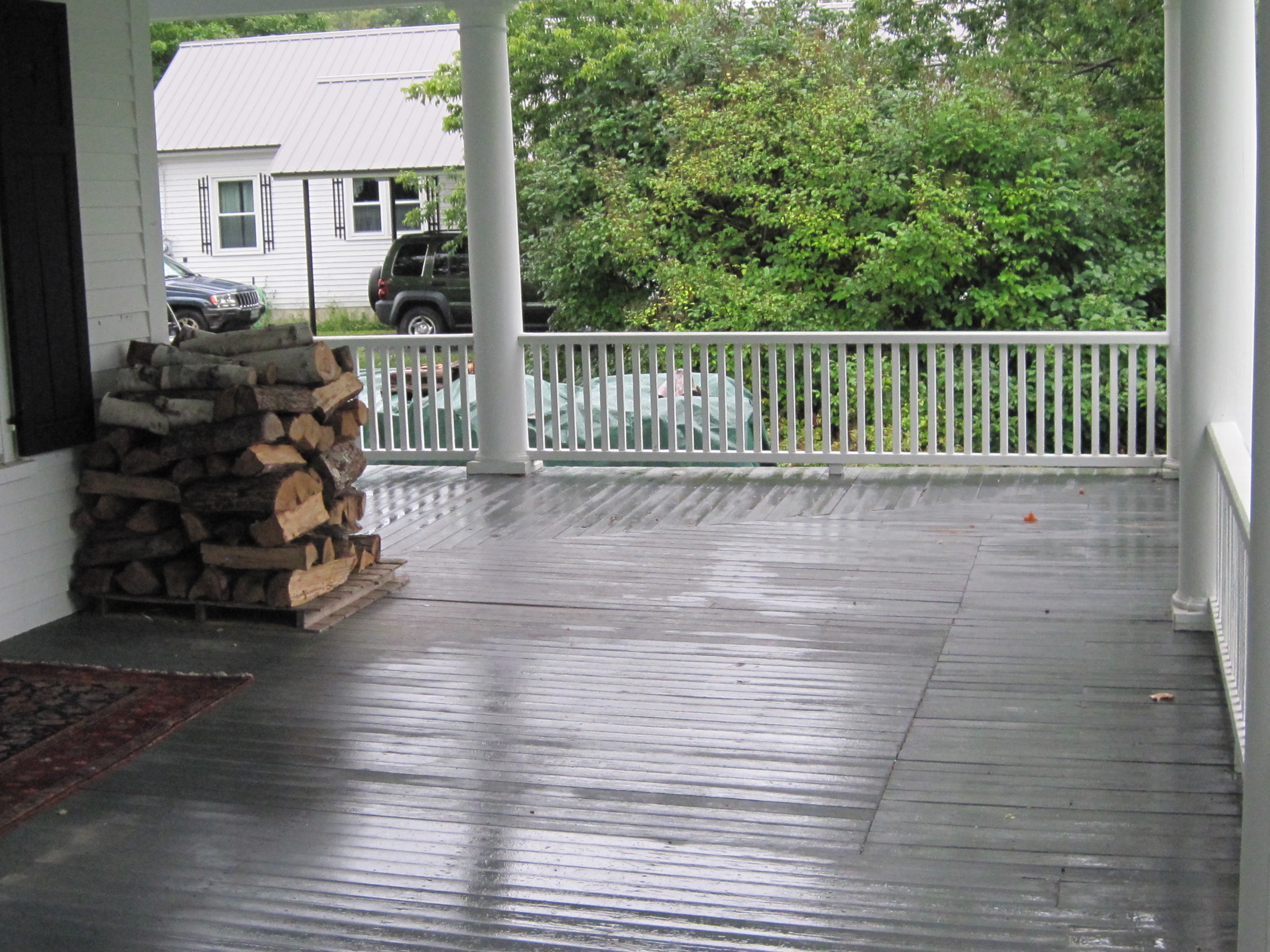
Our porch just prior to storm, cleared in preparation for Irene
We were thoroughly prepared. We stocked up on food, bottled water, batteries, candles, lanterns and lots of other stuff. We brought everything in from the yard so that none of our neighbors would get hit by deadly flying objects. We stayed indoors with the dogs pretty much all day.
But in the end, nothing happened. Most predictions about Irene’s path indicated it would come up along the Connecticut River, including directly over Lancaster, NH, only 10 minutes down Route 3 from us. That’s why we were sure there would be serious consequences for the northeastern Vermont river towns.
But—no. We had a day of moderate to heavy rain (not uncommon in these parts). There was a bit of wind (nothing extraordinary, by any means). The power didn’t go out once, not even for a single second, anywhere in our town. What limited cell phone service we have in the ordinary course of affairs remained intact. Our basement is completely dry. The Connecticut River, which I can see right out my living room window, has risen somewhat, but nothing dramatic—certainly nothing compared to the scary flooding we experienced this spring. Our internet connection was down most of yesterday, but that usually happens when there is any cloud cover or rain of any kind.
So the biggest impact here was of our own making. Anticipating the worst, we stayed inside. I played with the dogs, read books, and watched an entire season of “House” on DVD, starting at noon.
At around 7pm, the rain had mostly stopped, and restlessness had set in, so I went for a walk across the bridge to Northumberland, NH. A guy over there came out of his house and told me that the real devastation was coming—we were in the eye of the storm, he said, and that’s why it was so quiet. He predicted we’d get slammed before midnight.
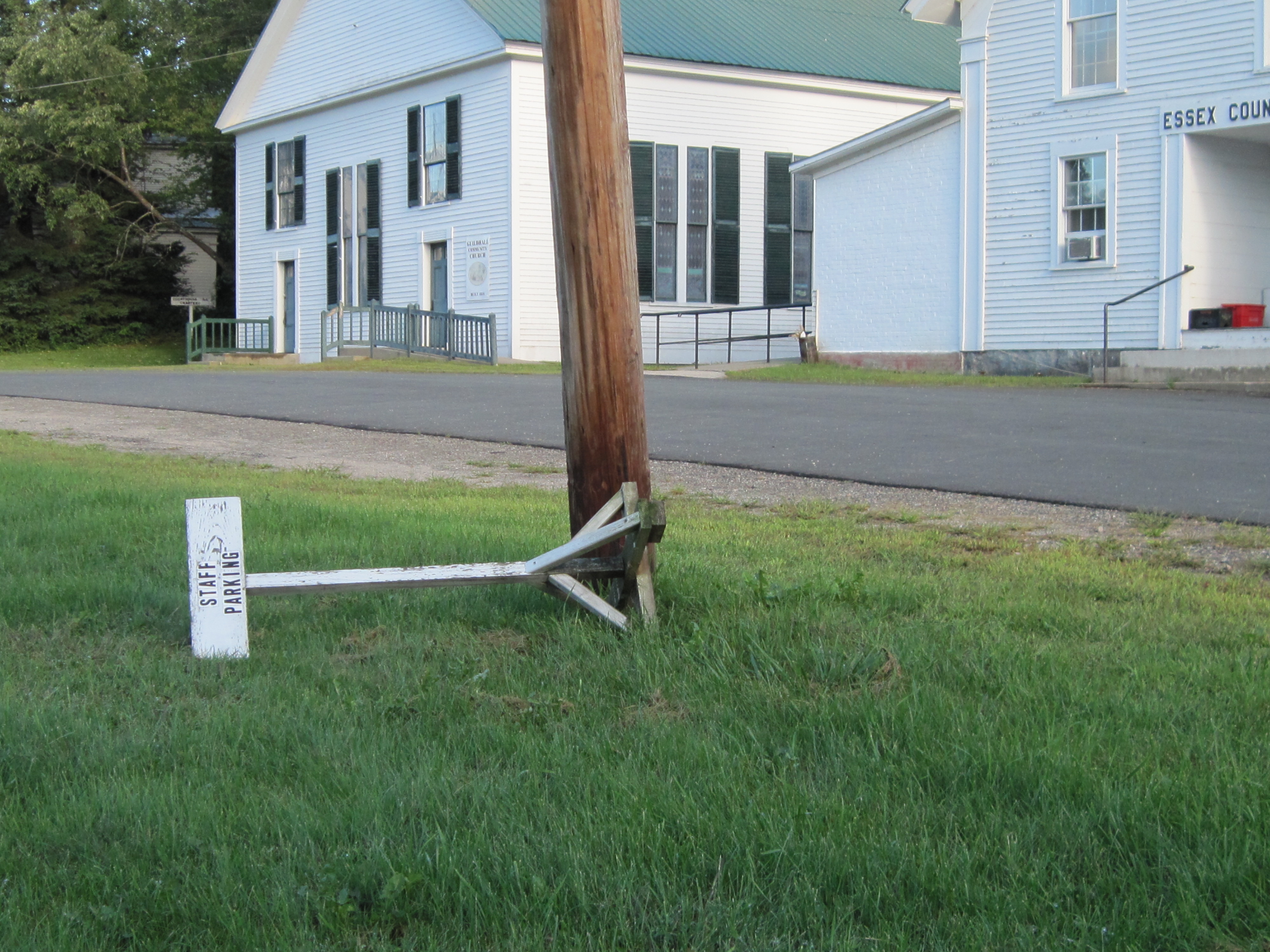
Didn’t turn out that way. This morning, I went walking around our little village looking for damage. Here in this photo is literally the worst thing I could find.
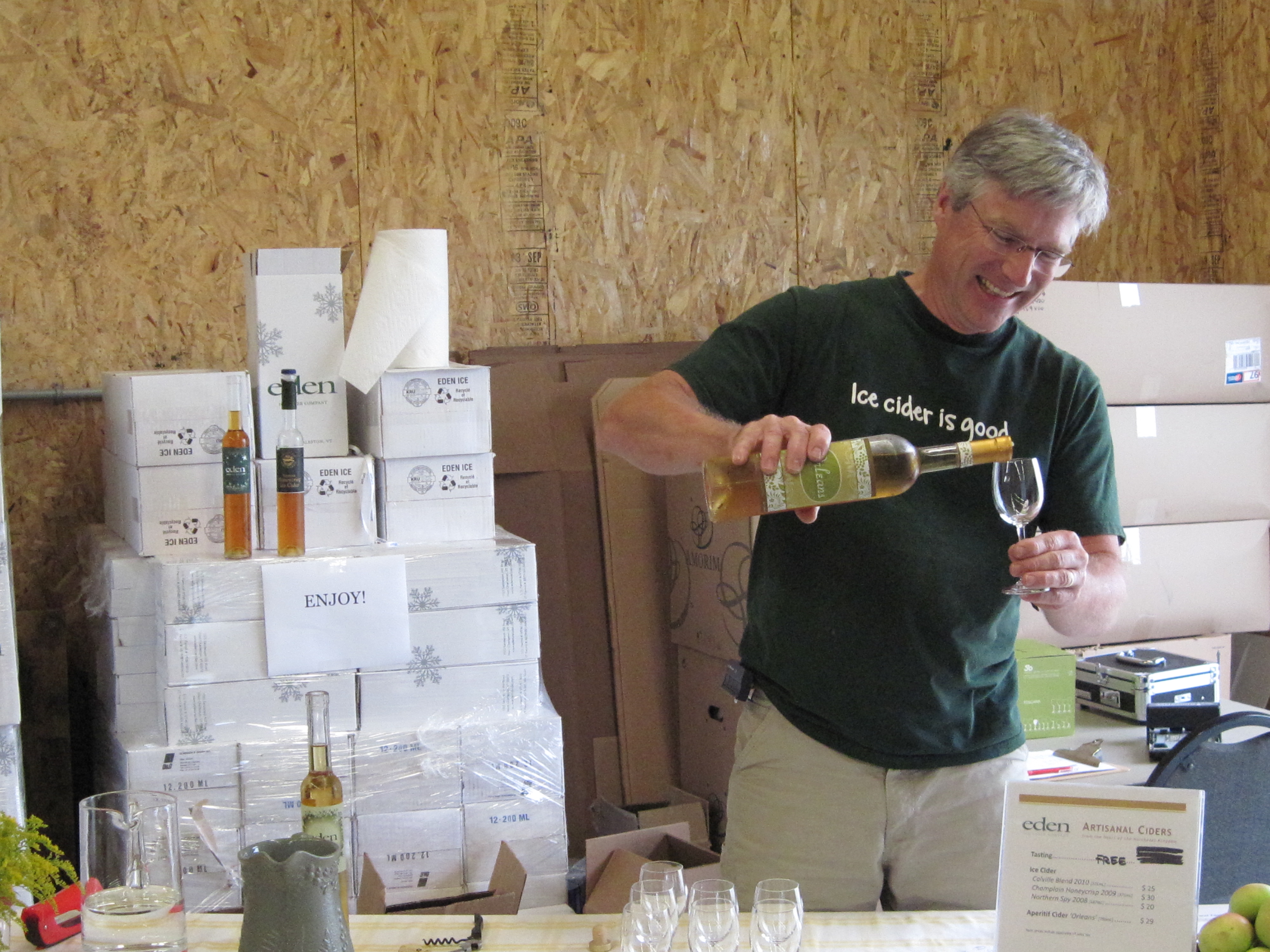
In one corner of the Northeast Kingdom, about an hour and a half’s drive from our place in Guildhall, there’s a remarkable (and successful!) experiment in the making of ice cider. Yes, ice cider, an elegant variant of dessert wine, fermented from Vermont apples over years.
I got my first tantalizing taste of the Eden Ice Cider when we found it for sale at the Littleton, New Hampshire Food Coop. (I later learned that Eden Ice Cider is available at almost all the fine restaurants in Vermont, as well as one in New York City.) So this weekend, we made the trek up to the source, for a tasting and tour.
Albert and Elinor Leger bought this old dairy farm in West Charleston and moved here from the New Haven, Connecticut area about five years ago. Their ice cider brainstorm took place after a visit to Montreal. I won’t delve into the details and history of the operation, which has been well-covered in a recent Vermont Life Magazine article. But I’m proud and pleased to see this entrepreneurial accomplishment here in the Northeast Kingdom.
What We Brought Back from the VIsit
And we came home with some bottles of our own. My favorite is Eden’s latest product, named “Orleans,” after the county where the farm is located. It’s an ice cider with a touch of anise hyssop and basil. Wow!
Visit the Eden Ice Company website, and then visit in person, with an appointment. It’s a great Northeast Kingdom treat!
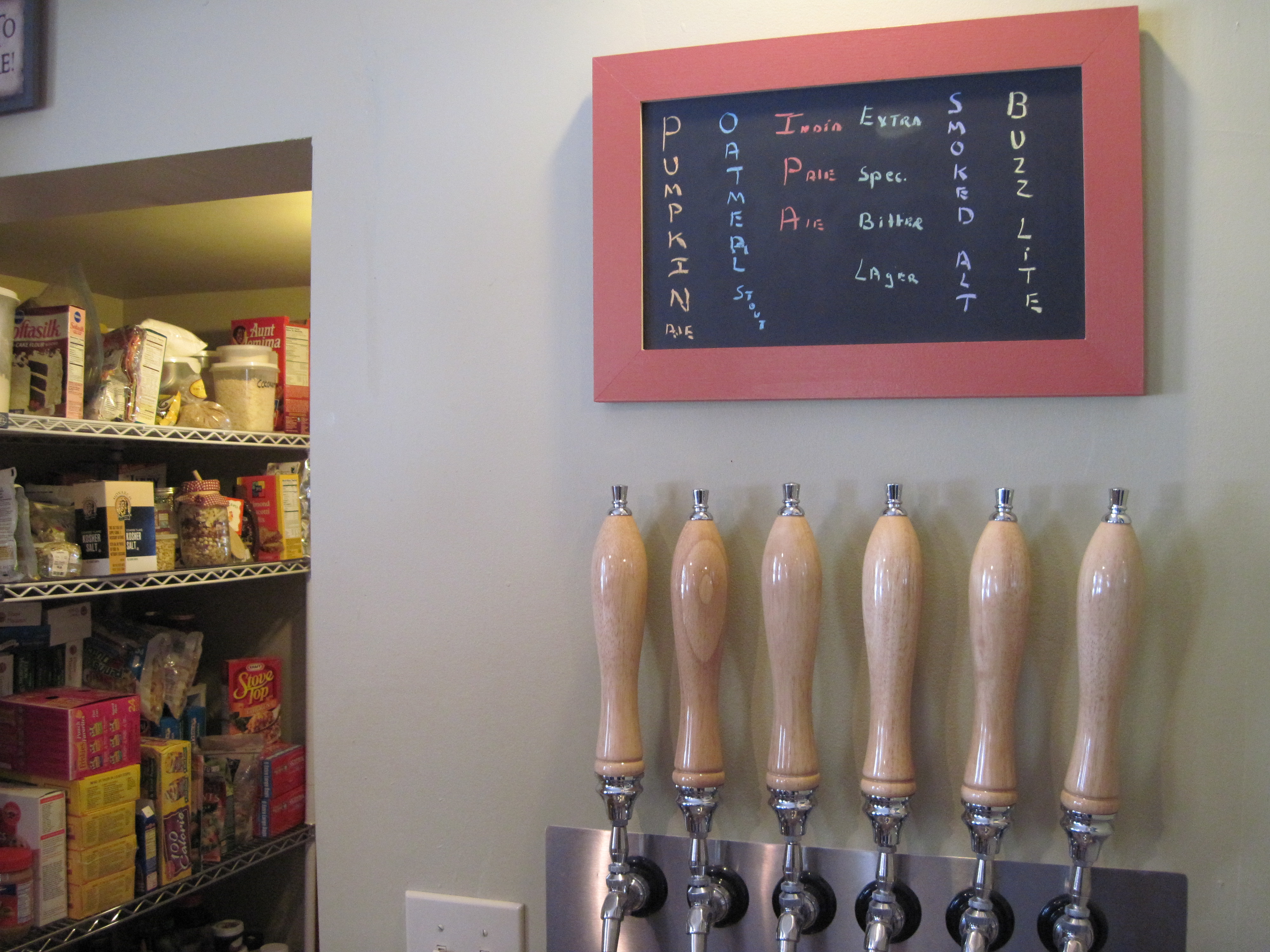
The new beer and ale tap at the HollandsOn a recent Sunday morning in late February, I gathered with about a dozen home beer and ale brewers at my friends Mike and LJ Holland’s home. The Hollands live about a mile south of me, on Route 102 in Guildhall, Vermont. For those of you not familiar with the town, Guildhall—population 268—lies on the eastern edge of Essex County and the Northeast Kingdom of Vermont, across the river just north of Lancaster, New Hampshire.
It’s a remote spot, without a single restaurant, bar, or even store in town; not a place you’d necessarily expect to find a vibrant brewing community. But vibrant it is; the brewers at Mike’s house that morning came from all over the North Country of Vermont and New Hampshire and they were an enthusiastic and knowledgeable crowd.
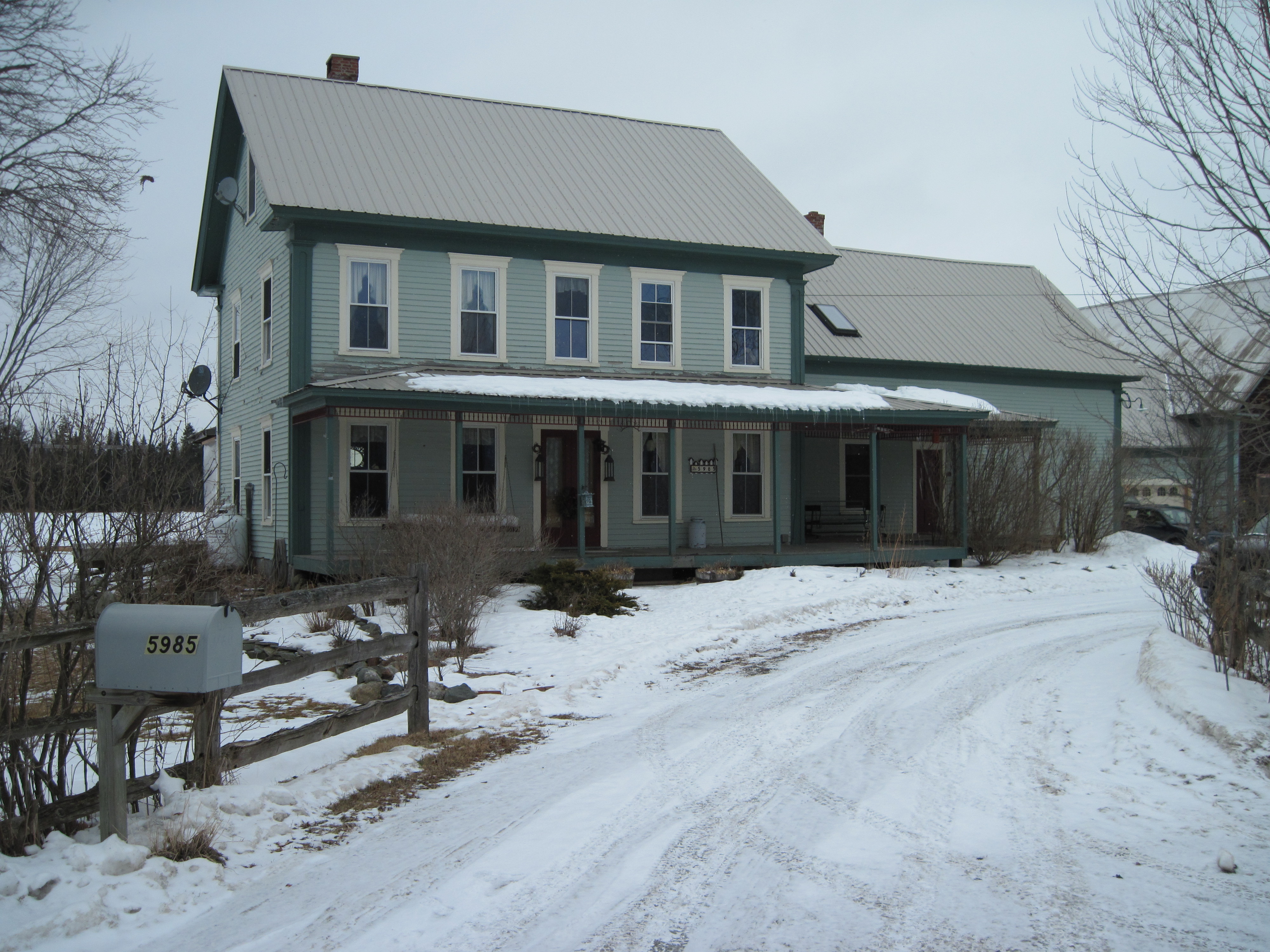
Mike and Lj themselves moved to Guildhall about 8 years ago, from a rural area of Pennsylvania. Mike rapidly built a reputation for himself as a superb chef and caterer. Before moving to Vermont, he’d worked as chef supervisor and sous chef at the Hilton Wood Cliff Lake in Bergen County, New Jersey, and the Main Course Restaurant at the Main Course Golf Course in Honesdale, Pennsylvania. Here in the North Country, he did a three year stint at the Clamshell Restaurant in Littleton, NH before becoming head chef at Weeks Memorial Hospital in nearby Lancaster. And he and Lj have become known for their informal but high-end local catering service. In an area where fine cuisine can be rare, they’ve staked out a small but growing reputation. (They’re both also involved in municipal politics: Lj has been a Town Auditor for years and was just elected to Guildhall’s Selectboard; Mike is a Guildhall Water Commissioner and member of the Town Office’s Kitchen Committee). The Hollands farmhouse, on Rt 102 in Guildhall
Mike and Lj came to Essex County, Vermont well before I did; by the time I arrived, they had already started experimenting with multiple homesteading projects, such as small animal and vegetable farming. After moving to the area from Boston, I had a lot to learn about gardening in the cooler climes of the Northeast Kingdom’s Zone 3. Mike and Lj were generous with advice about types of compost, the appropriate depth for raised beds, the best squashes and pumpkin varieties for these climes, and portable greenhouse strategies. The Hollands’ garden to this day is an impressive and inspiring one, and if that weren’t enough, they also began keeping chickens, pigs and sheep. Step by step, this couple have expanded their homestead and developed some serious skills.
It was about three years ago that Mike became fascinated by home beer and ale brewing (and later, wine-making). “Back in Pennsylvania, an aunt of mine gave me a home brewing kit as a gift one year,” he explained, as he peered into some extract fermenting in a giant container in his kitchen. He soon discovered that even in remote Essex County and neighboring Coos County of New Hampshire, he wasn’t alone.
In fact, there’s a fairly active and well-organized group of home brewers in these parts. White Mountain Fermenters has a website and meets once a month, rotating those meetings between members’ homes or at the Granite Cask brewing store in Whitefield, NH. Typically, the members use their monthly meetings to observe and learn about the host brewer’s methods, sample the results, and eat a hearty potluck spread.
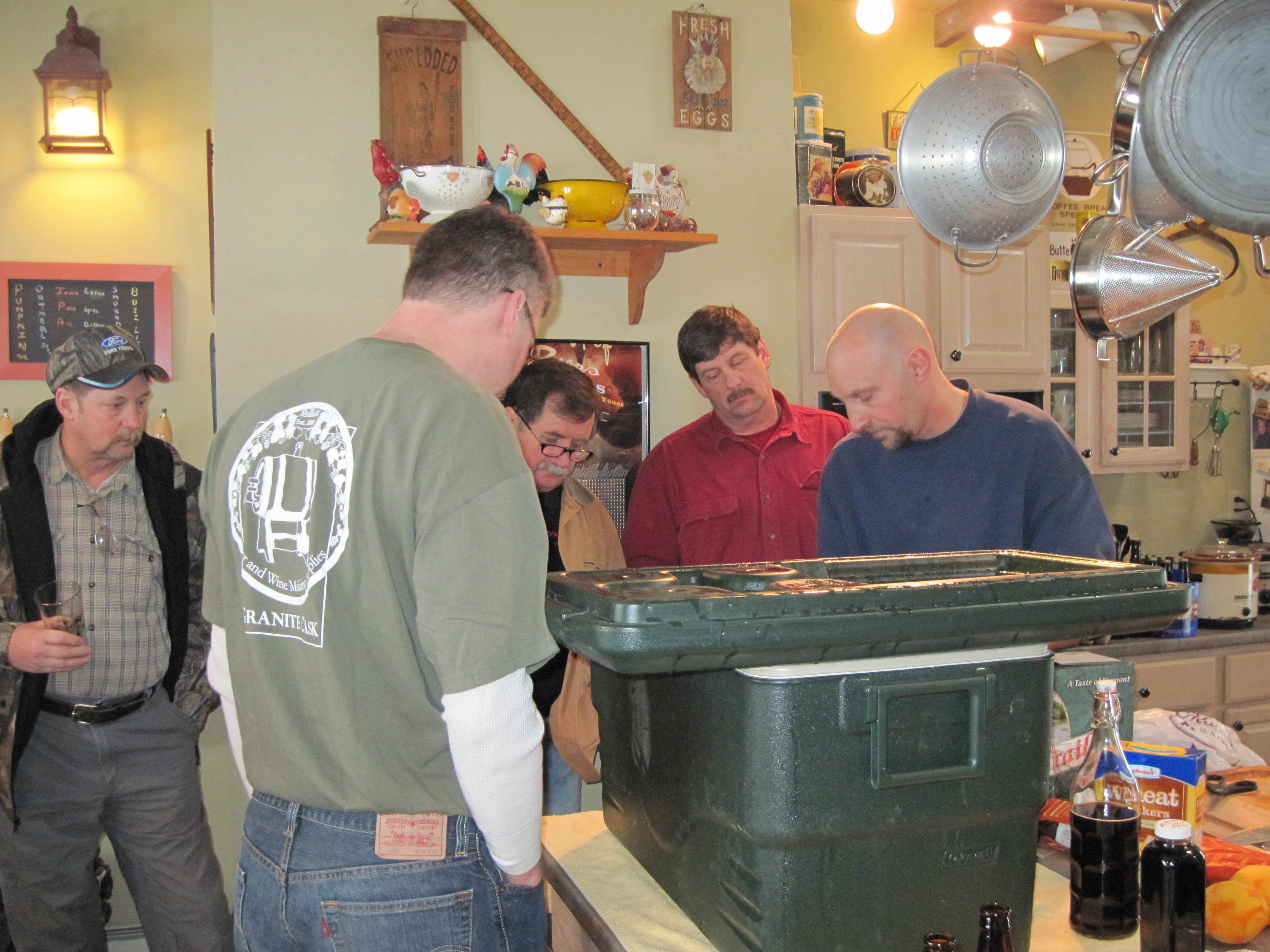
Mike Holland, with his brew measure But while there are lots of home brewers around, it soon became clear that Mike Holland stands out. Several of the Fermenters at Mike’s house that afternoon told me that Mike was something of a groundbreaker. “He’s really the only one of us who has actually moved to the next level of making his own extract for his brews,” one of the Fermenters explained. Some of the guys smiled a little sheepishly, noting that they’d love to also make their own extract, but that it was a time-consuming endeavor. A couple of them agreed with my comparison to making sourdough bread. To make a good sourdough, you need starter. Most people buy their starter commercially. But some hard-core bread makers make their own at home, by using flour, warm water, a bit of salt and waiting for the concoction to capture natural yeasts in the air. John Allin (center, with blue vest), supervising the fly sparging
Most of the Fermenters purchase commercially prepared extract—and most of the time, they buy it from the Granite Cask, a home brewing retail outfit in nearby Whitefield, NH. John Alllin, who founded and manages Granite Cask, was there on this Sunday, in the garage overseeing fly sparging, a process that rinses the grains, extracting the remaining malt. (It involves slowly adding water above the grain bed while simultaneously draining an equal amount from the bottom).
Allin once worked at the Mt Washington Hotel and Resort in Bretton Woods, in a variety of capacities, including food and beverage, before a serious work-related injury slowed him down. At that point, always intrigued by brewing and wine-making, he founded Granite Cask. And according to him and the other fellows at the Hollands on this day, Granite Cask does surprisingly well as a business endeavor; it provides Allin with a decent living and is a crucial resource for the North Country brewing community. Mike and others clearly consider Allin to be the “grandfather” of brewing in these parts and a mentor to all of them.
While none of the home brewers at the Hollands that day have ventured into commercial sales, almost all of them have entered their brews into local and national competitions. One must qualify for the nationals, and that can be done locally by entering into the competitions at the Lancaster Fair and Littleton NH Home Brew Competitions. Mike himself has racked up local, regional and national awards for his Doppelbok, Scottish 90 Schilling and Oatmeal Stout, among others. The Belgian Wit
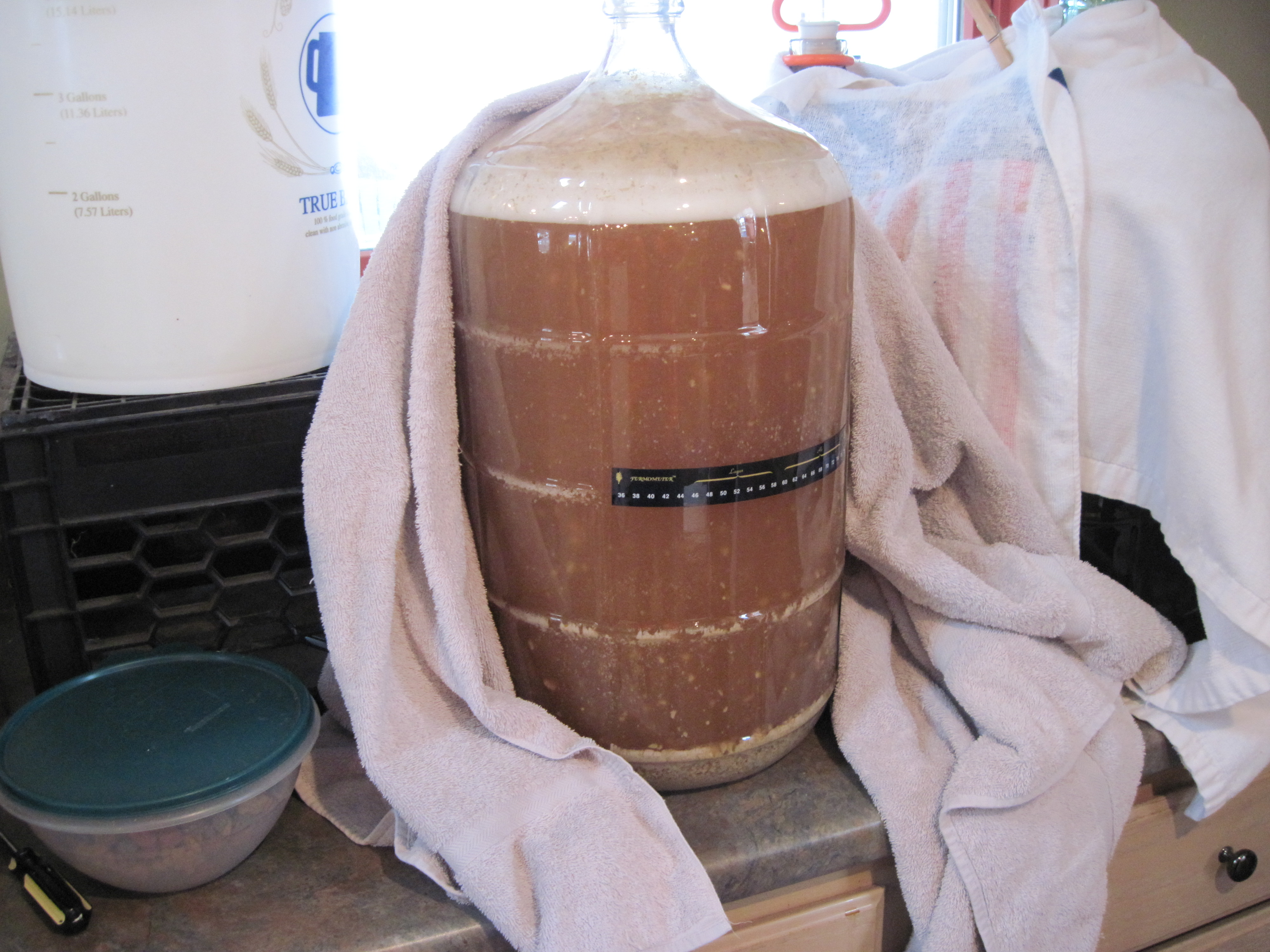
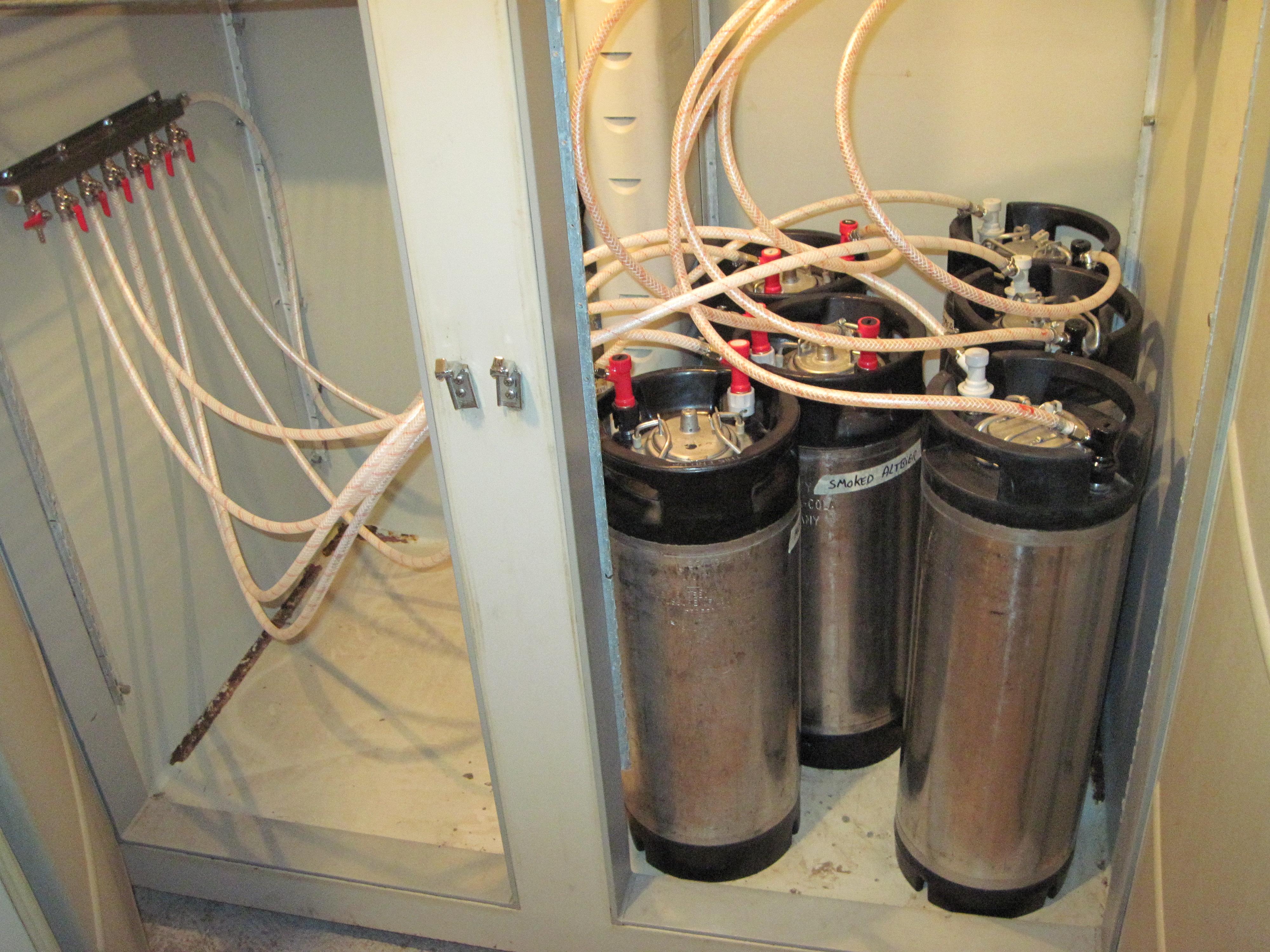
The February meeting of the Fermenters was—in part– planned to celebrate and show off Mike’s new tap system: six beer and ale taps mounted handsomely on the kitchen wall, labeled carefully with the name of each brew. (I was particularly enamored of the Pumpkin Spice Ale.) And in one corner of the kitchen, Mike proudly pulled aside a towel to reveal yet another of his latest pending brews: a gorgeous-looking Belgian Wit with chamomile, coriander and fresh orange peel. Later, I took my camera down to inspect the inner workings of the tap system; Mike had run an elaborate set of tubes down to a large refrigerator in the basement, which contained the vats of the various brews. The tap, behind the scenes
As for Mike and Lj’s goals? For now, it’s just informal, entirely non-commercial home brewing, for family and friends. But they’re slowing building toward the day when they’ll operate their beautiful 19th century farmhouse as a bed and breakfast with fresh home-grown produce, grass-fed meat, homemade wine, and a small, distinctive home brewery. Mike Holland, demonstrating process
To reach Mike and Lj Holland in Guildhall:
5985 Route 102
Guildhall, VT. 05905
802-328-2850
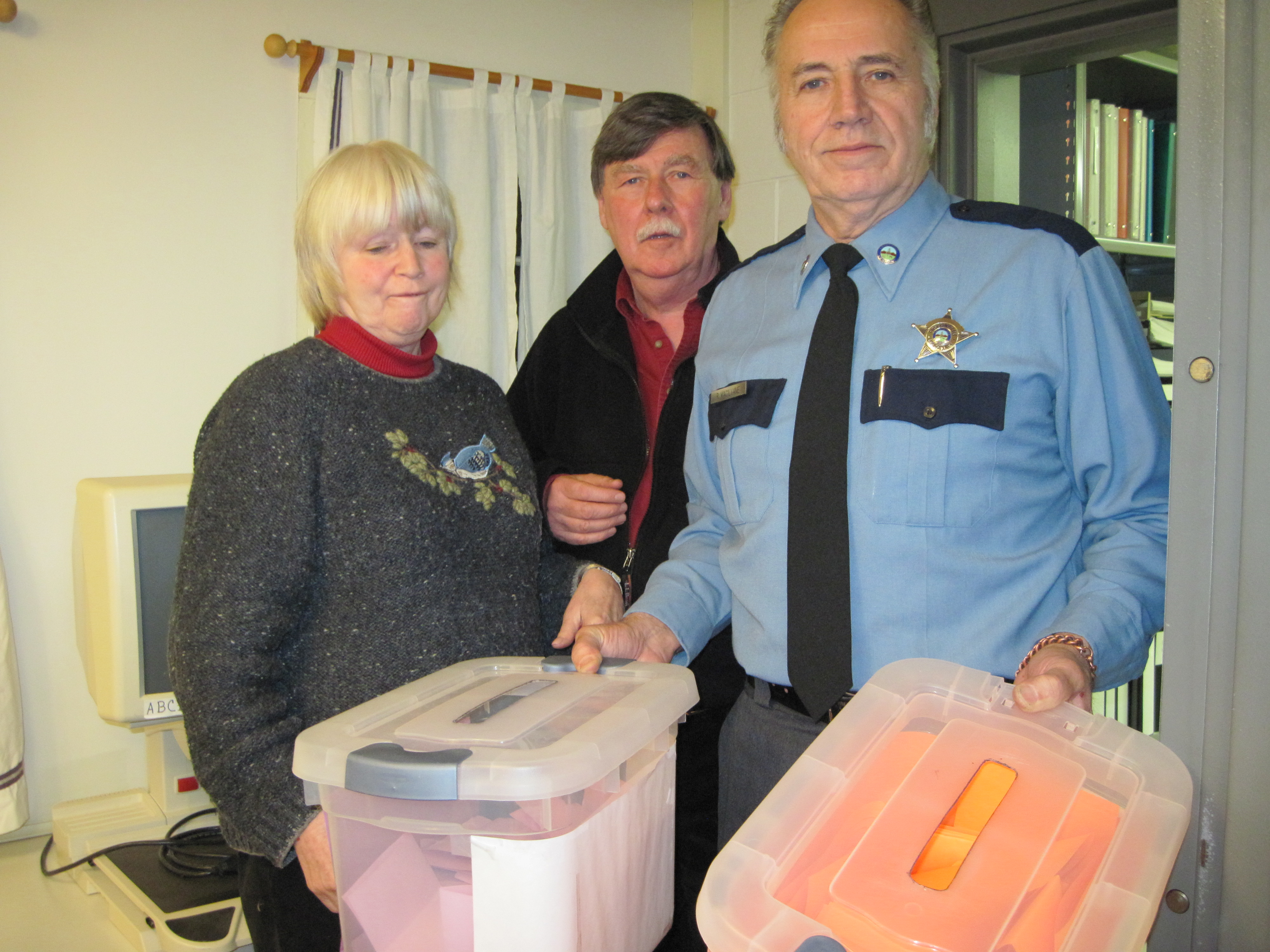
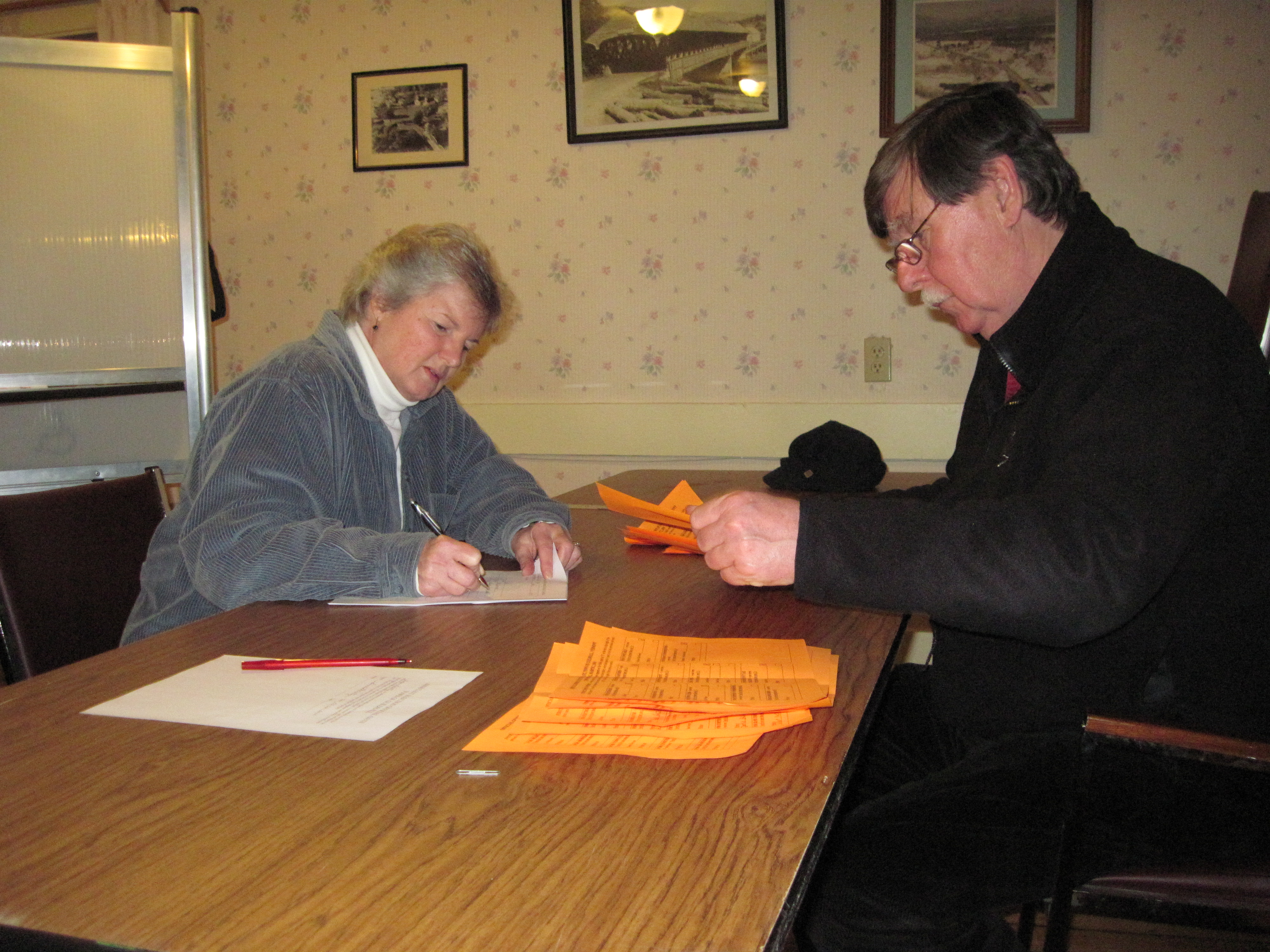
Eileen Thietten, Justice of the Peace, Ed Clark, Selectboard, Bob MacIlvane, ConstableImmediately after Town Meeting adjourned, I sent the Constable and two BCA members into the vault to retrieve the voted ballots, where we had locked them. Our town is so small that we always hand count our ballots. I designated three teams of two to count the votes and mark them on tally sheets. They counted; I brought out some refreshments to keep up the energy and attention levels. A handful of times, one of the counters would call me over to rule on whether a ballot should be counted or marked as spoiled. Susan McVetty and Ed Clark, couting ballots
Tom Dubreiul and Barbara Peaslee Smith, Selectboard, Counting Ballots
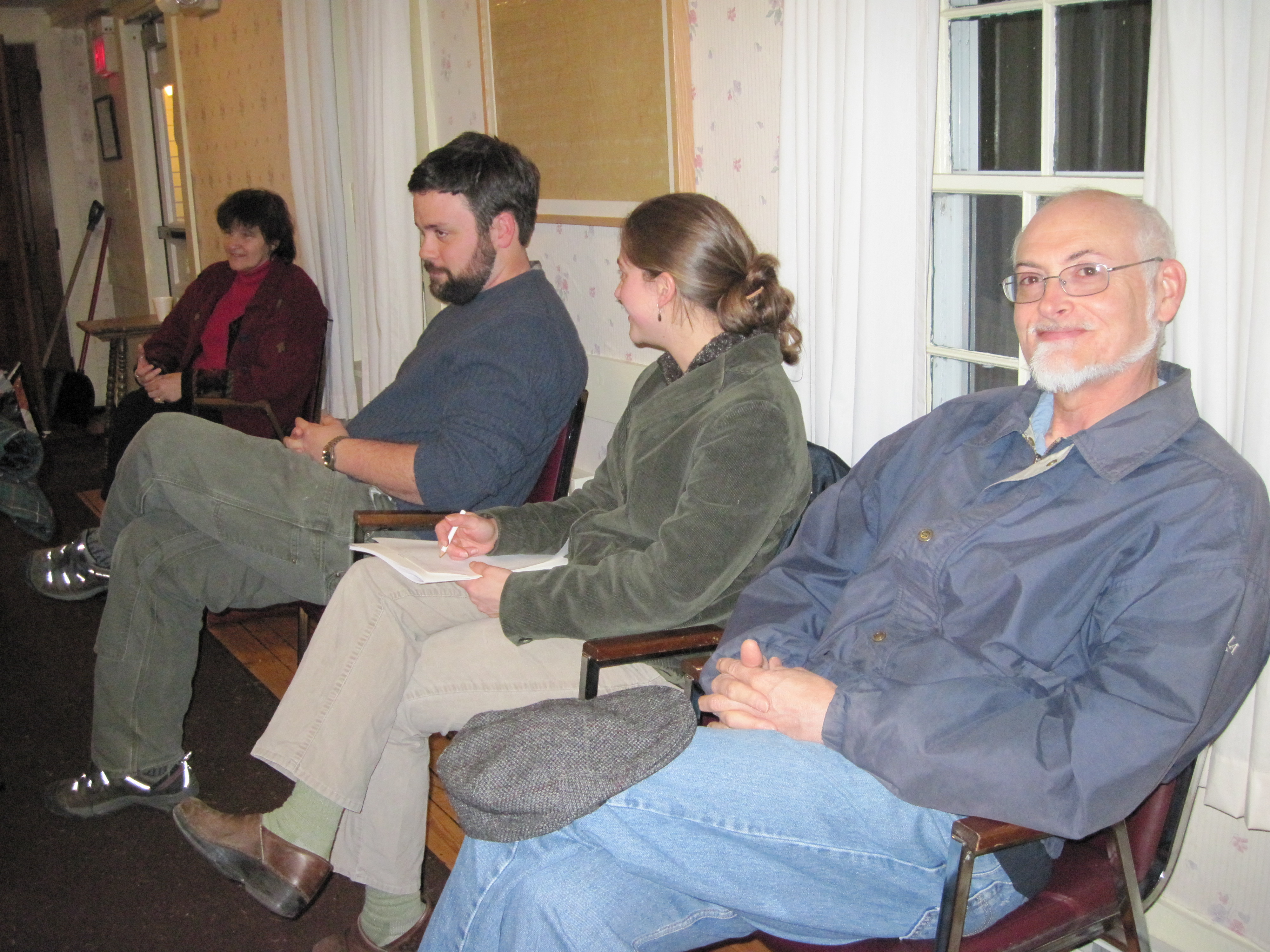
Hopeful candidates sat lined up behind a table, observing the proceedings and waiting.Lj Holland, Sam Swope, Linnzi Furman (his wife) and George Blakeslee
Once all teams were finished counting and notating, we sat around a table. With a summary sheet in hand, I asked for results from each team, for one race at a time, starting with Selectboard Member. In the end, we had no discrepancies, thankfully!
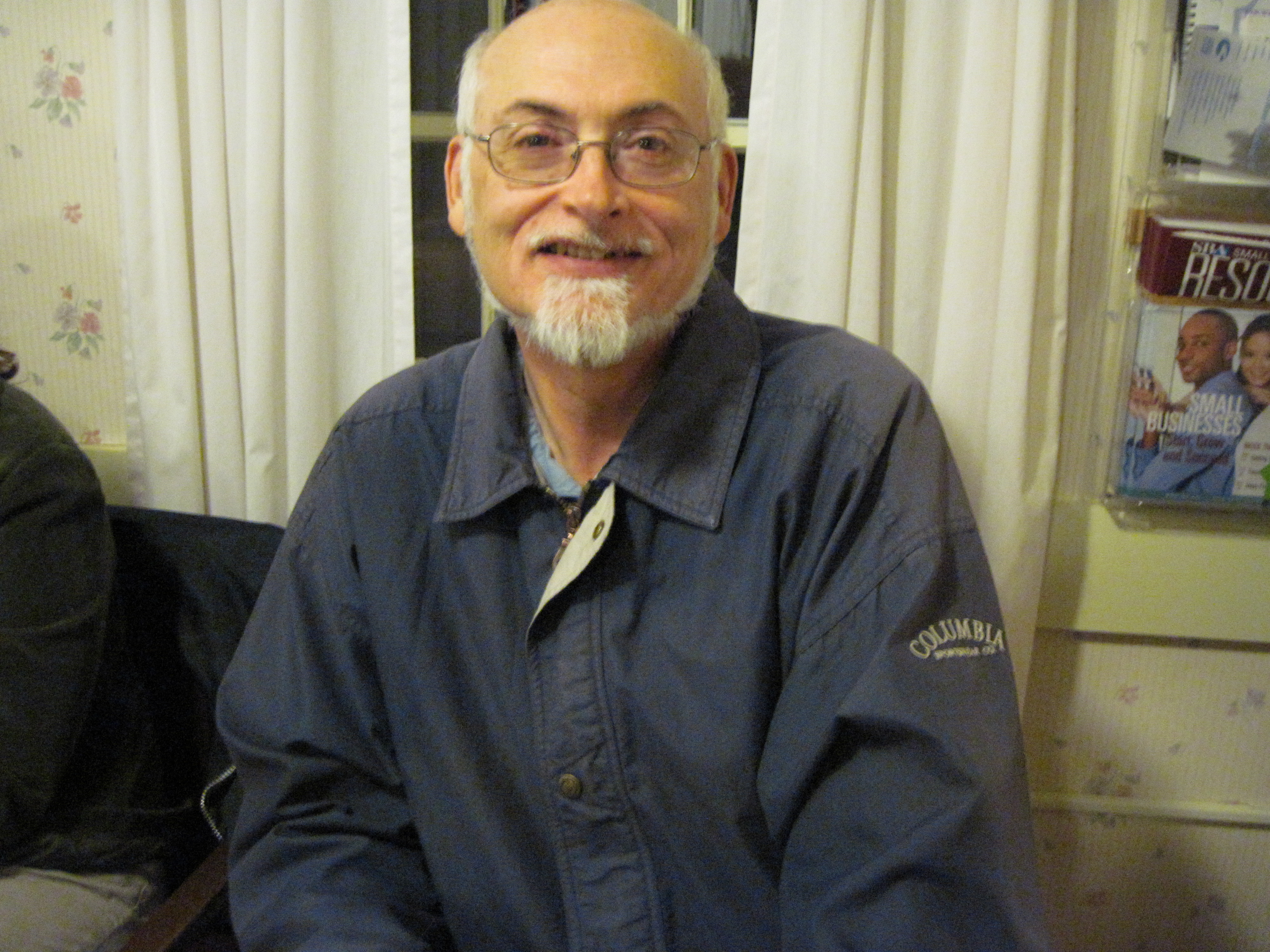
There was only one contested race, for Town Auditor, between George Blakeslee and Dawn Rogers. George Blakeslee defeated Rogers, 49-14. I was thrilled, because I had supported him enthusiastically.George Blakeslee, new Town Auditor, moments after his victory
With Barbara Peaslee Smith watching, I put all the election materials in the ballot bag and secured it. The new Town Clerk must save these materials for 90 Days. By the time I’d cleaned up, it was 10:30pm. Edward stayed with me to the end, and then we walked home across the green in the dark. On the way, we ran into George Blakeslee, walking his dog. George was all smiles because of his victory. I’m looking forward to working with him!
Town Meeting, about to openThings were pretty quiet at our evening Town Meeting until we got to Article 11, which asked if the voters would appropriate $2500 for law enforcement services. The key feature of this article was that it did not–deliberately–name any organization to be the recipient of those funds. In the past, the law enforcement Article has always specified that this sum go to the Essex County Sheriff’s Department. This year, the Selectboard felt that there was enough local dissatisfaction with the ECSD that they wanted to leave it up to the voters to debate and decide whether the money should go to ECSD, or allocate it elsewhere.
The Sheriff himself, Steve Gadapee, didn’t bother to show up. But Gil Rainault, a Guildhall resident and Essex County Deputy Sheriff, was there, and appeared upset at the omission of the sheriff’s department. He seemed to hint that without the appropriation, Guildhall residents might not get services, and a Selectboard member asked him if that’s REALLY what he meant to say. In the end, voters amended the Article to state that $2500 would go to the ECSD and another $2500 would be allocated at the discretion of the Selectboard for other law enforcement needs. There were some biting words!
A bit later, when we got to Article 14 regarding appropriation of funds for the Guildhall Public Library, a voter sought to amend the Article by proposing that a portion of that sum be instead given to Weeks Memorial Library, in Lancaster, NH. And accordingly, the original sum for the Guildhall Library be reduced. The Moderator very quickly ruled that this amendment was out of order, because the Lancaster library as a recipient had not been warned. Hmmm. The voters chose not to challenge his ruling. But I wonder: after all, we had just debated and amended Article 11. In that article, no law enforcement agency had been named, either, but amending it to name the Essex County Sheriff’s Department was not ruled out of order. Or perhaps the amendment to Article 14 was overruled because it was a hostile amendment? (Hostile amendments can also be overruled). I haven’t yet found the answer to this in Robert’s Rules of Order; I’ll have to ask Allen (our Moderator) about it when I next run into him walking across the Town Green!
Finally, there was a surprising amount of debate about Article #13, which asked the voters to require that any organization receiving appropriated funds must submit an annual financial statement as a condition of receiving those funds. I suspect some of the opposition (such as it was), was leftover from last year’s Library loyalists, who still don’t think the Library should have to be accountable to the Town, in spite of getting $5,000 from us. The Selectboard and the Treasurer (me) argued generally for accountability, and in the end, the Article passed.
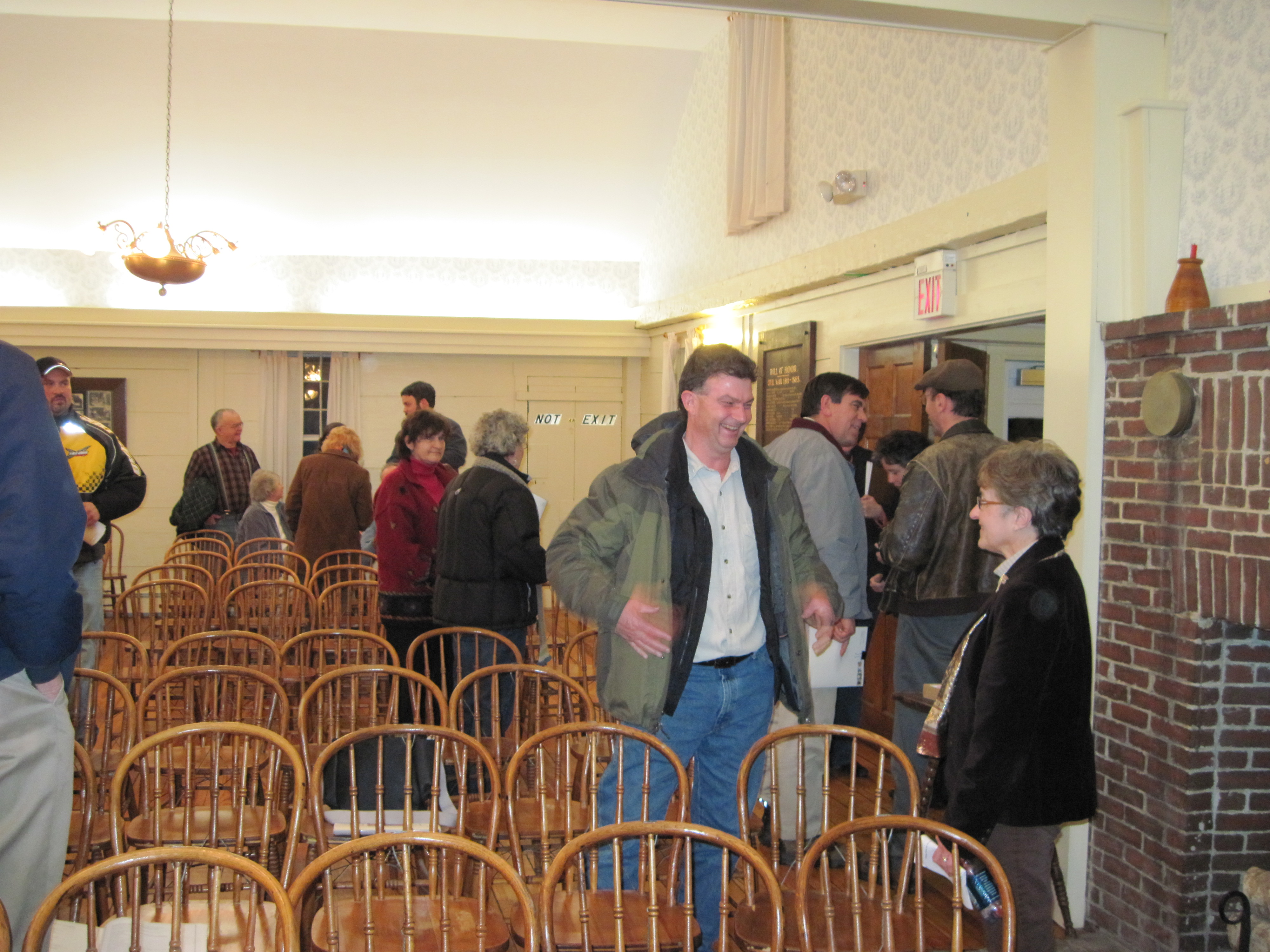
We adjourned at 9:01pm! Hanging around after close of Town Meeting
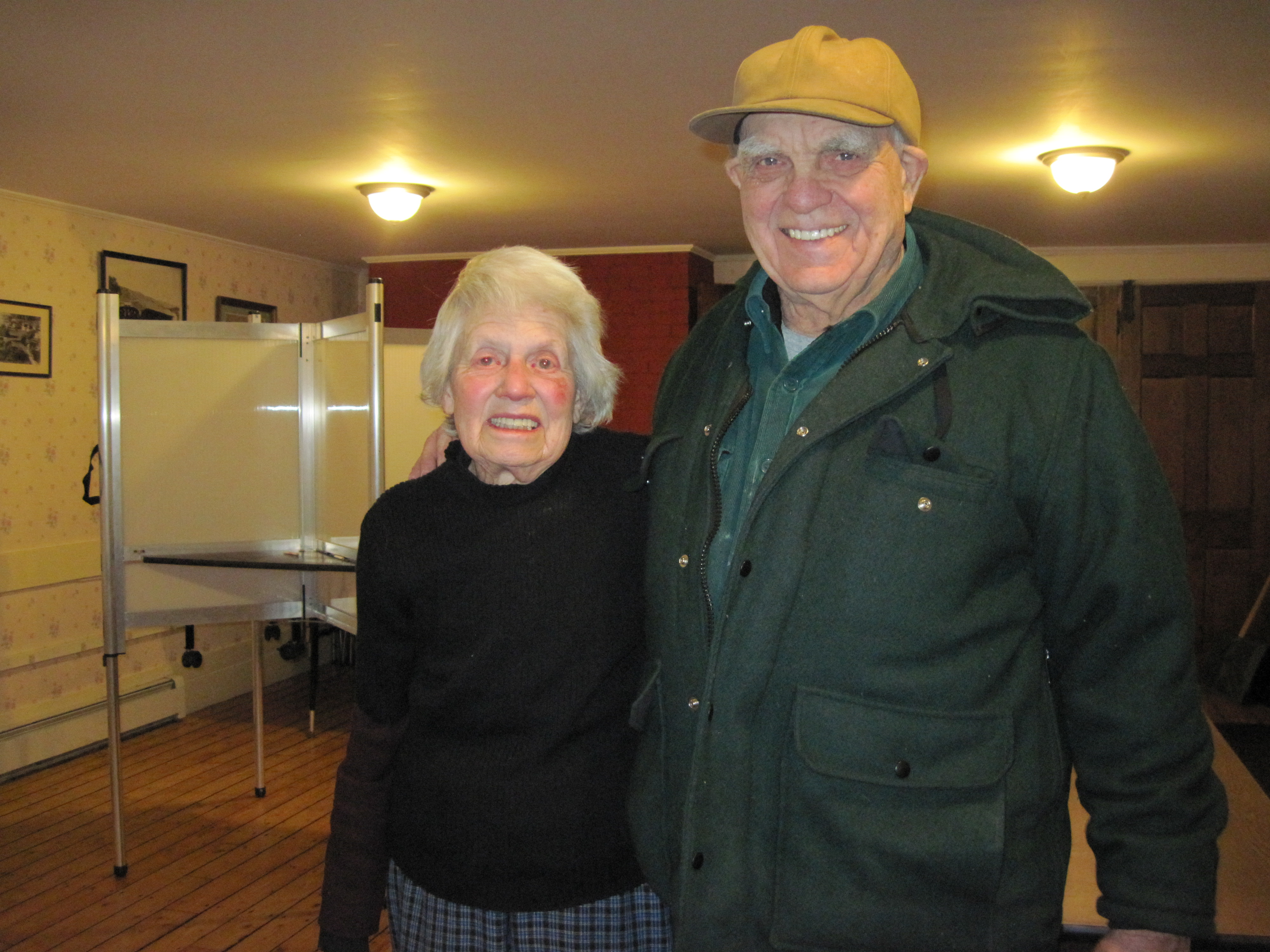
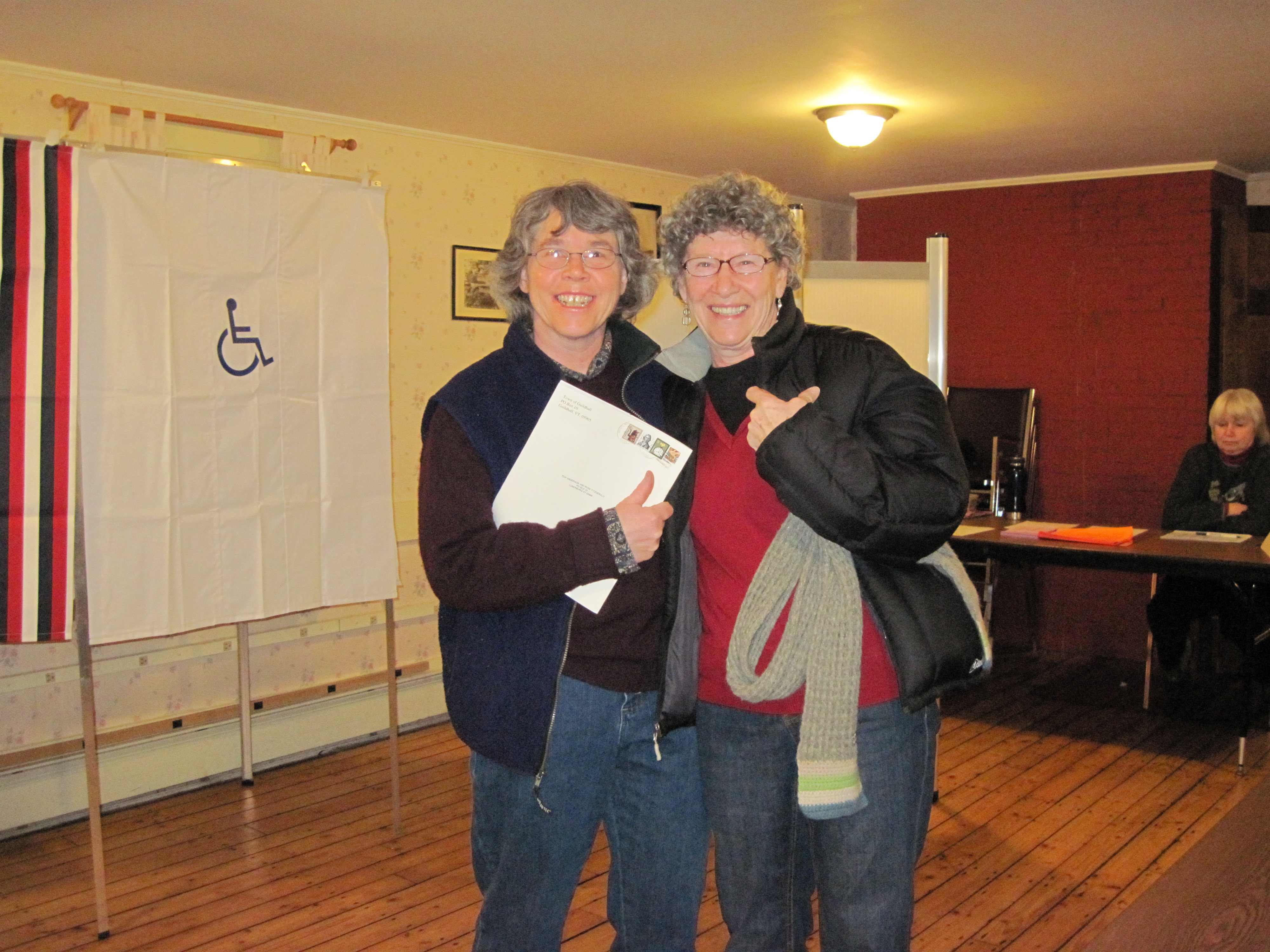
Harland and Dorothy Cantin, who have been married for 61 years.Teri Anderson and Rose Fitzgerald, together 10 years, married in Vermont apprx 3 months!Moderator Allen Hodgdon, just prior to calling the 225th Guildhall Annual Town Meeting to order
Guildhall Map, Circa 1855The fabulous historic map of Guildhall, from the 19th century, that hangs on my office wall.
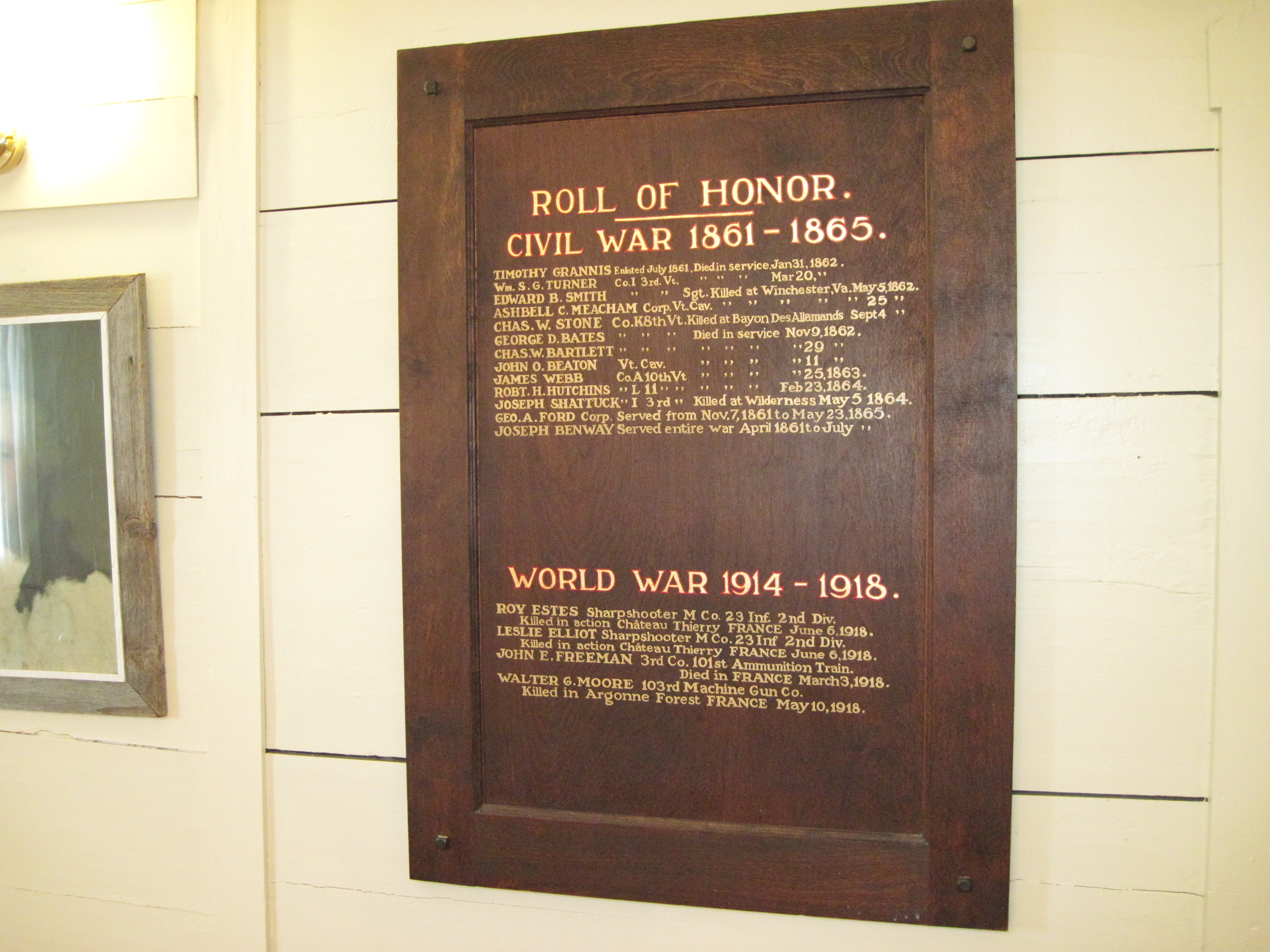
War Honor Roll, Guild HallThe honor roll, on the wall in Town Meeting room.
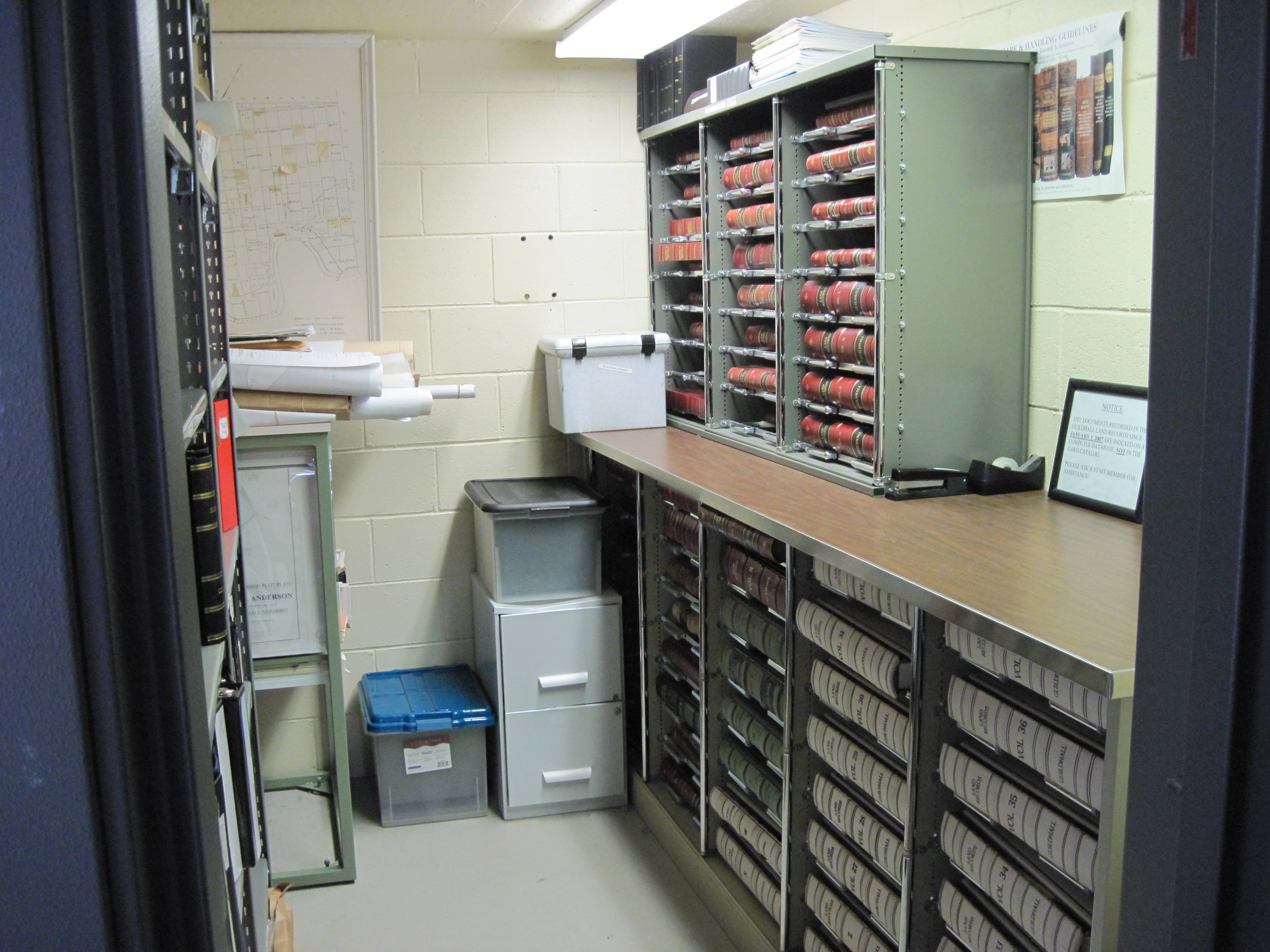
The Town Clerk’s vault. Here’s where the Guildhall Land Records, the Guildhall vital statistics and many, many other fascinating archived documents are stored. (This is the location of my vault scare of last month!)Guildhall Town Clerk’s Vault
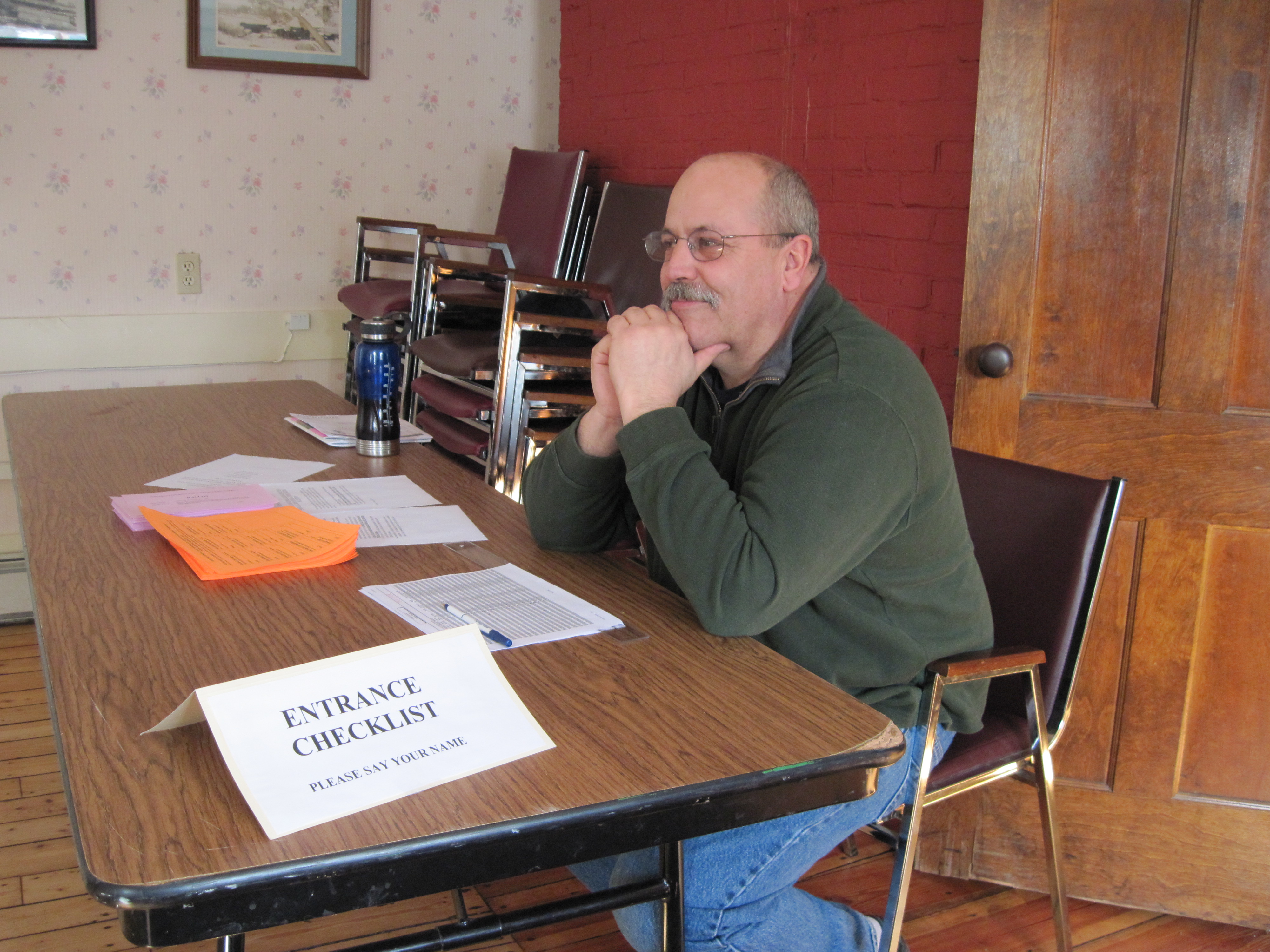
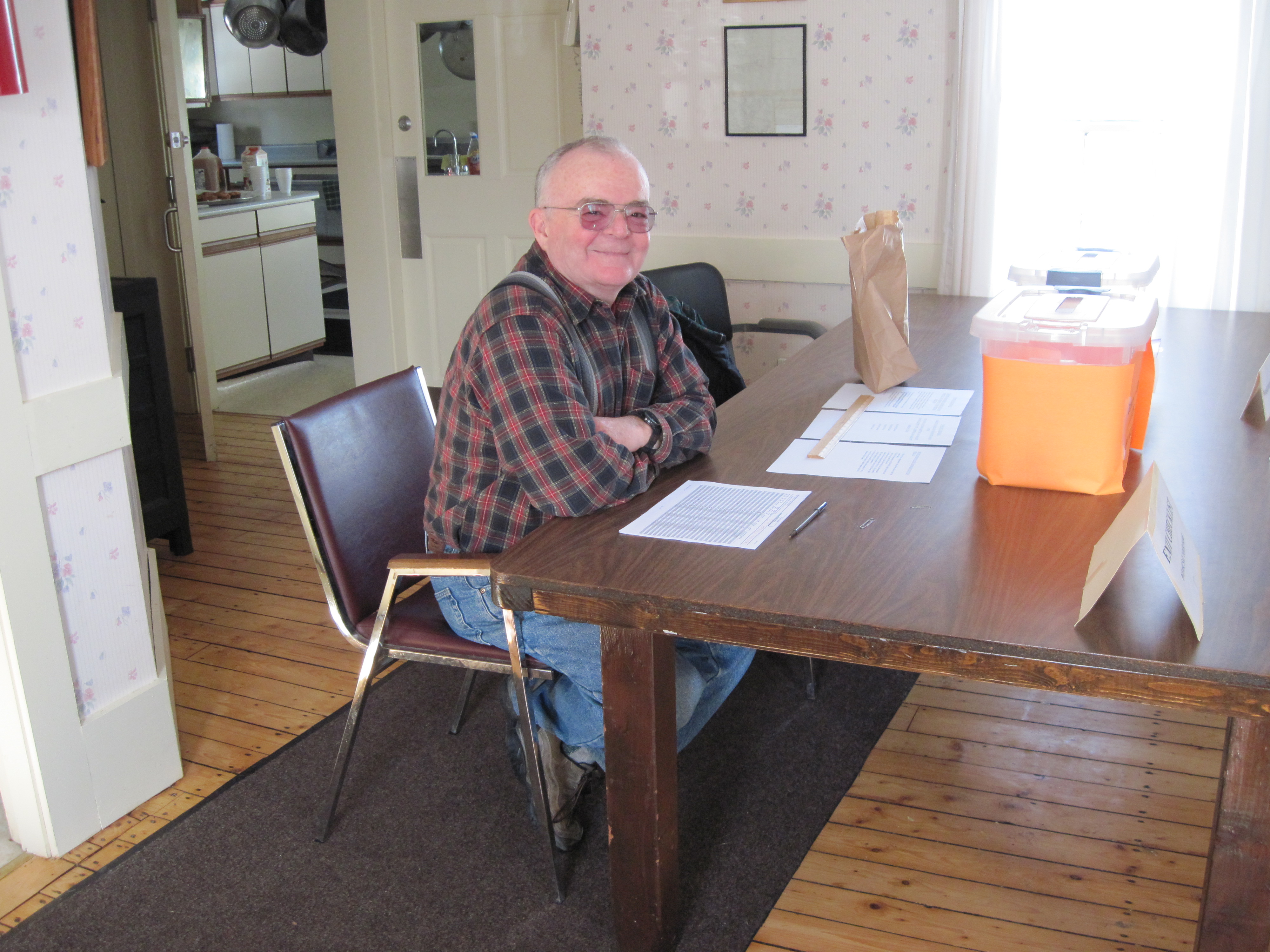
Tom Dubreiul, Selectboard Member, at the Entrance ChecklistAs of third shift, a whopping 44 people have voted at the Guild Hall. It’s been a steady stream of people, with many hanging out to talk and catch up. There are no places in Guildhall where people can gather, since our General Store closed down, so people are lingering here. The conversation ranges from the weather, to farm animals, to Obama’s health care plan, to what the next school field trip will be.
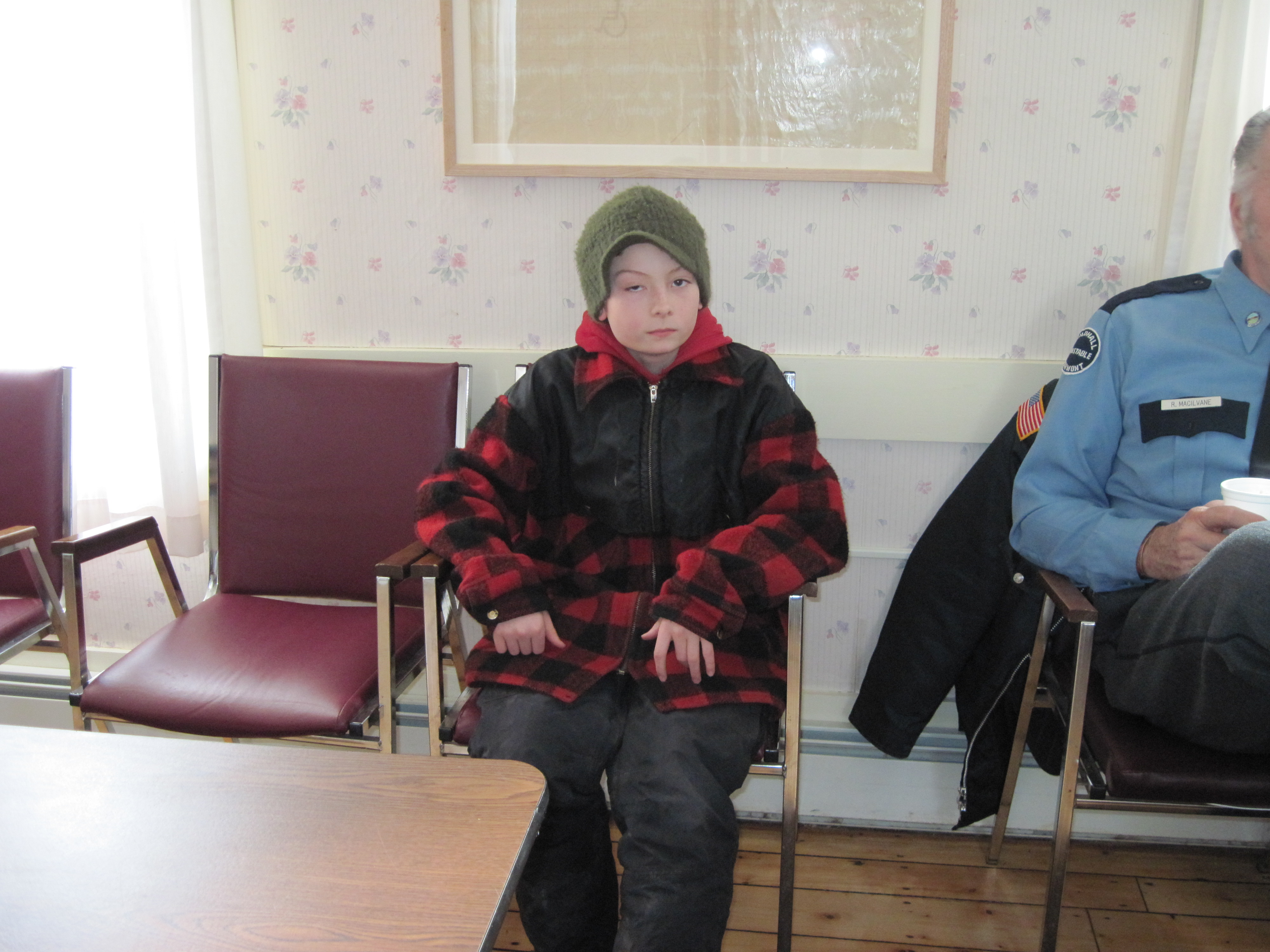
Here, Thomas Rogers–a future voter–sits waiting while his grandfather votes.Future voter!
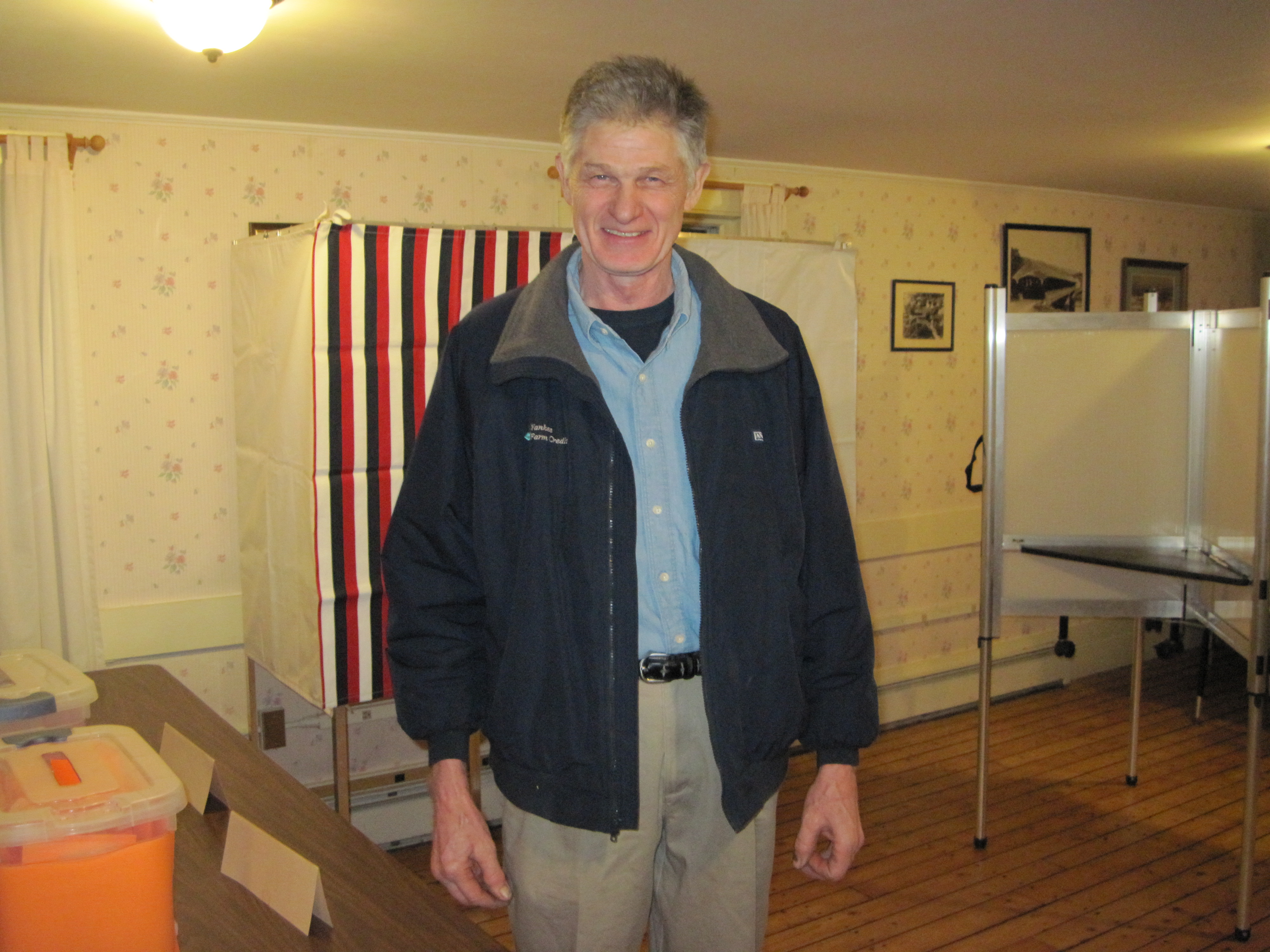
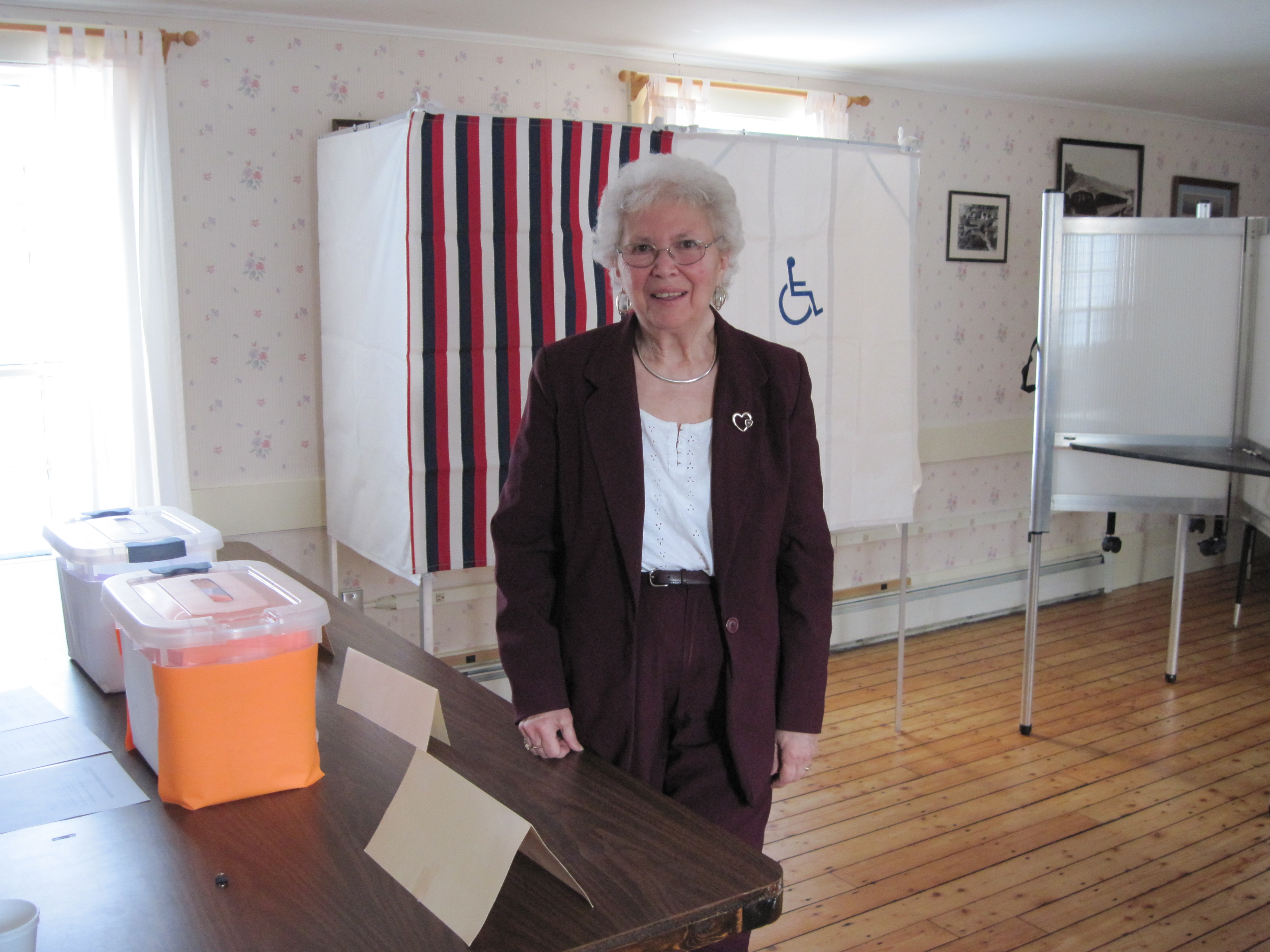
Claire MacIlvane, impeccably dressed, poses for the camera after casting her ballot. She’s a good sport!
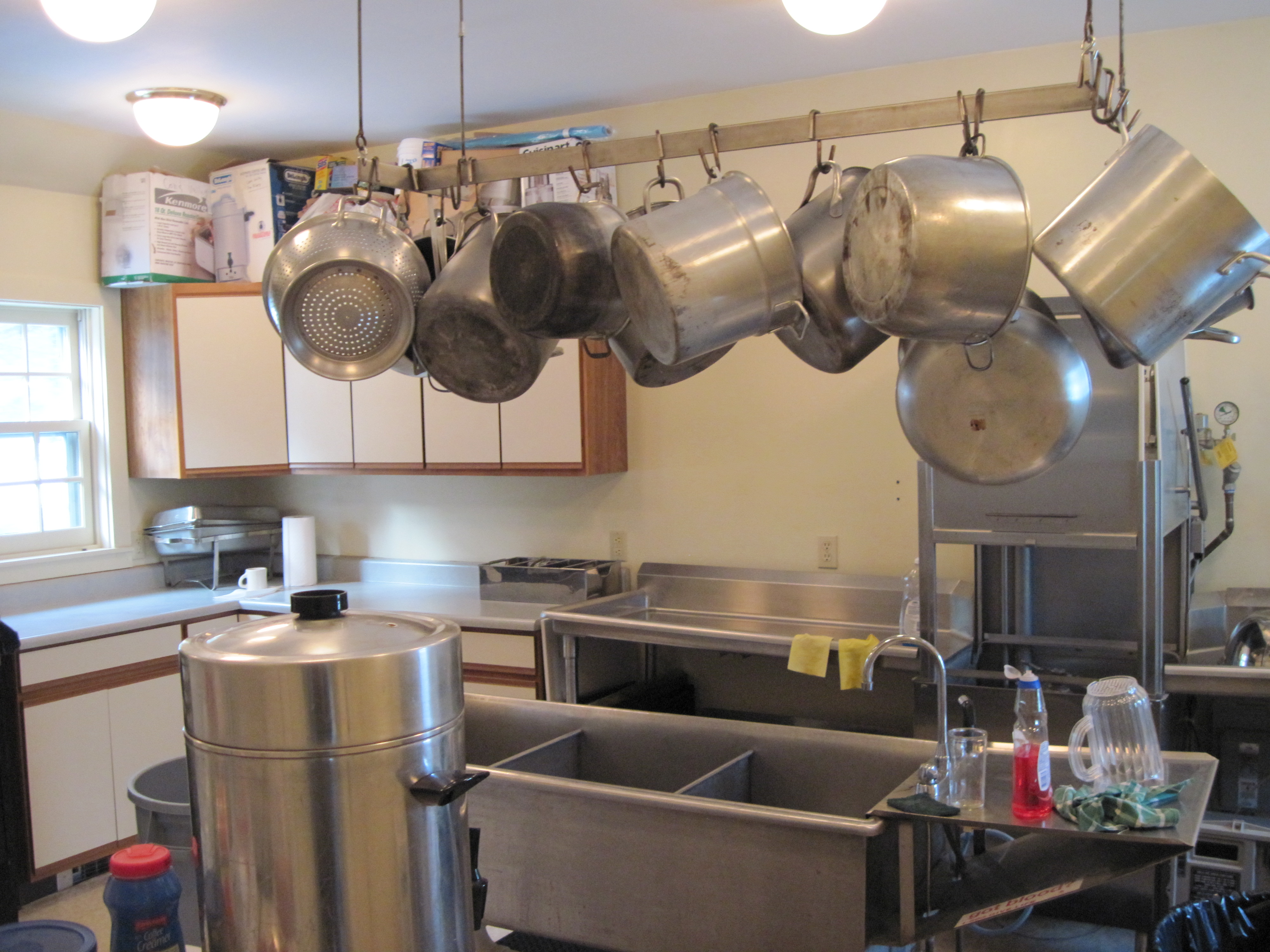
The Town Offices in Guildhall have a splendid, spacious kitchen. It hearkens back to the days when Town Meeting was an all-day affair, with lunch and supper served. Although I generally bring snacks for the election workers, there are no longer full-fledged meals, sadly. Some Vermont towns still have the suppers, usually served by school personnel or some charitable organization in town. I love the idea of townspeople hotly debating the issues and then sitting down for a convivial meal.Kitchen at the Guild Hall
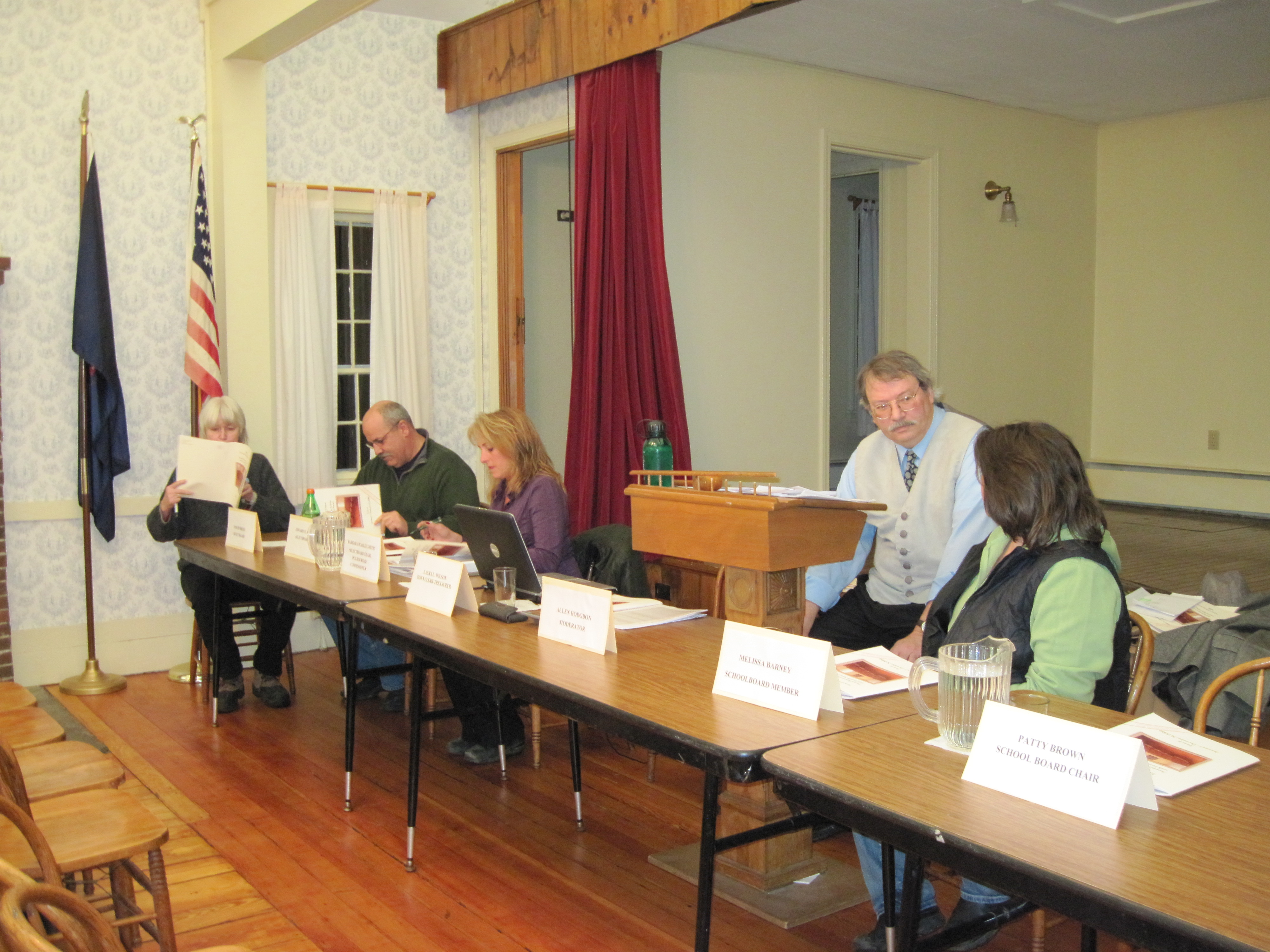
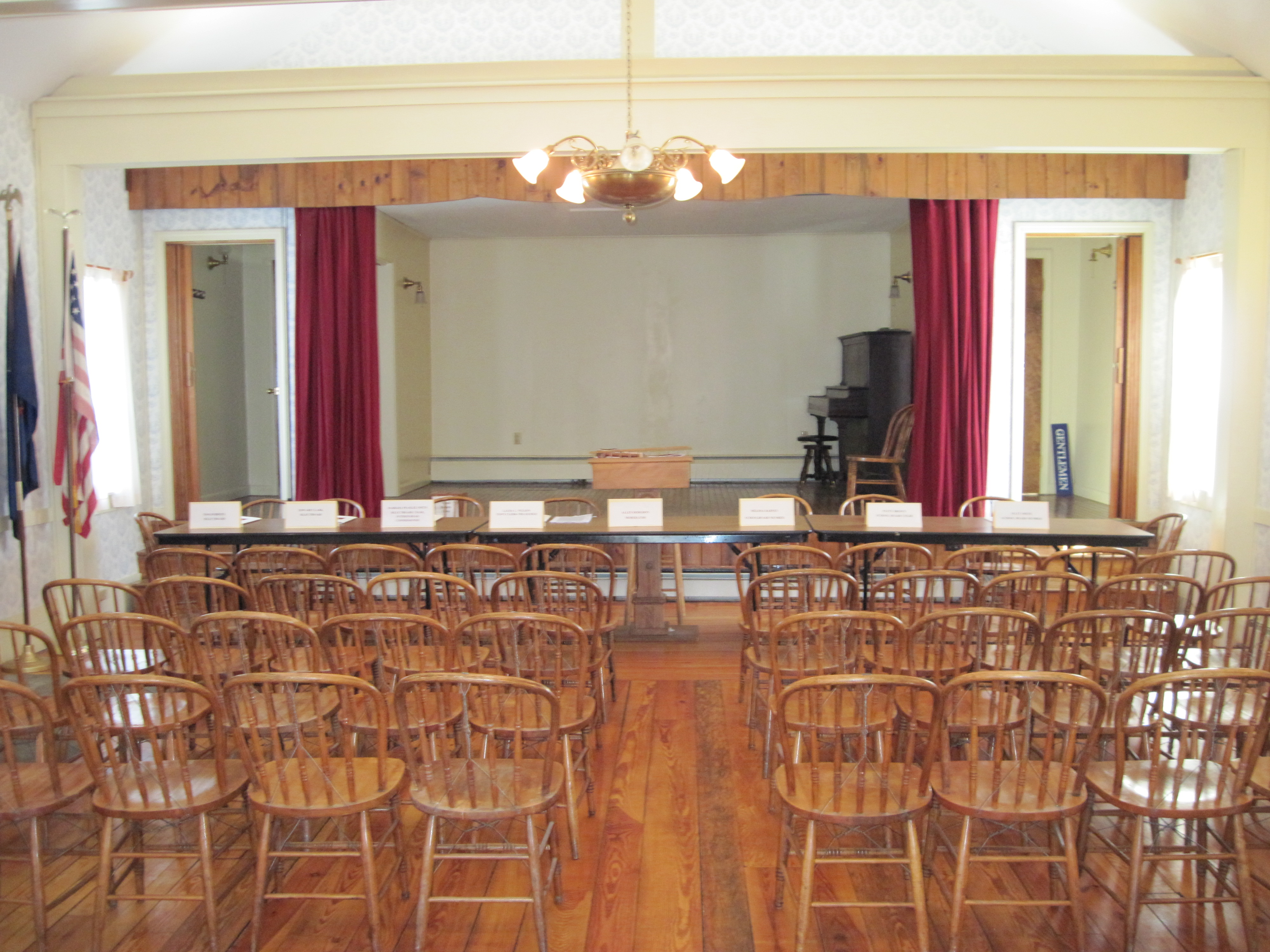
The Podium and the Panel, Pre-Meeting Town Meeting room, ready to go but empty until tonight! Standing in this room the day before the meeting never fails to give me a shiver, thinking of how long Guildhall residents have come here, year after year since 1795 to debate roads, libraries, school budgets, garbage, and other things! Started the day by going for a short run, down to Melissa Barney’s house and back. Then, I ensconced myself in my kitchen to bake muffins for election staff. (Cherry-Almond!). Brought the food over and opened the office at 9am!
Alfred McVetty, Justice of the Peace at the exit checklistPolls opened at 10am, with Alfred McVetty (pictured) and Eileen Thietten at the entrance and exit checklists. Before the polls opened, Representative Janice Peaslee stopped by and I took the opportunity to ask why she was opposed to the sale of the Island Pond airport in order to make room for the 100 jobs that the new pellet plant will bring to the area. Her answer? She thinks there are other suitable places that can be used, and she thinks the airport is important infrastructure. An airport in Essex County more important than 100 jobs? Hmmm. I’m afraid I’m not convinced.
Town Clerk business? Someone from Maidstone came in to renew her vehicle registration and another person to search for a deed and look at the tax map.
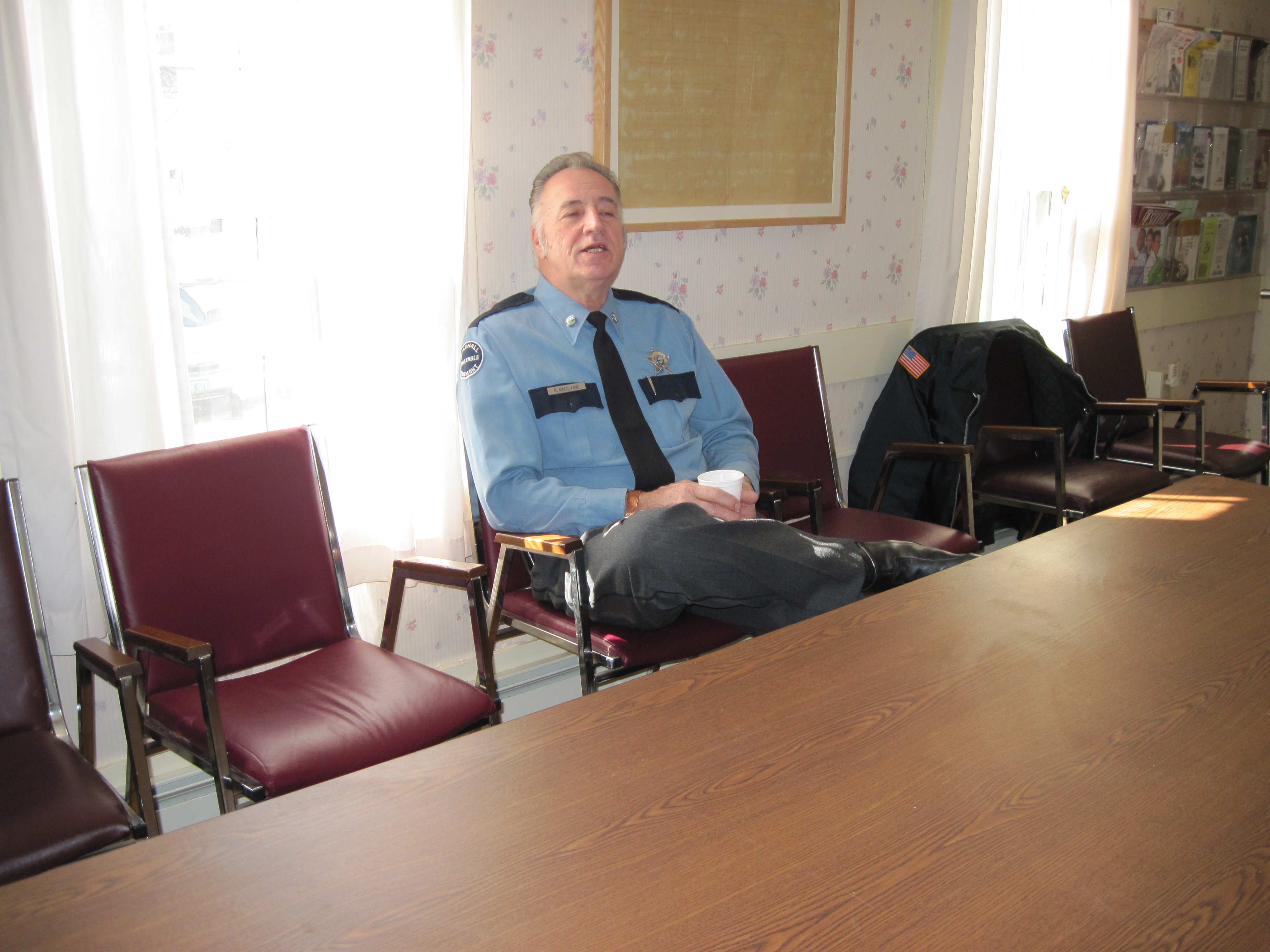
Our constable Bob MacIlvane keeps a watchful eye over the proceedings.Robert MacIlvane, Guildhall Constable
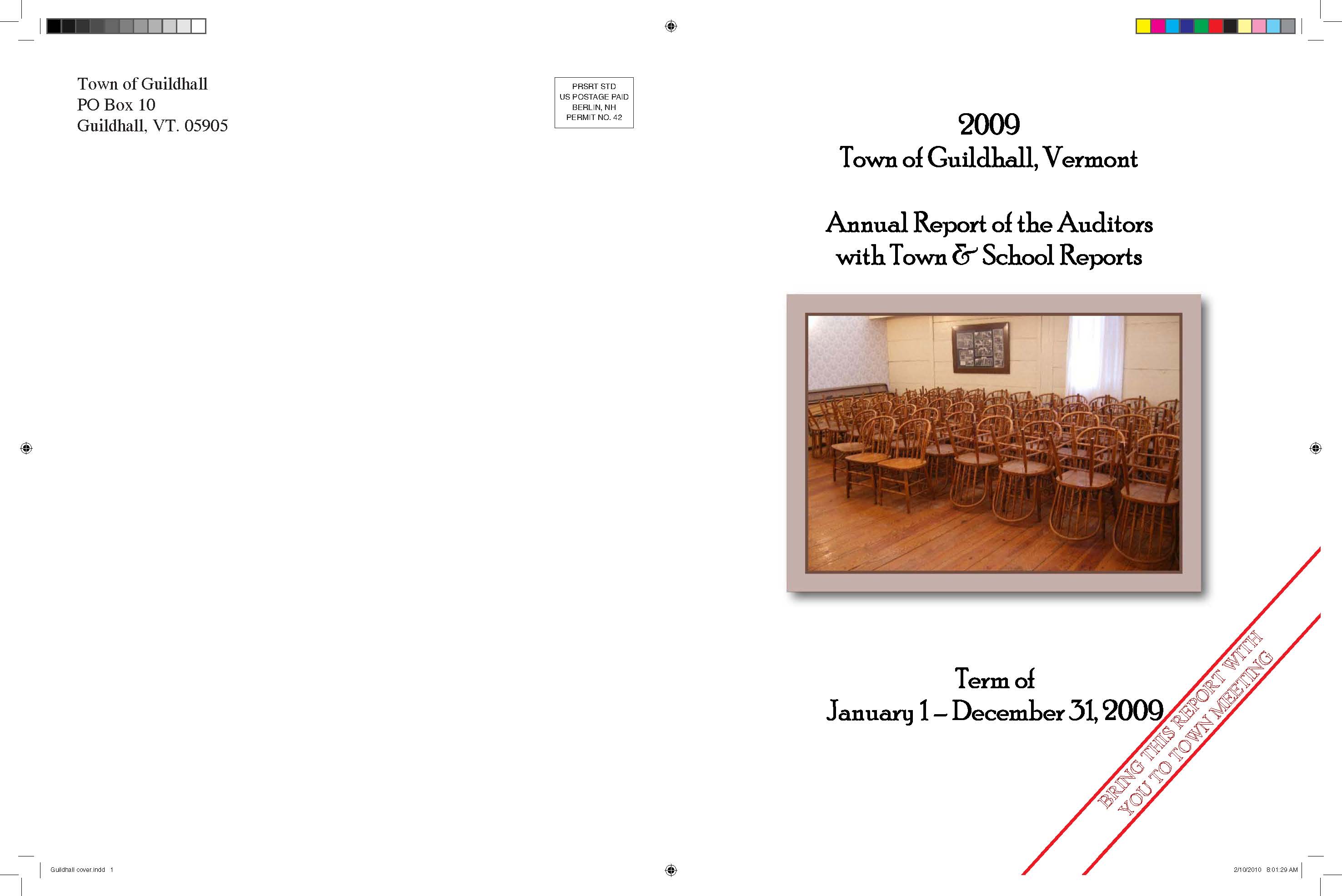
2009 Town Report, Cover Page ImageDuring January and February, auditors, town clerks and treasurers all over Vermont have been busy preparing their town’s annual town report. In the mid-19th century, towns began publishing single sheets, and then gradually moving to modest booklets. The Town Report is mailed, physically distributed, and often available on municipal websites. It typically contains budget and tax information and reports of all the Town and School officers. Read Guildhall’s! Guildhall Vermont Twn Rept 2009






 Life, Law, and Politics in the Northeast Kingdom