• Blog
  • About
  • Contact

Life, Law, and Politics in the Northeast Kingdom

  • The Guildhall Garden

    February 17th, 2014

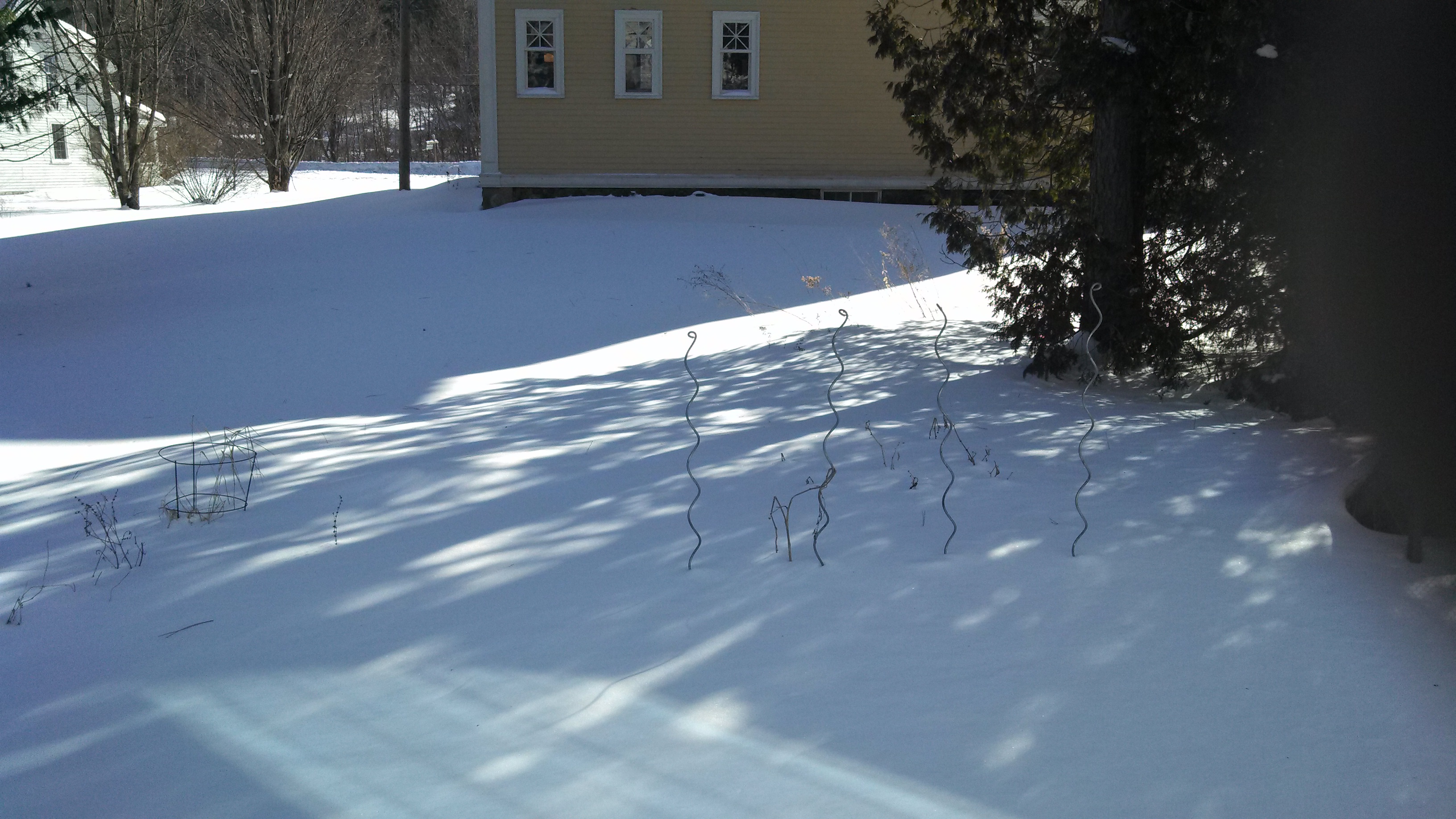
    IMG_20140217_143036_738This is how my garden looks today, buried in approximately a foot of snow. You can’t see it, but there are three raised beds for vegetables, a semi-circular area for wildflowers and rhubarb, and two long borders that contain peonies, sorrel, oregano, bee balm (monarda), chives, and a burst of bright orange lilies.

    I made my first forward-thinking gardening step yesterday, by placing an order at Fedco for seeds. Below is my order. There are a few items that I’ll have to buy in person somewhere. In the meantime, I make my plans–which seeds I’ll start inside, when (roughly), I’ll plant the cool weather crops like peas and spinach outside (probably mid-April), and where to place the various plants and seeds in relation to each other.

    214 – Greencrop Bush Green Bean ( A=2oz ) 1 x $1.40 = $1.40
    798 – Legume Inoculant ( A=treats 8lb ) 1 x $5.00 = $5.00
    889 – Cascadia Snap Pea OG ( A=2oz ) 1 x $2.00 = $2.00
    1313 – Marketmore 76 Slicing Cucumber OG ( A=1/16oz ) 1 x $1.20 = $1.20
    1457 – Costata Romanesca Zucchini OG ( A=1/8oz ) 1 x $1.40 = $1.40
    1520 – Lemon Yellow Summer Squash OG ( A=1/8oz ) 1 x $1.60 = $1.60
    2042 – Scarlet Nantes Carrot ( A=1/8oz ) 1 x $0.90 = $0.90
    2109 – Early Wonder Tall Top Beet OG ( A=1/8oz ) 1 x $1.00 = $1.00
    2268 – Misato Rose Radish OG ( A=1/8oz ) 1 x $1.50 = $1.50
    2407 – King Richard Leek OG ( A=1/16oz ) 1 x $1.70 = $1.70
    2541 – Bloomsdale Spinach OG ( A=1/4oz ) 1 x $1.40 = $1.40
    2712 – Black Seeded Simpson Lettuce OG ( A=2g ) 1 x $1.00 = $1.00
    2771 – Royal Oakleaf Lettuce OG ( A=1g ) 1 x $1.00 = $1.00
    3023 – Arugula OG ( A=1/16oz ) 1 x $1.00 = $1.00
    3038 – Golden Chard OG ( A=1/16oz ) 1 x $1.30 = $1.30
    3170 – Dark Green Italian Parsley OG ( A=1/16oz ) 1 x $1.20 = $1.20
    3312 – Fiesta Broccoli OG ( A=0.2g ) 1 x $2.50 = $2.50
    3608 – Imperial Star Globe Artichoke OG ( A=0.5g ) 1 x $1.50 = $1.50
    3678 – Applegreen Eggplant OG ( A=0.2g ) 1 x $1.70 = $1.70
    3723 – Purple Beauty Sweet Pepper OG ( A=0.5g ) 1 x $1.10 = $1.10
    4065 – Jubilee Tomato OG ( A=0.2g ) 1 x $1.30 = $1.30
    4117 – Principe Borghese Cherry Tomato OG ( A=0.2g ) 1 x $1.30 = $1.30
    4418 – Genovese Basil ( A=2g ) 1 x $1.00 = $1.00
    4436 – Anise Basil ( A=0.5g ) 1 x $1.20 = $1.20
    4453 – Lime Basil OG ( A=0.25g ) 1 x $1.30 = $1.30
    4531 – Bouquet Dill OG ( A=2g ) 1 x $1.20 = $1.20
    4567 – Bronze Fennel OG ( A=0.2g ) 1 x $1.20 = $1.20
  • Laura Grows Up: Music 14-20 years old

    February 9th, 2014

    me, at 16 years old.
    me, at 16 years old.
    Before about age 14, my musical universe was–for the most part–overwhelmingly shaped by important people in my life, mainly my parents and their friends and romantic partners. But by 14, I had started making discerning choices. There was music my parents liked that I consciously rejected in favor of other albums and artists.

    Bonnie Raitt
    Bonnie Raitt
    The best and perhaps first example was Bonnie Raitt. I don’t know what first brought Raitt to my attention, but it wasn’t any specific person in my life. Somehow, I was listening for myself and making choices. (At age 17, I left home for good, and my musical universe broadened even more.)

  • A Poem About Snow Machines, by Edward Clark, Jr.

    February 1st, 2014
    Inuit Snowmobiler, Napochie Sharky, Cape Dorset 2006
    Inuit Snowmobiler, Napochie Sharky, Cape Dorset 2006

    The Polaris 2011 800-RMX 155
    Roars up the snow packed groomed trail
    Missing all the soft gifts of my woods.

  • Laura’s Music: 11-14 years old

    January 25th, 2014

    imagesWhen I was 11-12 years old, my father (who I was still only visiting on weekends), took up with a 16 year old woman named Judith Wolfman. We called her Judy, and sometimes Jude. To this day, I don’t know that much about her background, except that she grew up in a relatively affluent Jewish family on Long Island and had two sisters, Laura and Deborah. Her father was a psychiatrist. She had dropped out of school and come to central and western Massachusetts where she hung around the margins of the local counterculture and music scene. We were only four years apart in age. (My dad was 33).

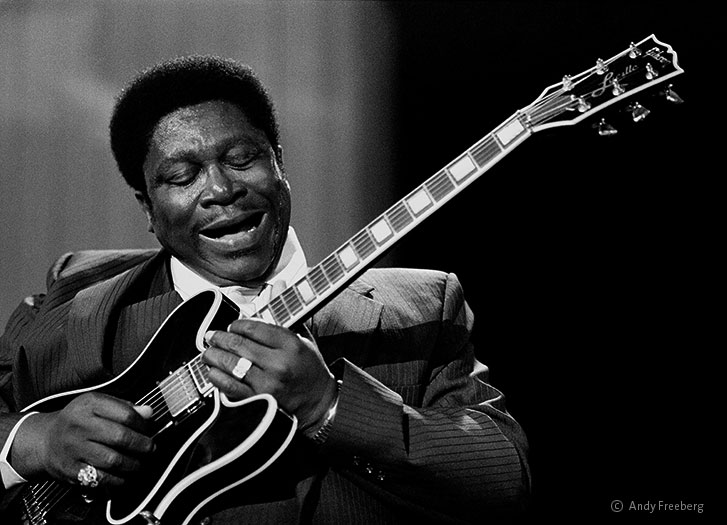
    bb_king_3Judy was smart and educated, as much or more than my father. She knew a lot about film, literature and poetry. She was also well-versed in music and popular culture. She played the guitar reasonably well and knew things about pottery, sewing, and fashion. She kept a journal (which she occasionally showed me) and gave names to her house plants. Jude had a great sense of humour and easily made me laugh hysterically. To me, she was the epitome of sophistication, even though she was only four years older than I.

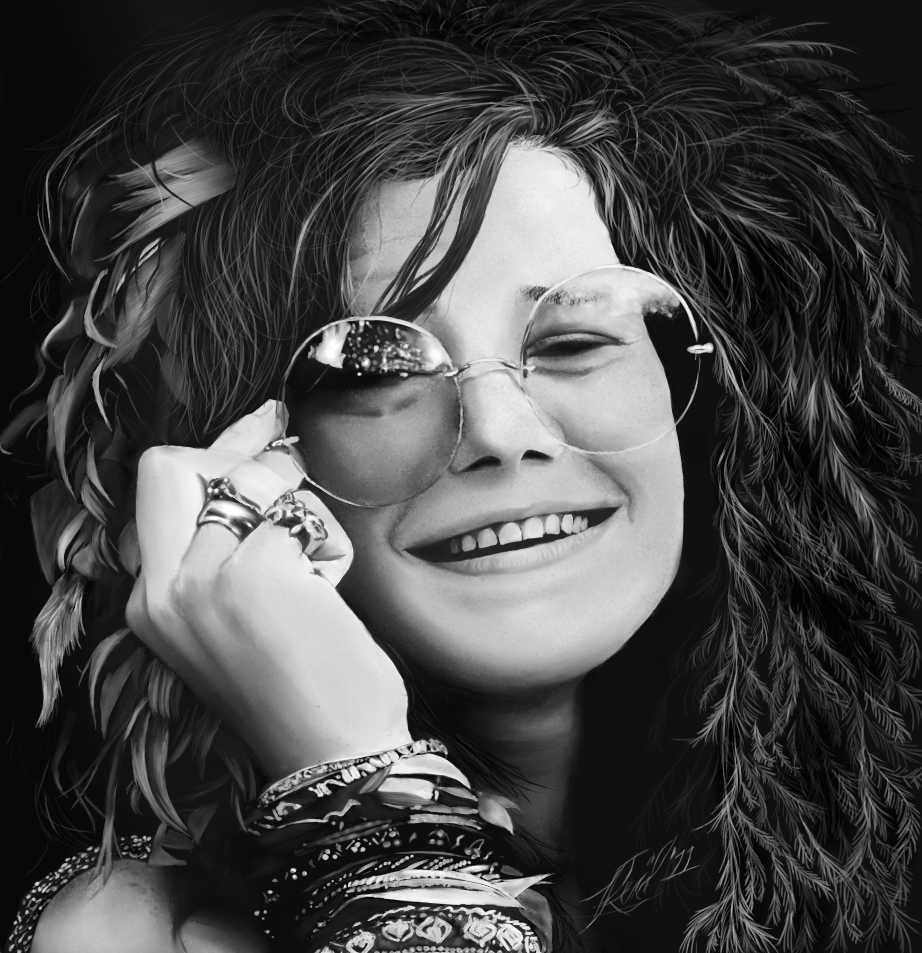
    janis_joplin_by_diabla69-d4kilrnJude was an enormous cultural influence on as I entered puberty and adolescence. With a few exceptions here and there, almost all the music on this playlist came directly from Judy. (The exceptions: by the time she came into our lives, I had already developed a Donovan obsession. And I had learned about Gladys Knight and the Pips from my classmates at Amherst Junior High).

    Judy was just one of a string of my father’s women after my parents’ divorce. Like all his women, she didn’t stick around for that long. Sensibly, she left him after just two and a half years. (I’ve always been grateful to my dad’s various girlfriends and wives, at least the ones I knew about. Each and every one of them were strong, independent, interesting women and my father was only a temporary interlude before they moved on to much better things. All of them helped shape the person I am today, including being a feminist).

  • Looking Back: Music in the Life of William Henry Waller, II

    January 12th, 2014

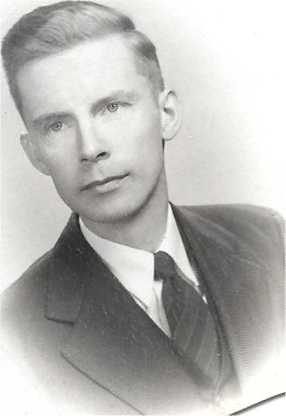
    William Henry Waller, II, circa 1948.
    William Henry Waller, II, circa 1948.
    My maternal grandfather William Henry Waller (also known to us grandkids, variously, as “Unk,” “Hank,” or “Chief,” was born in 1909, in Angola, Indiana. He was the only son of three children and grew up in a conservative, fundamentalist family.

    At some point after his graduation from college, he completely and utterly rejected the conservative ideology and religion of his youth. That probably happened during the Depression of the 1930s, when he had finished college and was navigating his way through young adulthood. Although I cannot, of course, be completely sure of this, I feel pretty confident that after college he likely never set foot in a church again and he hard harsh words for religion of any sort.

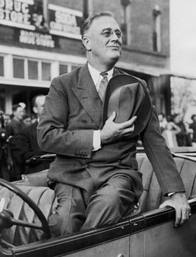
    FDR was one of my grandfather's heroes, as he is to me.
    FDR was one of my grandfather’s heroes, as he is to me.
    Moreover, Unk evolved into a fierce critique of capitalism and corporate hegemony. He adored Franklin Delano Roosevelt and considered him a hero, although Unk’s family of origin apparently considered FDR the devil incarnate.

    He never called himself a socialist, although he sounded an awful lot like one to me. Unk believed in the marketplace, he frequently reminded me, just thought it had to be tightly regulated, and he was knowledgeable and devastating in his critique of regressive tax policies.

    After college, he studied neuroanatomy at Cornell University and then graduated from medical school at the University of Georgia. He eventually became a psychiatrist, which remained his profession until retirement.

    My grandfather wasn’t an affectionate or demonstrative person. Most of the time, I found it difficult to talk to him at all, never mind share anything personal or to have discussions about music, poetry or other kinds of art. But I knew he loved me.

    I’ve tried to learn what I can about the music he listened to or might have listened to. My own memories are limited: I remember he and my grandmother Irene Andrews Waller dancing every New Year’s to Guy Lombardo’s “Auld Lang Syne.” And he was fond of FDR’s now-classic campaign tune “Happy Days Are Here Again,” even forty or fifty years after FDR had been elected.

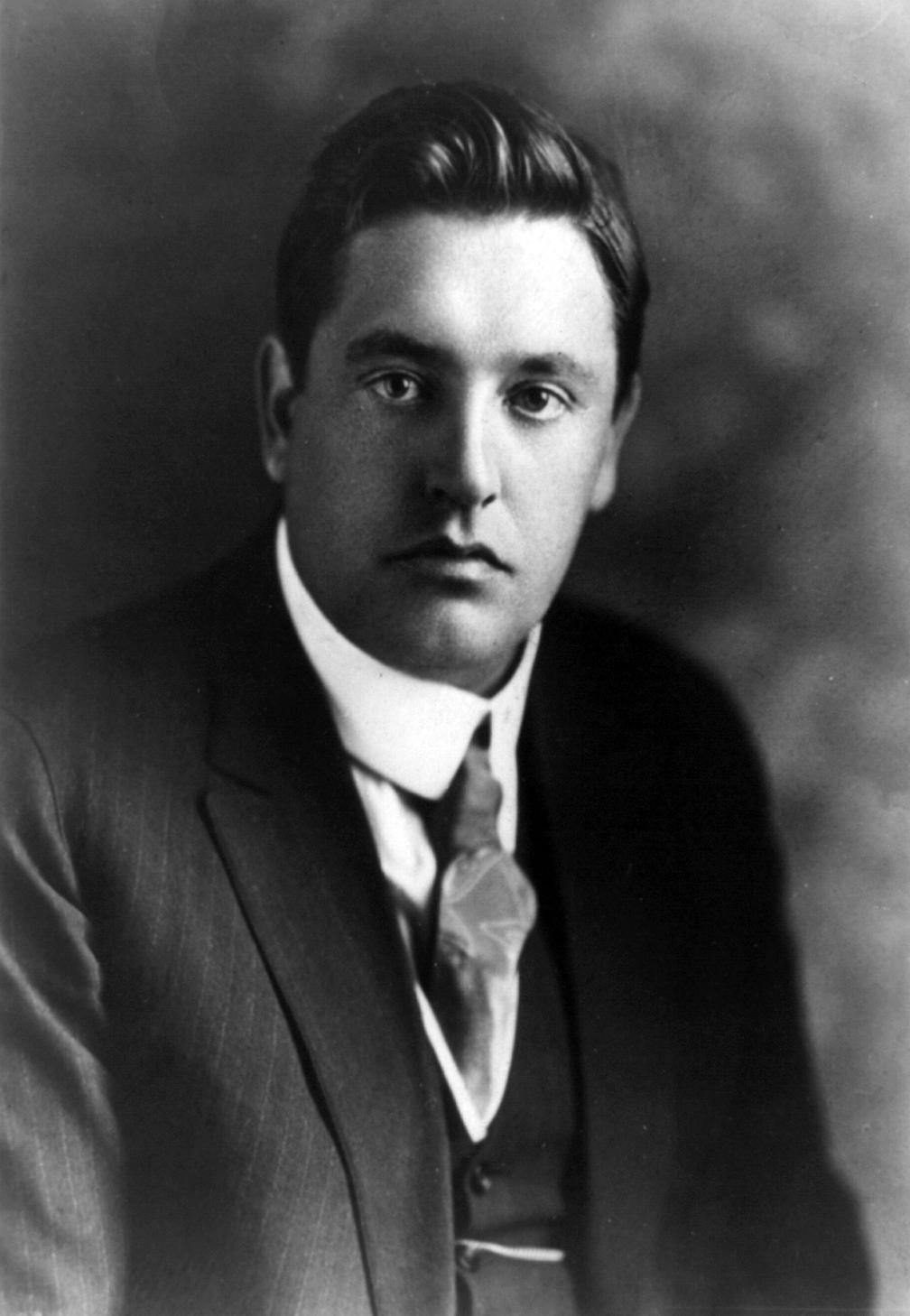
    The great Irish tenor, John McCormack whose version of The Rose of Tralee is included below.
    The great Irish tenor, John McCormack whose version of The Rose of Tralee is included below.
    My mother has provided some additional clues: songs that she heard him singing in the shower, an incident when he went without my grandmother to hear Frankie Laine at a nightclub in Boston (which apparently caused some friction between them) and songs that he often requested that my mother or grandmother play on the piano after my mother’s voice practice sessions (usually involving classical music, ie Handel, Mozart, etc) were done.

    Patching all that together, and learning what I could about which artists were recording what during the relevant time period, I’ve assembled this playlist!

  • Wanted Man: Laura’s Music Memories, Age 8-11

    January 4th, 2014

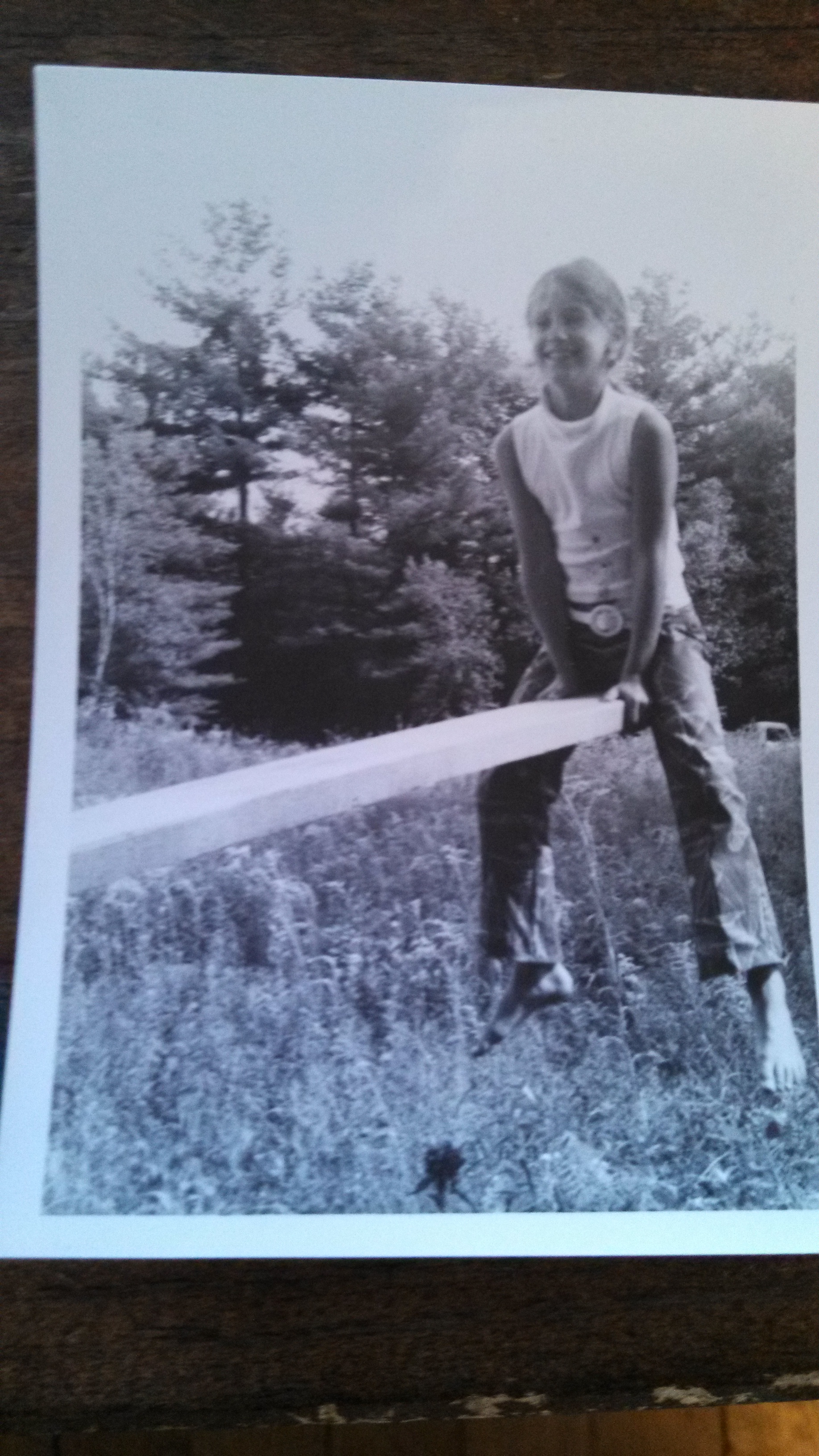
    Laura, at age 9 or 10.  The beginning of my own hippie phase.
    Laura, at age 9 or 10. The beginning of my own hippie phase.
    My parents got divorced when I was 7-8 years old. My brother and I lived with my mother and visited my dad on weekends or holidays. His life was chaotic, to say the least, and he never lived any one place for very long. Most of my memories revolve around being in cars with my father–when he picked us up, dropped us off, or took us on long rides or outings to go here and there, visiting his motley crew of hipster friends.

    My dad had an 8-track cassette in the car, and he tended to get fixated on certain music, so us kids did, too. To this day, I can still remember Johnny Cash blaring loudly as we drove here or there, or the soundtrack to the movie Bonnie & Clyde. (In fact, we heard that soundtrack so often in the car that to this day, my brother and I can recite from memory virtually every line of dialogue from that film.)

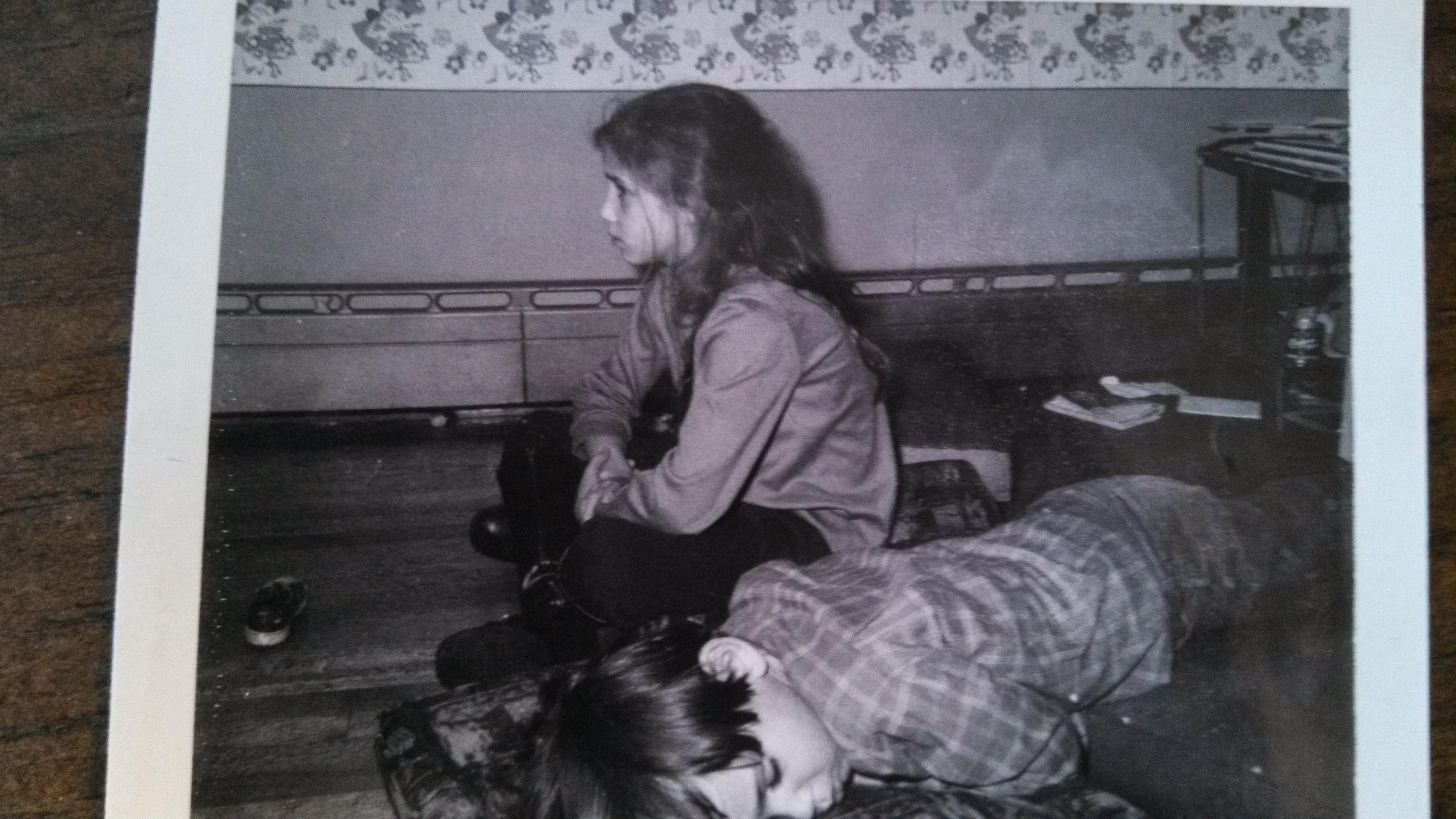
    me, at my father's house in Barre, Massachusetts for the weekend, watching TV late at night, with brother Andrew asleep,
    me, at my father’s house in Barre, Massachusetts for the weekend, watching TV late at night, with brother Andrew asleep,
    The other important source of musical influences during that time was movies. My father took us to movies a lot, sometimes two or three in one day. He took us to see grown up films, something for which I will always be grateful. He had no patience for children’s movies and believed it was downright wrong to censor or deprive children of worthy movies just because they contained sex or violence. (At least, that’s what he said. In retrospect, it’s my guess that he may simply not have cared. He wanted to see the movie, that’s all that mattered, and he wasn’t going to be bothered with making arrangements for a babysitter or an alternative children’s movie.)

    Consequently, I got to see all kinds of fantastic movies that none of my friends were seeing, such as Arthur Penn’s Bonnie & Clyde, To Sir With Love, The Prime of Miss Jean Brodie, The Last Picture Show, The Graduate, and of course, endless visits to theatres to see James Bond films.

    During this time, my music was still heavily influenced by what my parents listened to. But I did start, in small ways, to exercise my own preferences, independent of them. By the age of 10, I had developed a bit of an obsession with Donovan (Season of the Witch, Hurdy Gurdy Man), for example. And through the repeated exposure to those damn James Bond movies, I developed an independent interest in Shirley Bassey and Louis Armstrong.

    My father was obsessed with Johnny Cash. In particular, I remember this song playing frequently. Listening to it now, it makes sense that my father would have liked the song. At that juncture in history, my dad had started to turn the corner toward being alienated from society and his family and friends, indeed eventually becoming a fugitive himself. By this point, he felt misunderstood and persecuted much of the time. Wanted Man.

    .

    And here’s the rest of the playlist from that era:

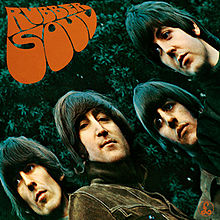
    Finally, it was during this time in my life, specifically at about age 9, that I identified and purchased my very first album of my own, inspired by Randall Huntsberry, a hipster professor and father of my friend Joanie. An album that changed my life. Rubber Soul. (I can’t include any of the tunes from this extraordinary album here because evidently the Beatles have never licensed their music for streaming on Spotify or any other service).
    220px-Rubber_Soul

  • Laura’s Music History, 0-8 years old (dedicated to Altina and Andrew)

    January 1st, 2014
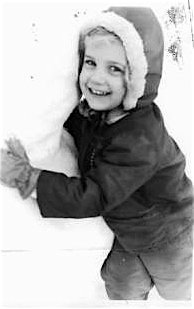
    me, approximately 5 years old.
    me, approximately 5 years old.

    This is a selection of music drawn from my early childhood. These tunes still loom large in my memories of that time in my life–music that had an enormous impact on me, even at a tender age.

    Of necessity, the selection reflects the music my parents, their friends and my grandparents chose and were surrounded by–a historical snapshot of a musical (and political) era. This is what my youthful parents–Altina Waller and Louis Wilson–listened to at home, in the car, and sang out loud to my brother Andrew and I.

    In building this playlist, I chose tunes actually remembered (rather than music I’ve since learned about). Many were old tunes revived and performed by multiple artists. If I couldn’t remember which artist I’d heard do the song, I made a choice based on what I know of my family’s history, which artists recorded during that period and what they likely would have been exposed to.

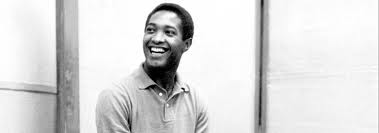
    Sam Cooke
    Sam Cooke

    As you see, I was mostly–but not exclusively– a child of folk music. As an adult, I’ve explored that important period of our history when Leadbelly, Woody Guthrie Pete Seeger, The Weavers, Joan Baez, Odetta and others revived old tunes passed down through generations and made them not only accessible and popular, but the catalyst for the most important anti-war movement this country has ever known and the soundtrack that inspired the the civil rights movement.

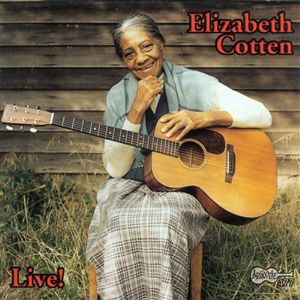
    My parents and grandparents weren’t political activists, at least then. But they were modern, optimistic and progressive. They melded the old with the new. The music to which I was exposed represented that spirit. Perhaps the most emblematic, for me, was the mournful and moving “Freight Train,” written and performed here by the extraordinary Elizabeth Cotten.

    cotten

    And here’s the first portion of the playlist. Enjoy.

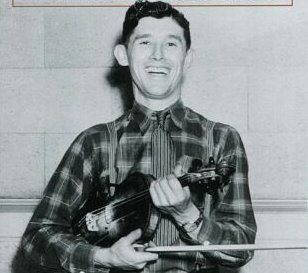
    Note: “Beautiful Brown Eyes” is a remarkable song, covered by artists ranging from Leadbelly to Pete Seeger to the Kingston Trio and Ramblin’ Jack Elliot. My father Louis Moore Wilson sang it to my brother Andrew and I at bedtime on many occasions. The only lyrics I remember are from the refrain: “beautiful brown eyes, I’ll never love blue eyes again.” But as an adult, looking up the song’s history and provenance, I learned that it’s not exactly a children’s song. Instead, it’s a dark tale, narrated by a woman who chooses to be single rather than married to an alcoholic man. Since it’s among my earliest musical memories, I have no concrete knowledge of which version my father would have heard most, so I reviewed the options in light of my father’s age and the song’s recording history, and settled on the version by Roy Acuff, a “cowboy” musician of the late ’40s and 50s.

    Roy Acuff
    Roy Acuff

    Here’s part II of the playlist.

    The standout tune, from the folk genre–and in my memory–was this, by Sam Cooke. To this day, it is one of my great regrets that I never got to hear him sing live.

    In assembling the playlist, I researched about who had done renditions of the songs–both then and now–and there were a few surprises. The biggest one, and the most compelling, was this version of Woody Guthrie’s Red River Valley, an old Canadian cowboy standard, by the great contemporary jazz artist Cassandra Wilson. If this doesn’t move you to tears, nothing will.

    Finally, the late Kurt Cobain, of Nirvana, did a startling rendition of Leadbelly’s “In the Pines,” some time in the early 1980s. I think it might be the best version of them all, and that’s saying a lot!

  • Summer 2013 Pastry (and Pizza) Roundup

    September 10th, 2013

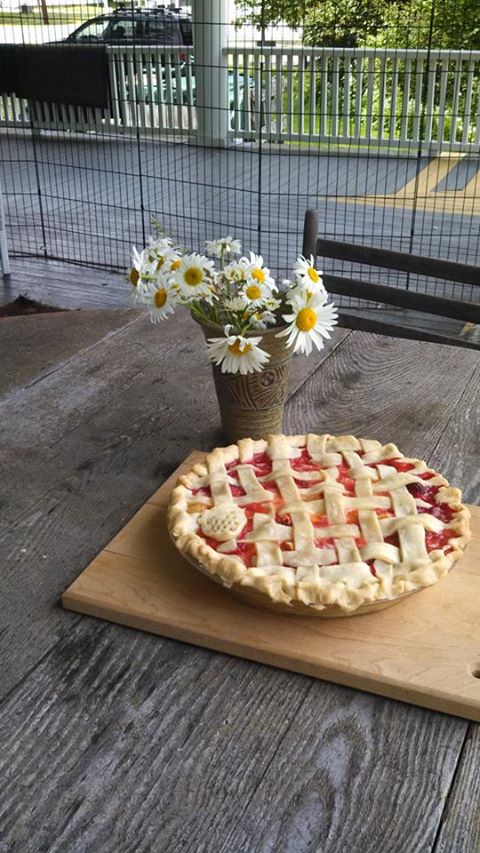
    Strawberry-Rhubarb Pie
    Strawberry-Rhubarb Pie
    I did more baking this season than I ever have in past years. For some reason, no weekend felt complete or satisfying unless I had baked one or more pies or other type of pastry. This summer, I also experimented with a broader diversity of pies, with many I had never, ever tried. (It took some courage)

    Other developments:  for all the years I’ve been making pie crusts, I’ve always preferred butter.  This summer,  I decided to try substituting about a quarter of the butter with vegetable shortening.  I’m now a convert.  Butter makes for the best flavor, but adding some shortening makes the crust more tender and flaky (without any film), and any decorative features I add hold their shape better due to the shortening. (This is important to me because this year I’ve started to work on the aesthetics of pies much more than I have in the past). And to boot, I’ve also started routinely adding a tablespoonful of vinegar along with the ice water.

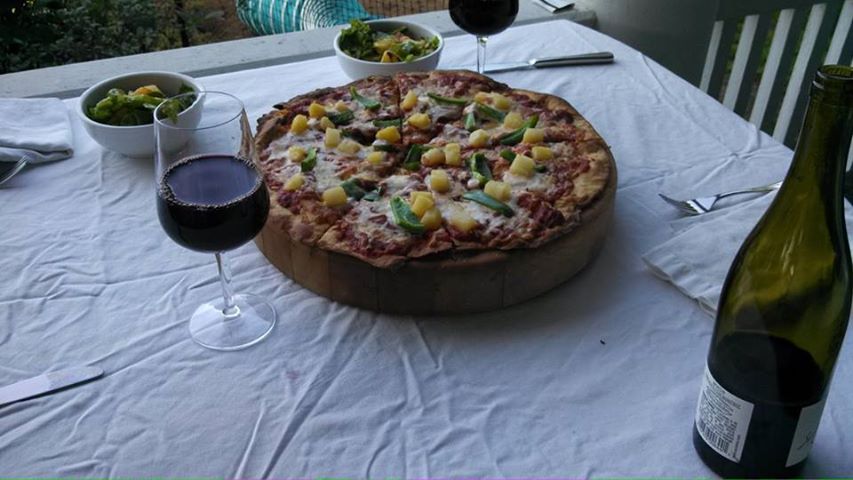
    It wasn’t just the pie–oh no, Edward and I went a little further this summer, and we decided to make our own pizza at home. Through trial and error, and the acquisition of a few critical tools, we’ve achieved a pretty impressive pizza. The basics? Roll out the dough, prick with a fork, slide onto a pizza peel covered with corn meal, slide onto a pizza stone (also covered with corn meal) in a 475 degree oven for a 7 minute pre-bake. Remove, brush the dough with olive oil, decorate the pizza with our preferred topping, and then slide back into the oven for another 7 minutes.

    Laura and Edward's Pizza.
    Laura and Edward’s Pizza.
    The pizza peel helped a lot, as did the corn meal and a special pizza rolling cutter. I had a recipe which informed me that one can use the “no-rise” method, meaning just whip up the dough with no rising, therefore not so time-consuming. For most of this summer, that’s how we did it, but this past weekend, I decided to see if the “long rise” method would yield any better results. On Saturday, I mixed the dough at 10am and let it rise until 5:30pm. Then we followed the same process. I had high hopes, but–sitting over dinner, we decided neither the taste or consistency of the dough was that much better with the long rise. In a way, this was really good news–no need to plan ahead!

    Here’s a slide show, with captions, of the pies I made this summer. There were a couple–namely this weekend’s Honey Acorn Squash Pie and a plain old Blackberry Pie back in July sometime, of which I took no photos. But here are the remainder, in all their glory.

    This slideshow requires JavaScript.

  • Been Too Long at the Fair. (Bonnie Raitt) Lancaster, NH, 2013.

    September 1st, 2013

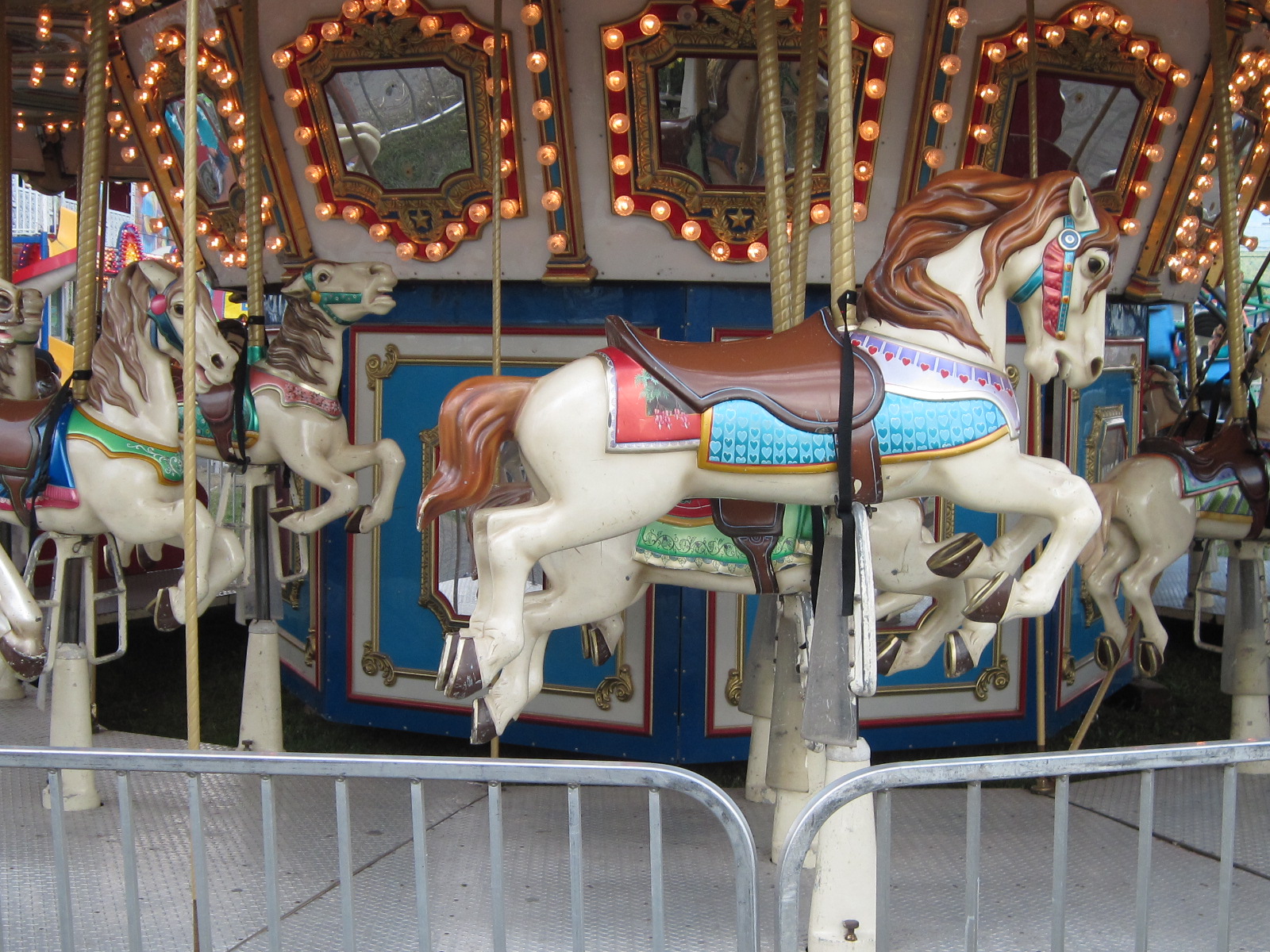
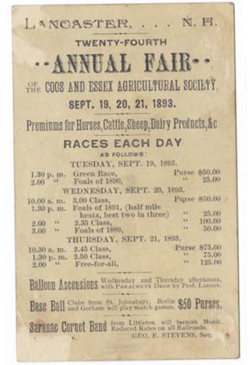
    IMG_2506The Lancaster Fair. It’s an event of enormous cultural significance in this part of the world. The fair started in 1870, and was known as the Coos and Essex Co Agricultural Fair. Initially, its main focus appears to have been horse racing and baseball, with selling of agricultural products and livestock.

    New England is dotted with similar fairs, large and small. This one is pretty big as fairs go, lasting for six days.Fair History

    I like the sheepdog trials and the pie contests. From time to time, I enter a pie. You drop your pie off at 3pm and the judging commences at 4pm. So you have about an hour to wander through the midway, take a peek at the petting zoo, listen to music, and eat greasy food. (On Friday, I ate a spicy Italian sausage along with a strawberry lemonade.)

    There’s a certain inevitable energy and excitement to the fair. But in the end, reflecting on my time there, I couldn’t help but think of an old song covered famously by Bonnie Raitt (but originally written by Joel Zoss).

    Here’s the tune, set to a slide show of my fair photos from Friday and Saturday, below:

  • Free Verse for Free Will: A Poem for Will Berry, by Edward W. Clark, Jr.

    July 13th, 2013
    Ed Clark and Will Berry, on Fellows Rd.
    Ed Clark and Will Berry, on Fellows Rd.

    This poem is written for and dedicated to our good friend and independent logger Will Berry, who died last week at the age of 48.

    FREE VERSE FOR FREE WILL

    The chain saw burped, then idled.
    Lean and direction determined.
    Paths of retreat noted.
    The forest air filled with
    The scent of gas and bar oil.
    A glance at the felling sights before
    A firm hand guides the whirring chain
    To solid wood.
    No axes and wedges used today,
    Just a pause and a deliberate walk away.
    Sound of timber hitting the forest floor.
    All felling, limbing, skidding, bucking
    Over now. Scent of gas and bar oil fading now.
    Will once told me:
    “There is nothing to fear in the woods.”
    There is nothing to fear in the woods.

    Edward W. Clark, Jr., July 2013

←Previous Page
1 … 4 5 6 7 8 … 14
Next Page→

Blog at WordPress.com.


Loading Comments...
 

    • Subscribe Subscribed
      • Life, Law, and Politics in the Northeast Kingdom
      • Join 52 other subscribers
      • Already have a WordPress.com account? Log in now.
      • Life, Law, and Politics in the Northeast Kingdom
      • Subscribe Subscribed
      • Sign up
      • Log in
      • Report this content
      • View site in Reader
      • Manage subscriptions
      • Collapse this bar